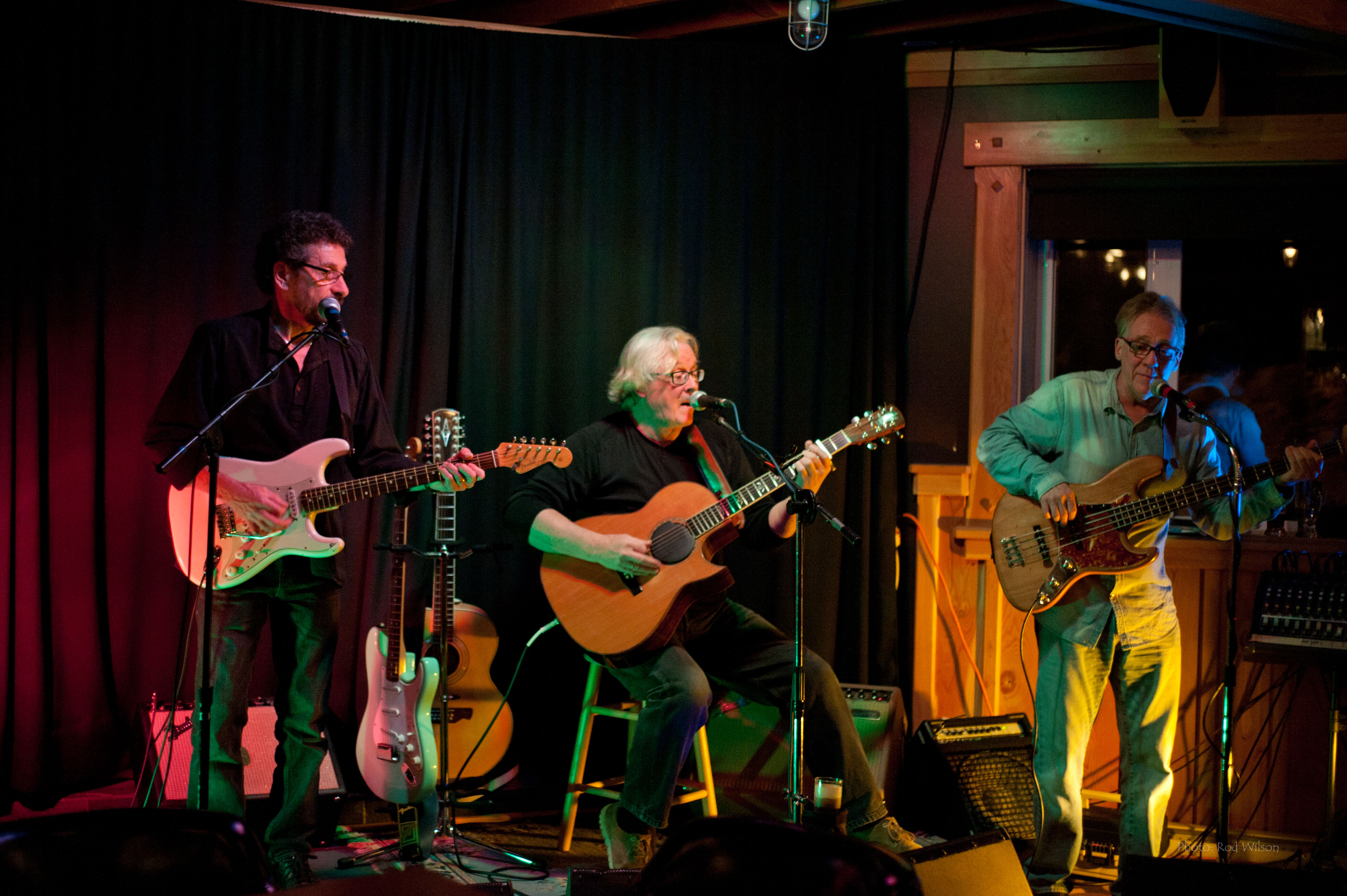
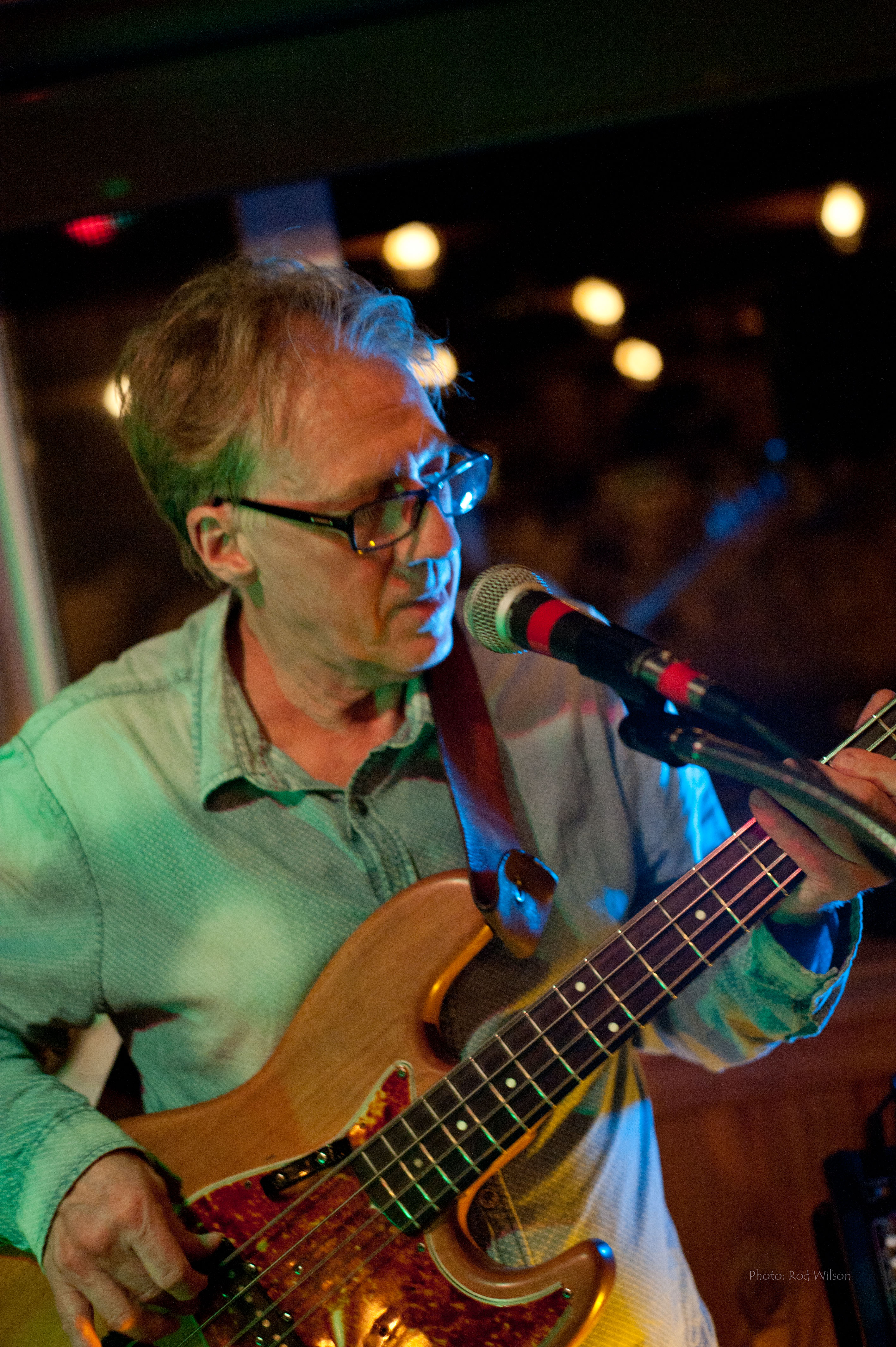
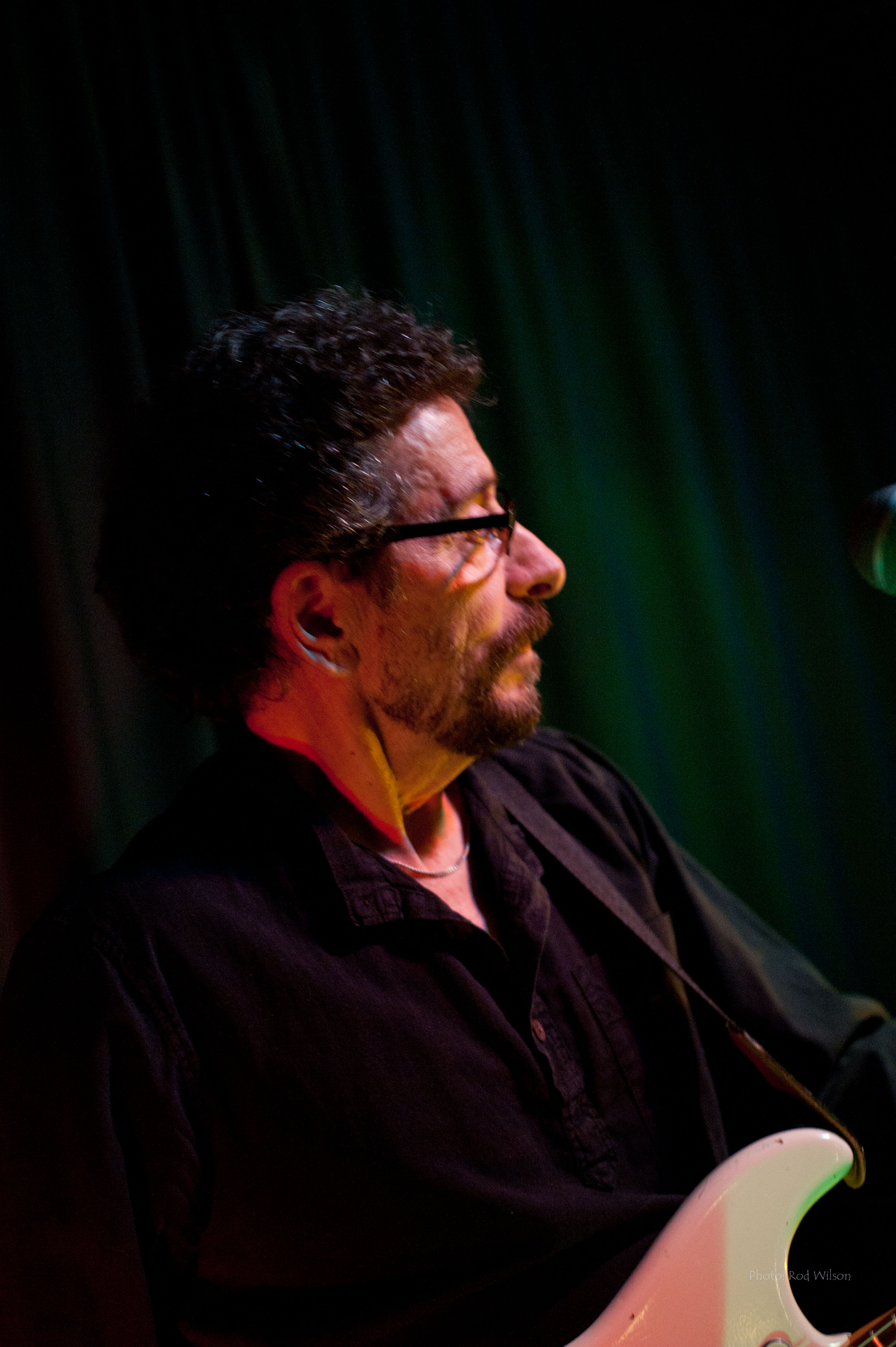
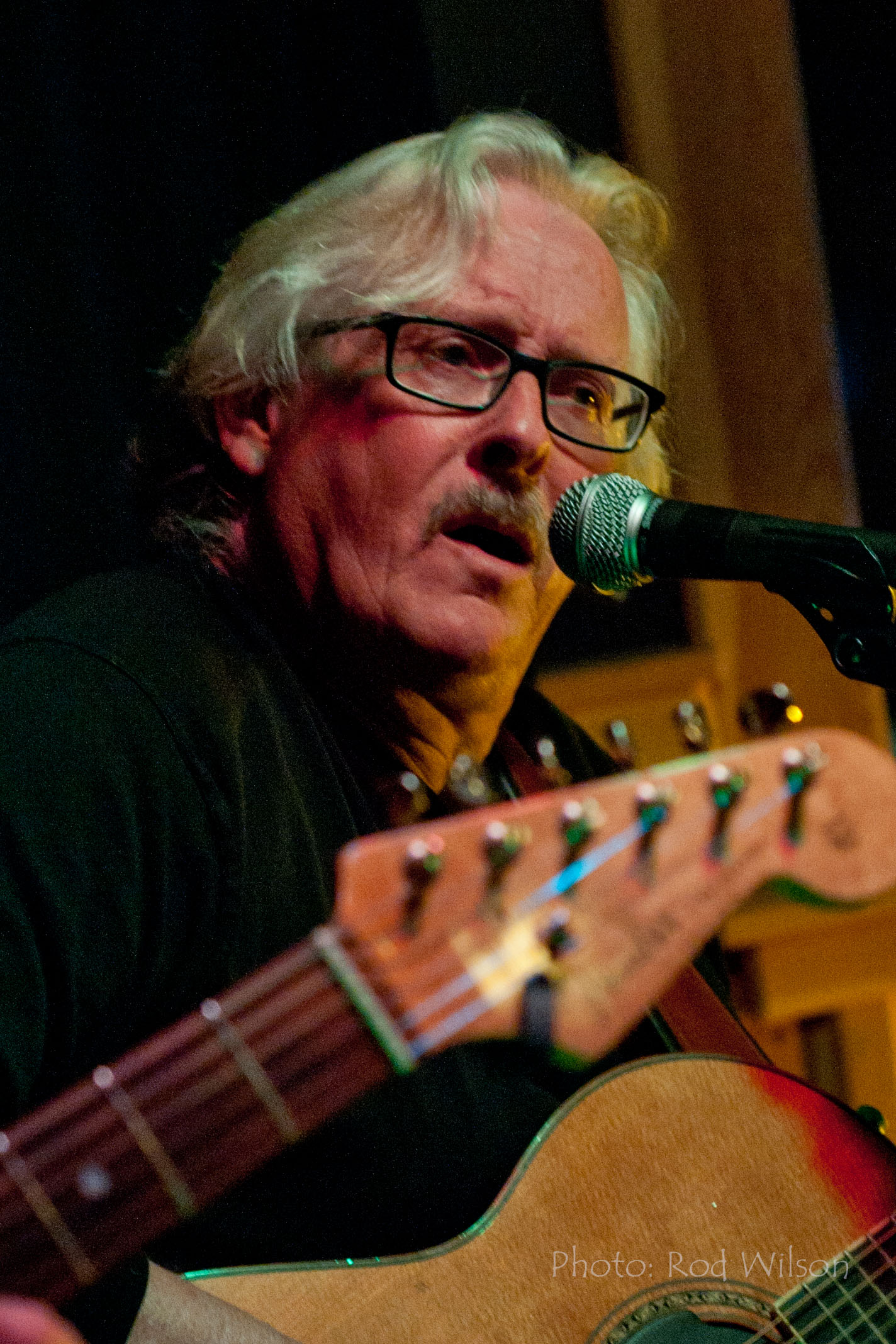
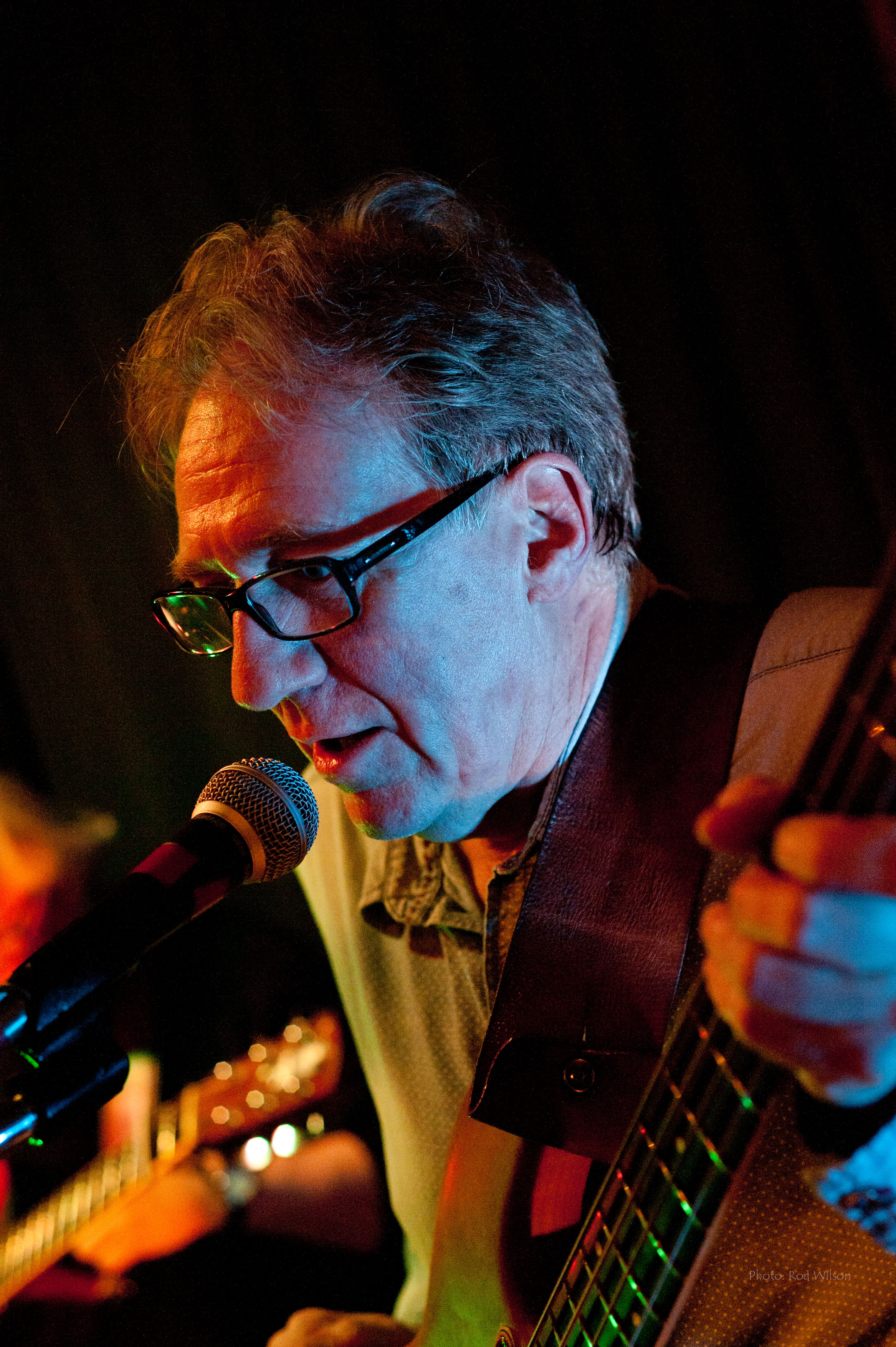
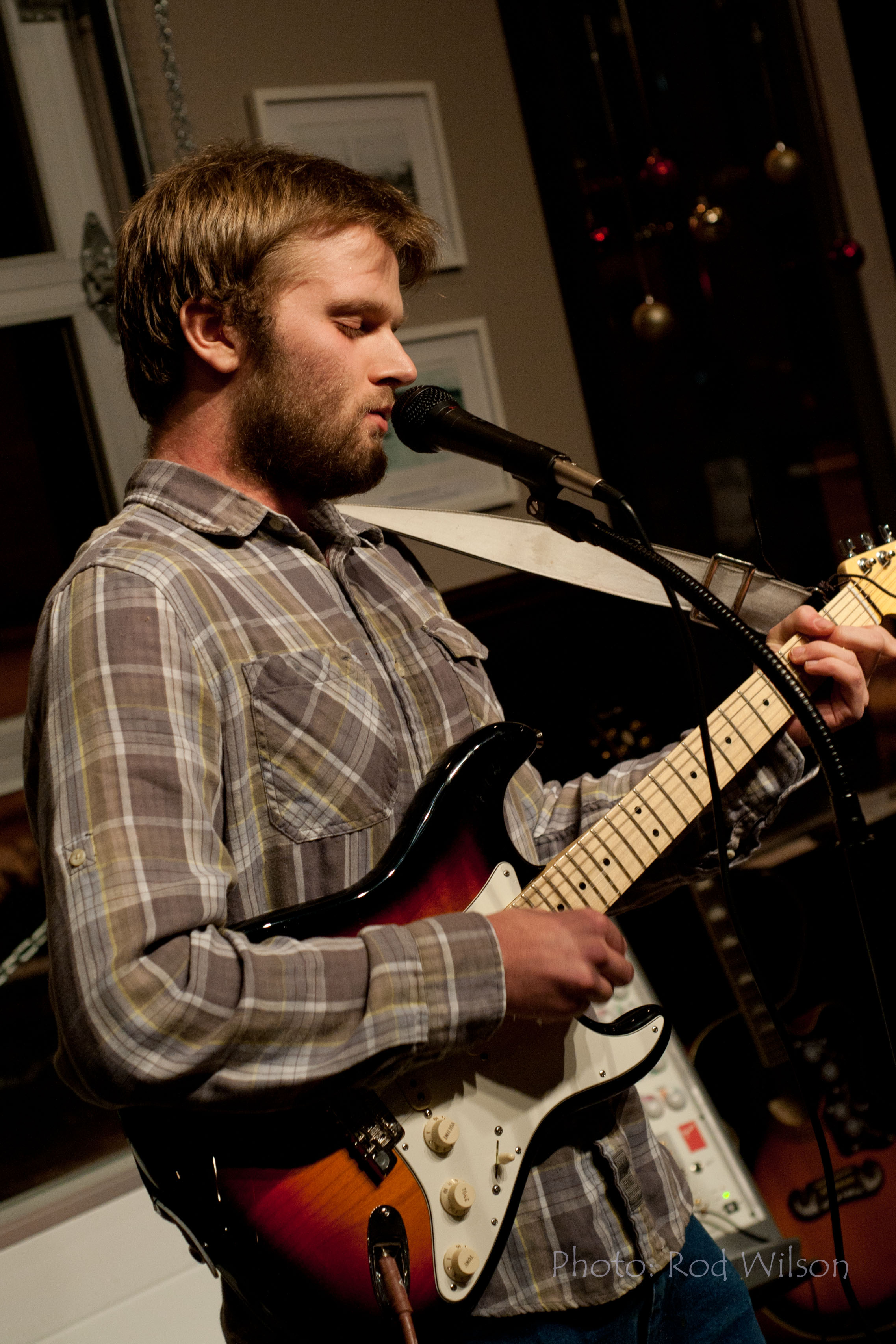
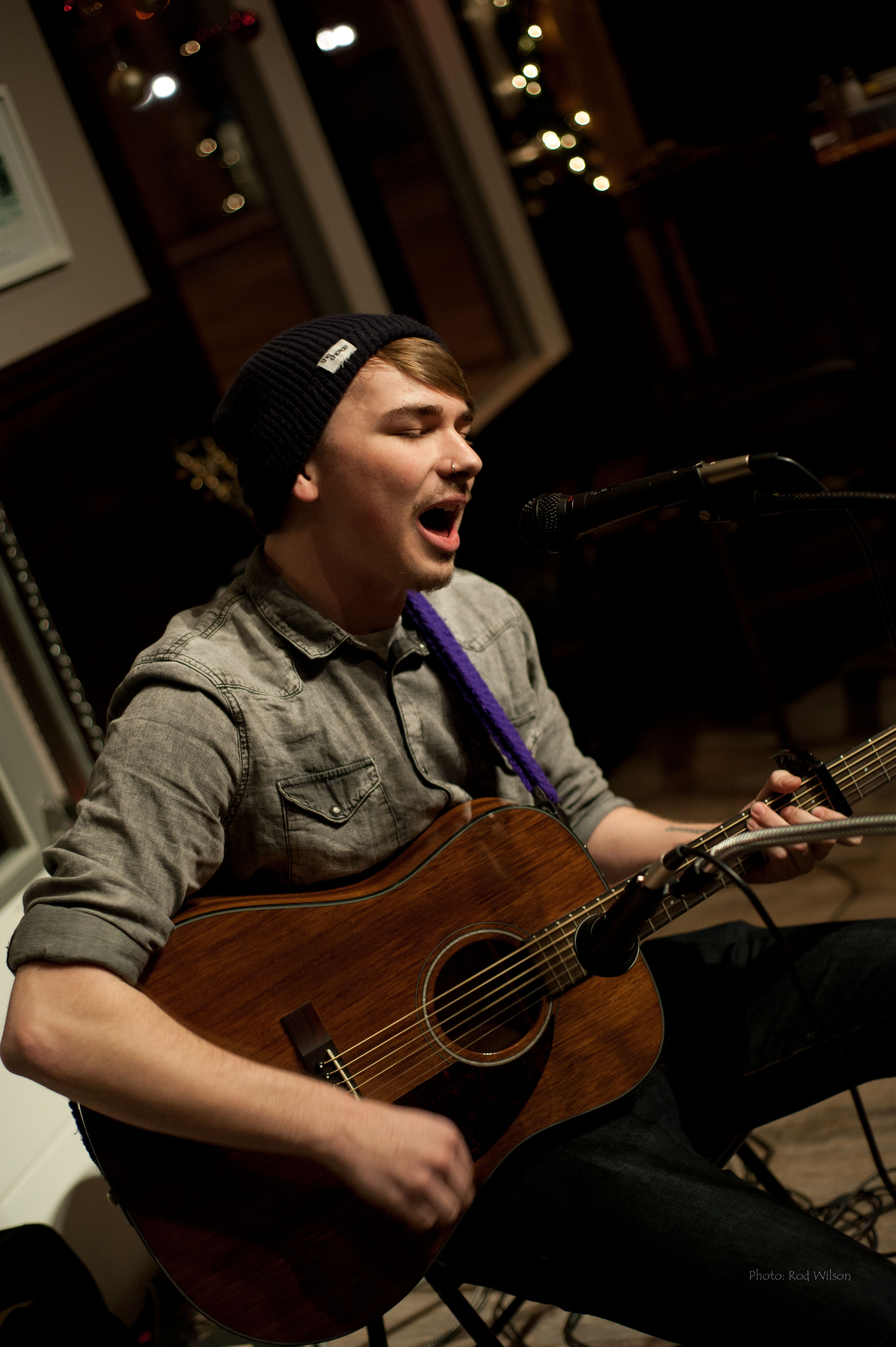
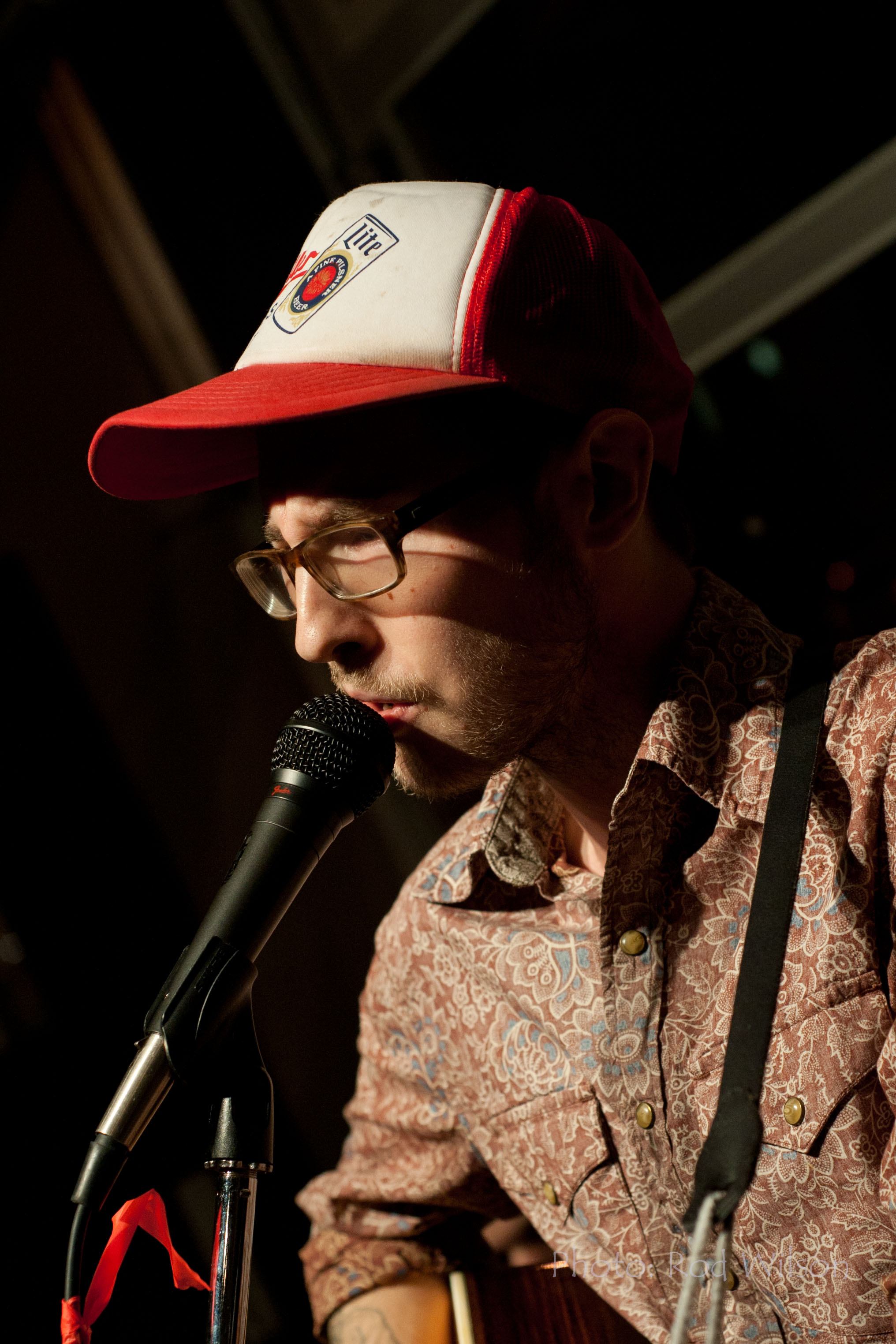
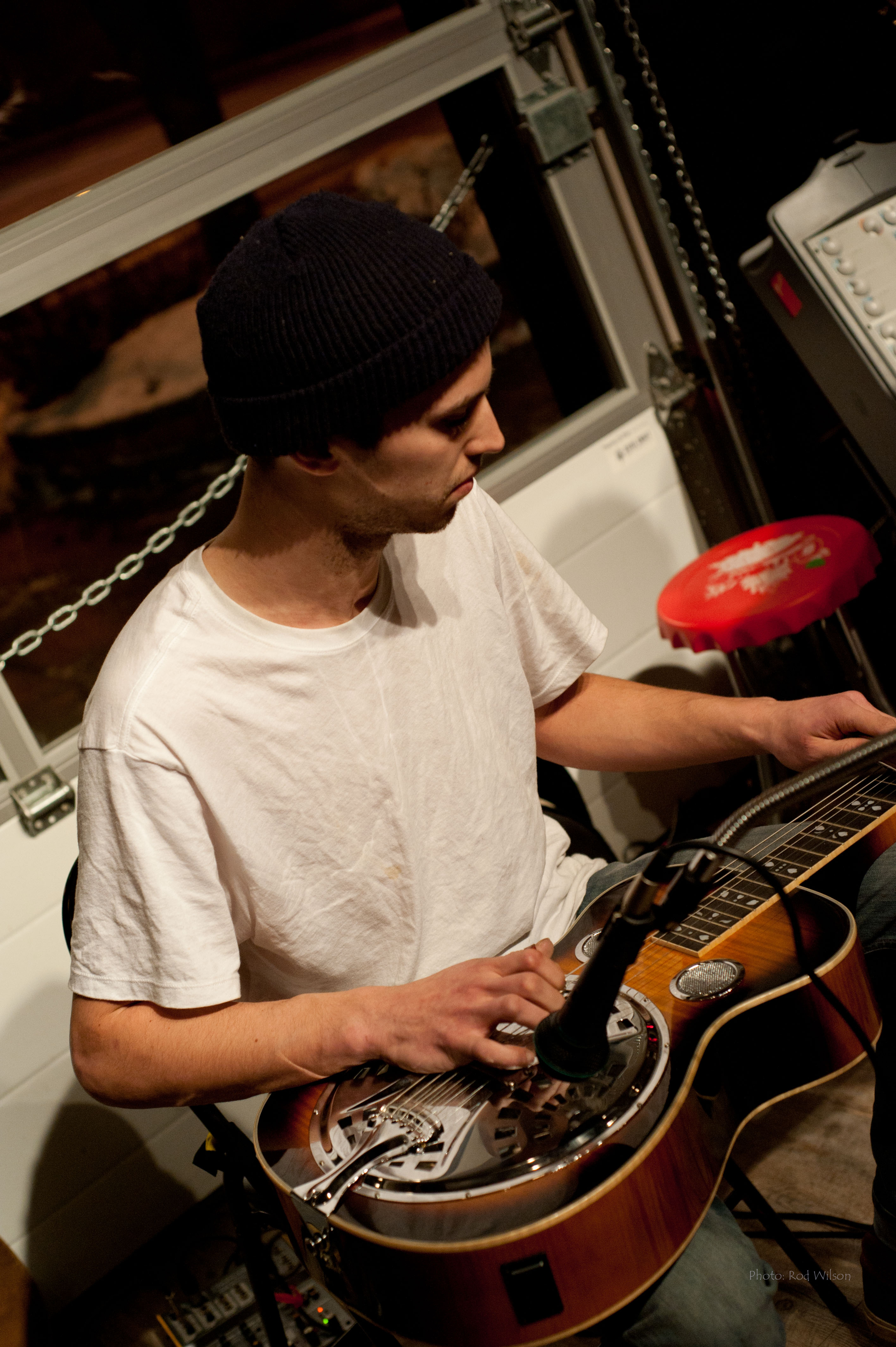
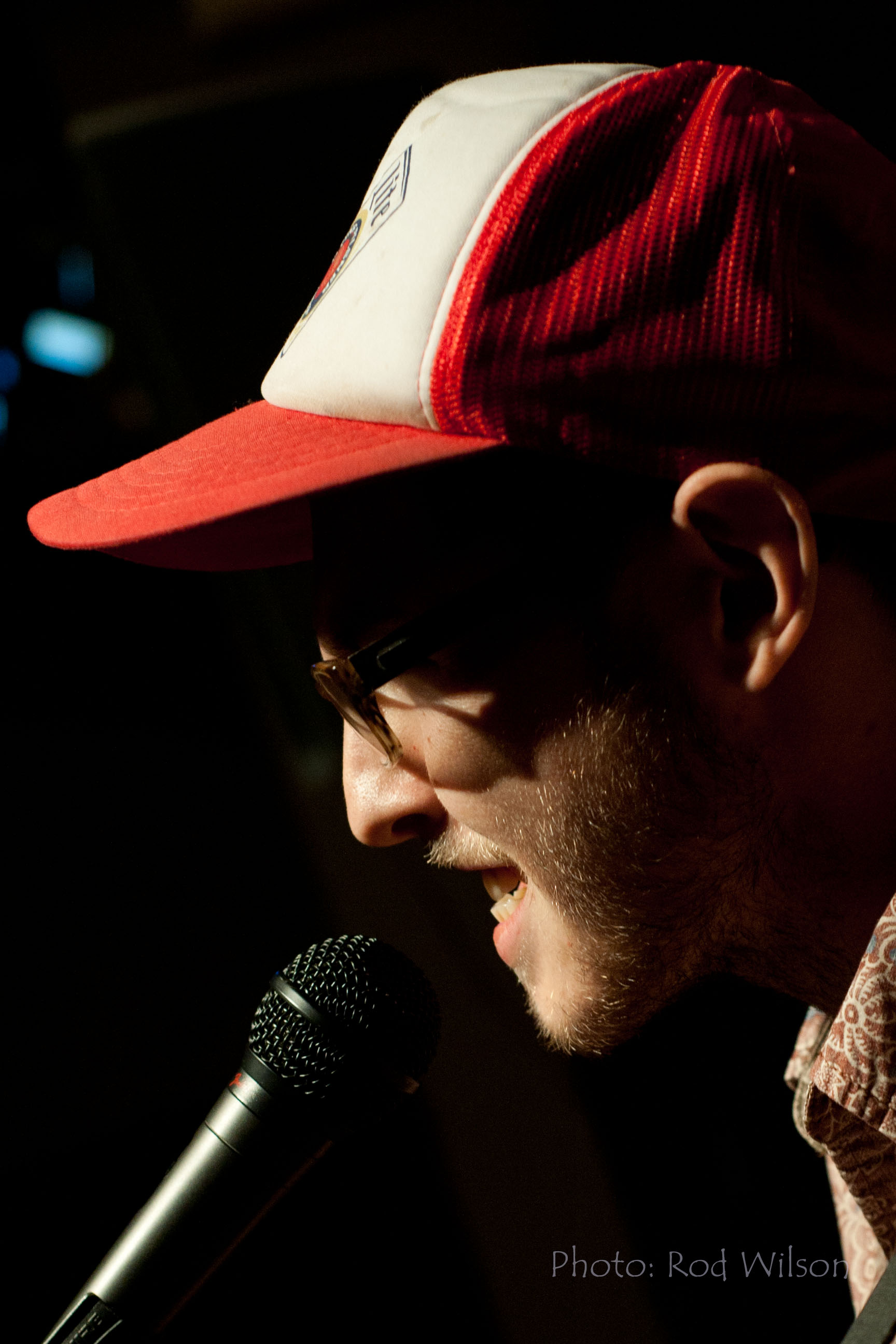
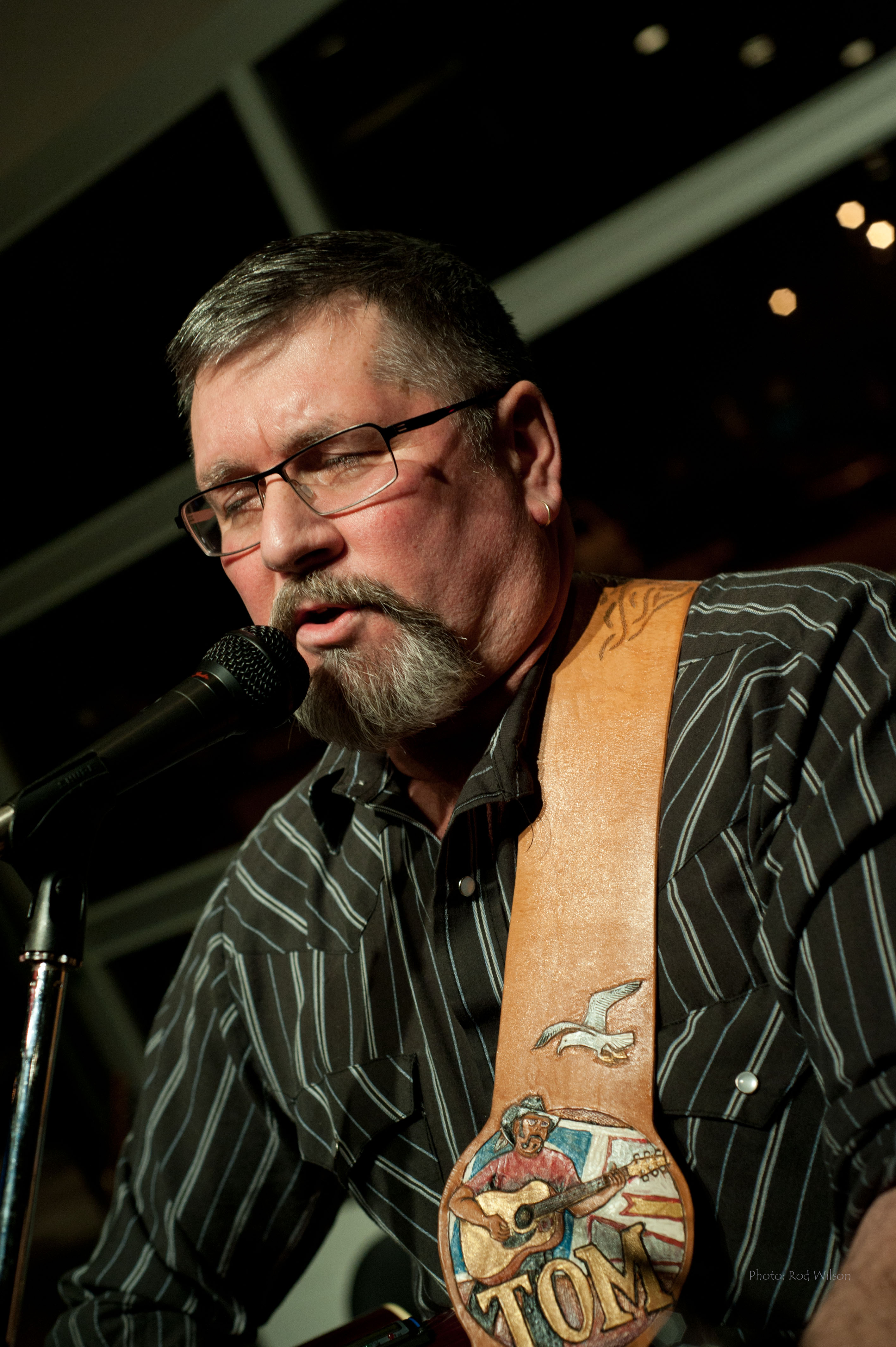
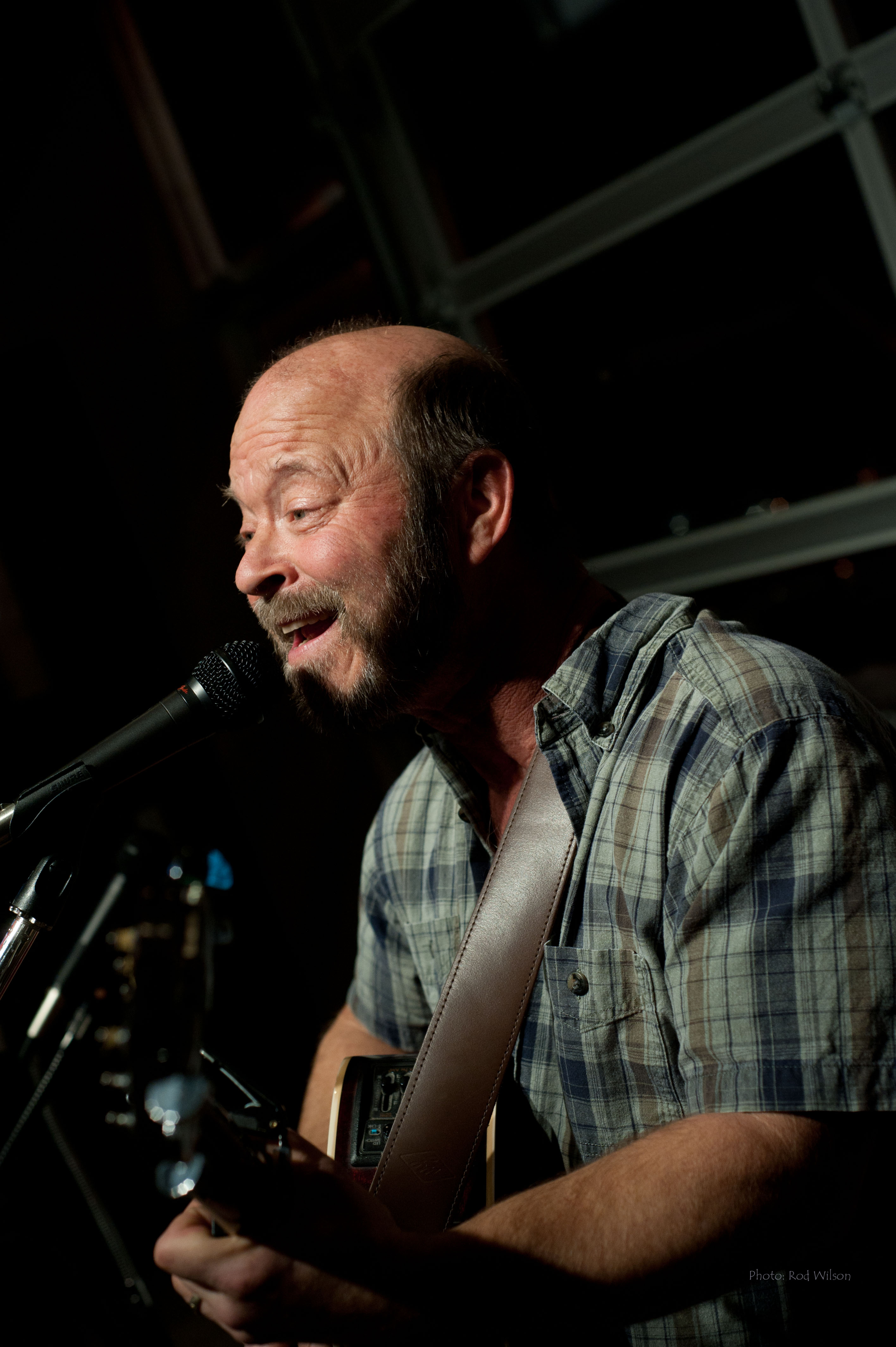
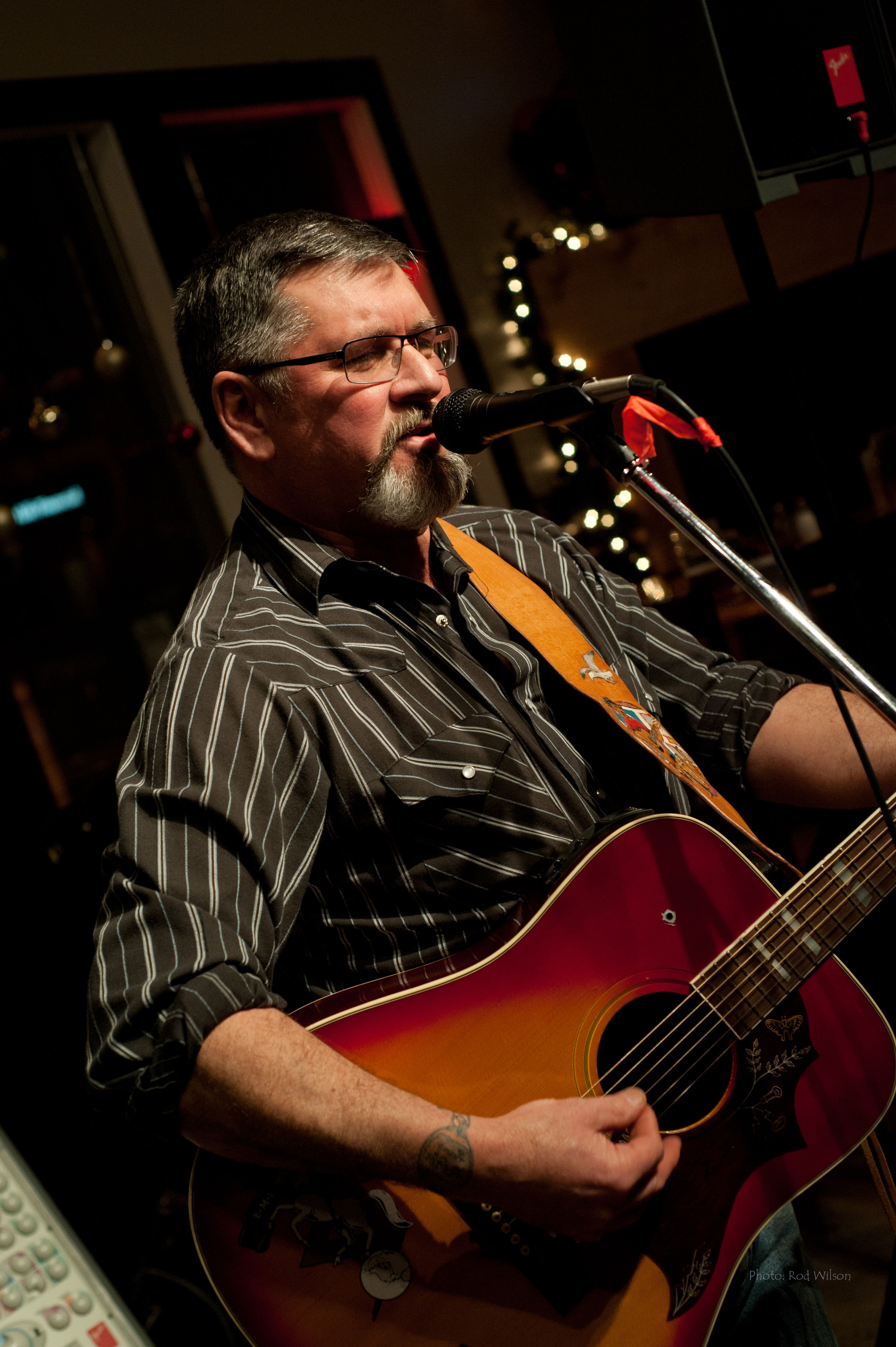
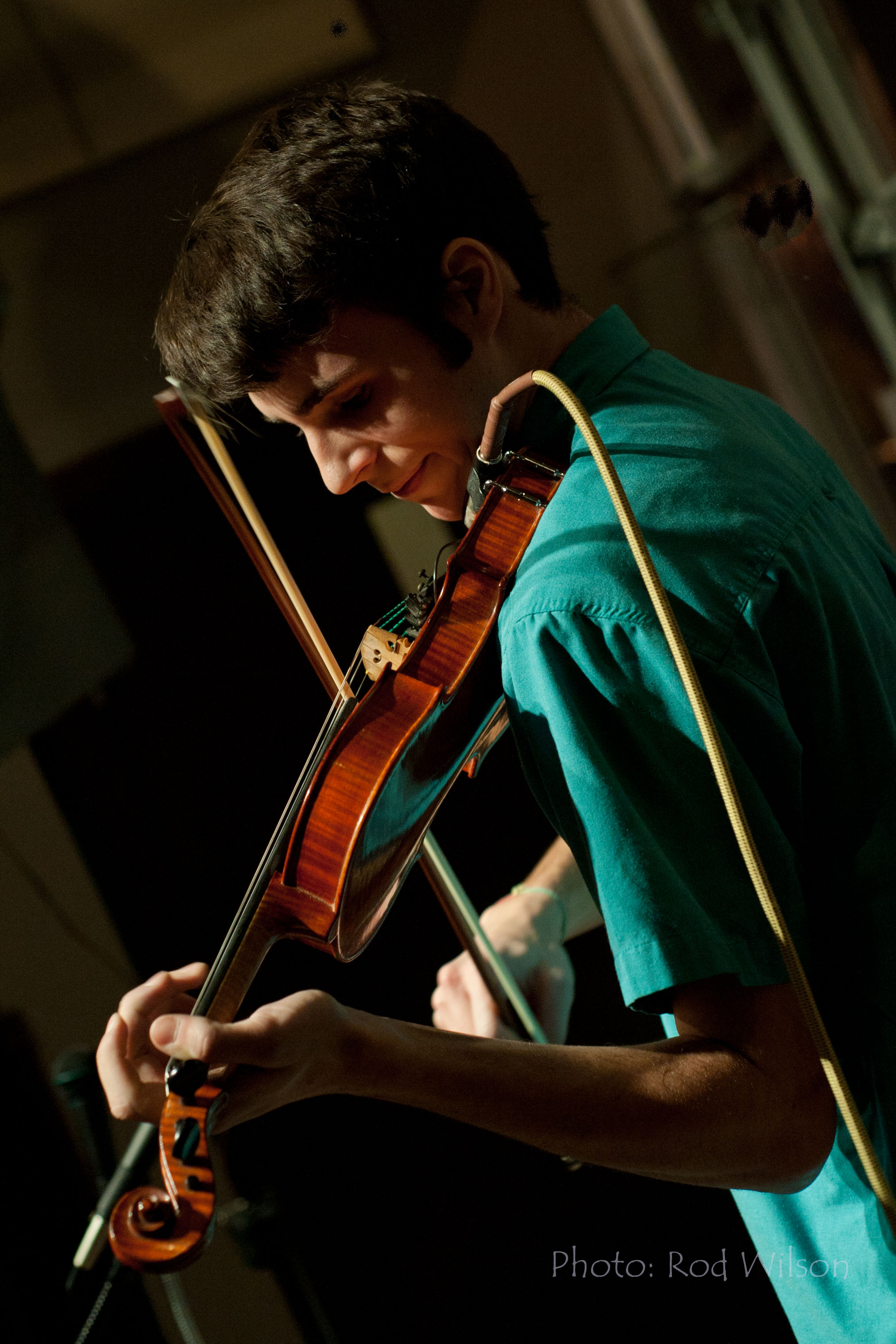
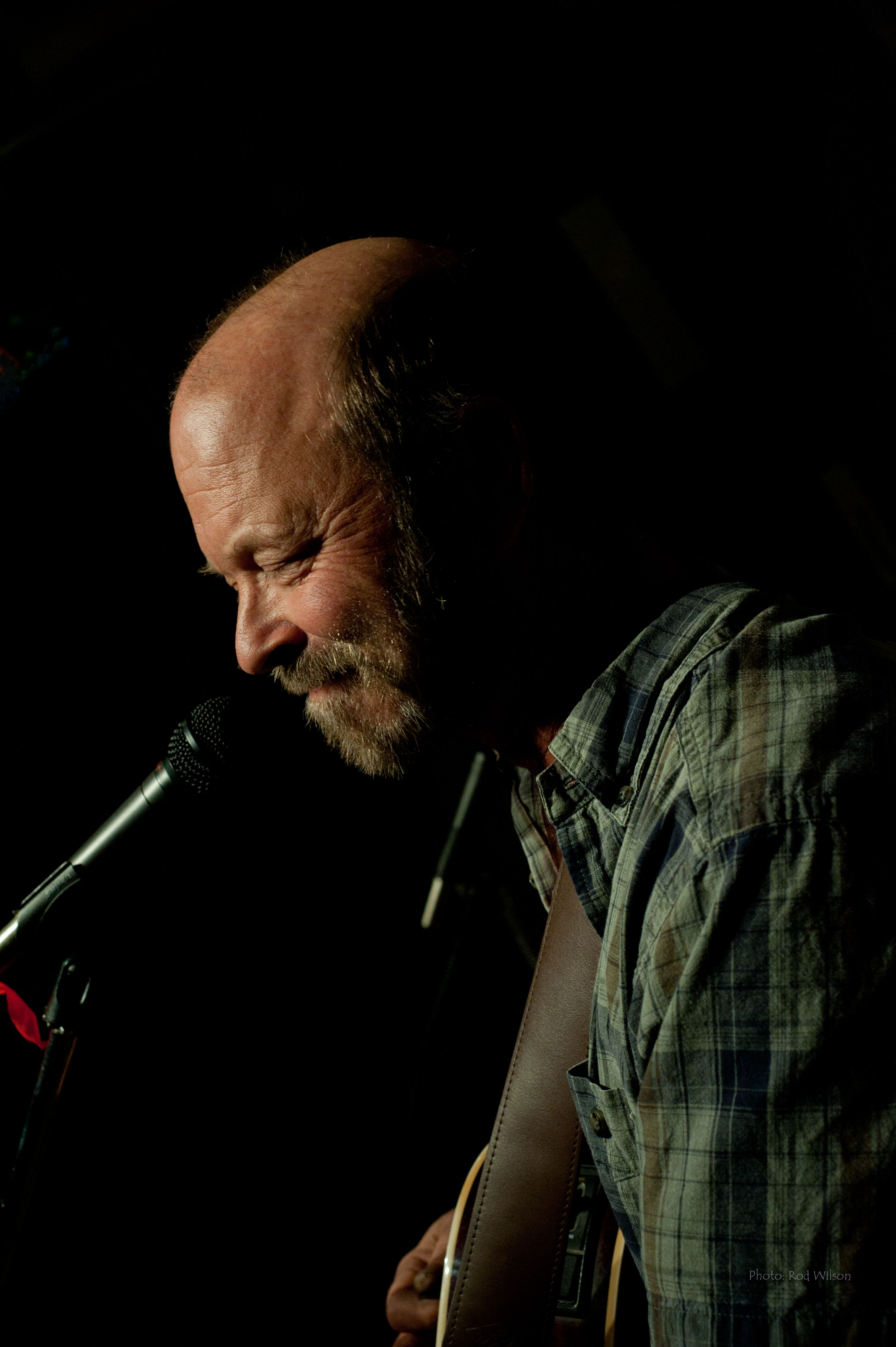
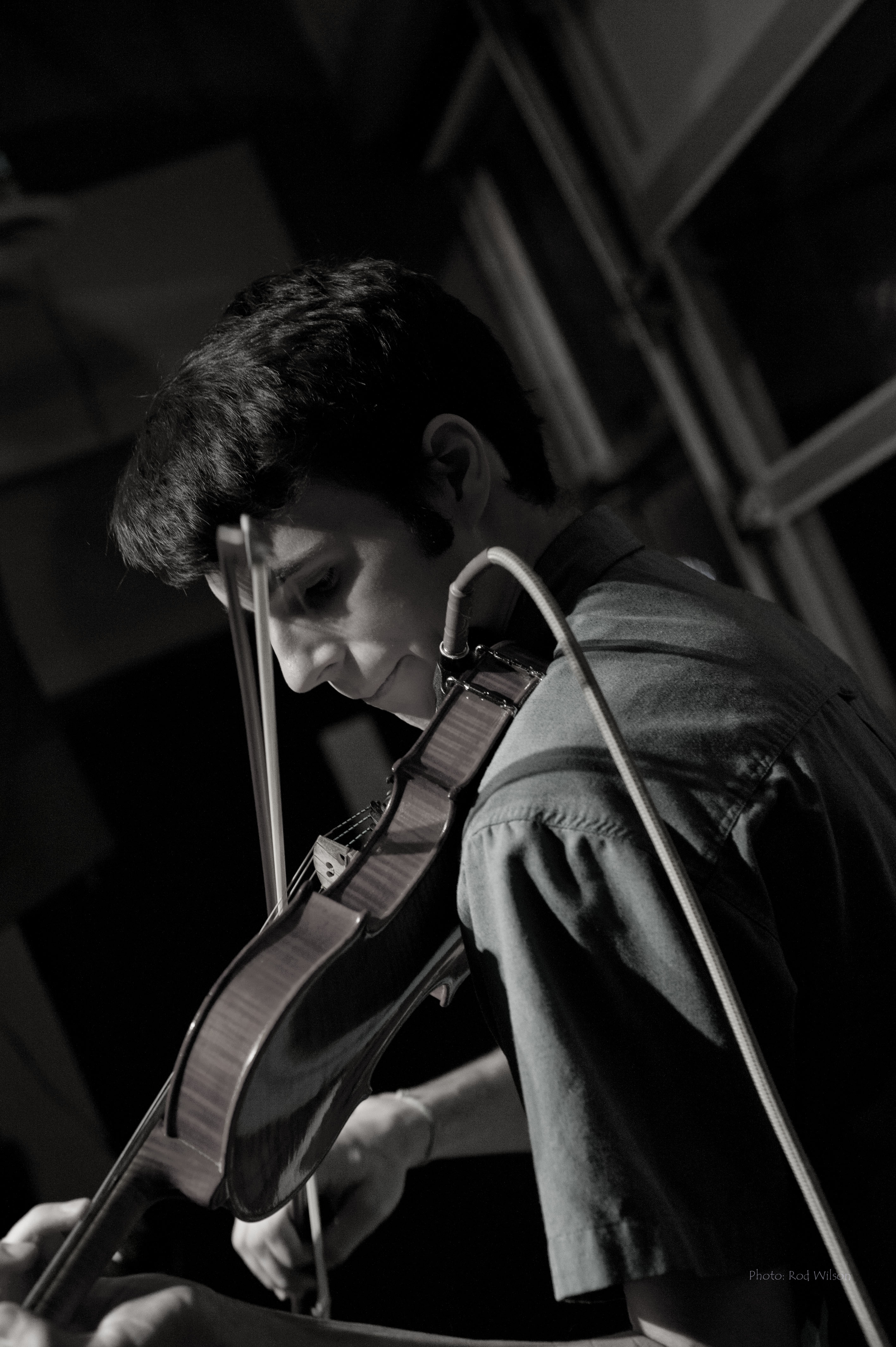
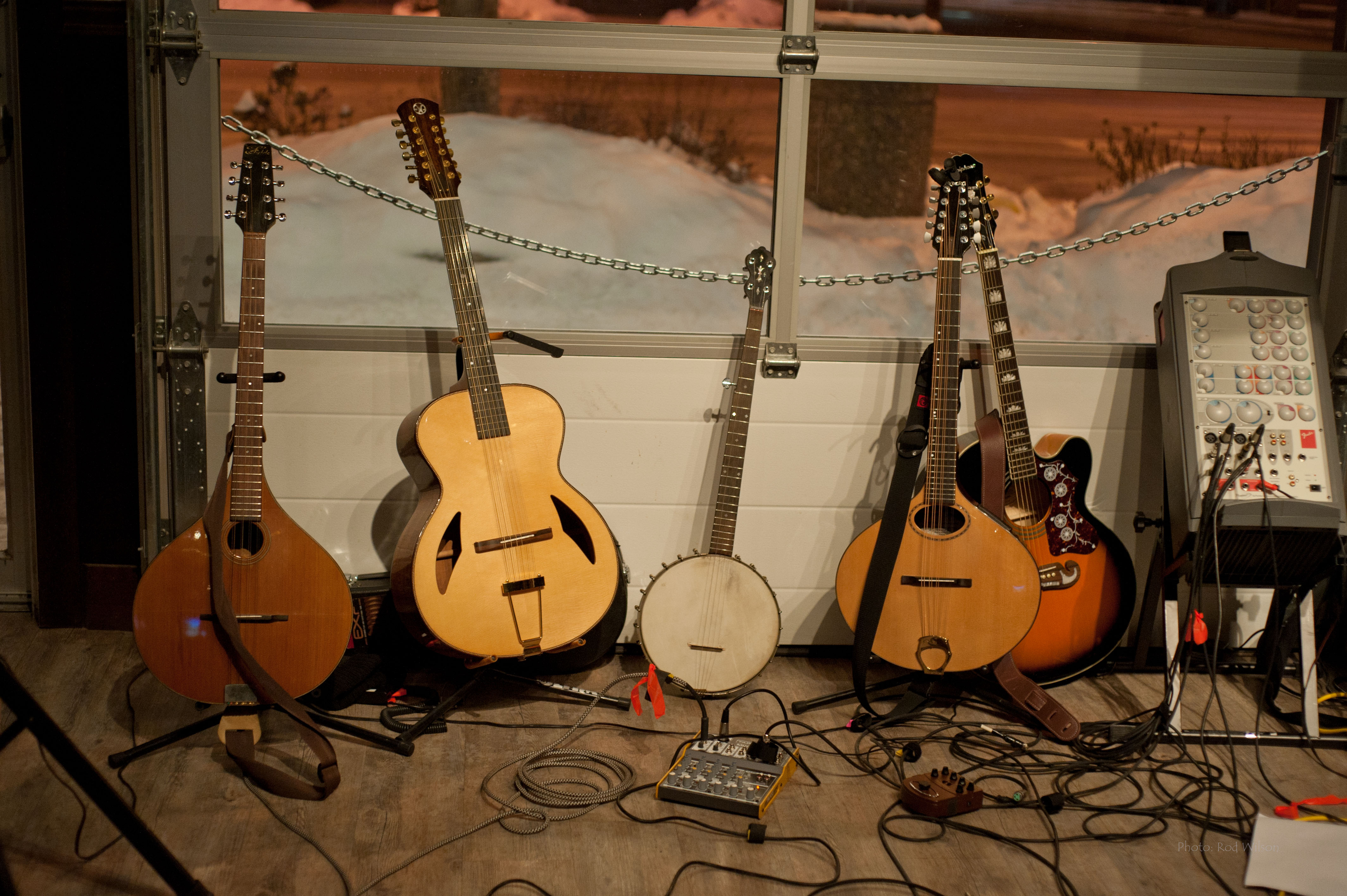
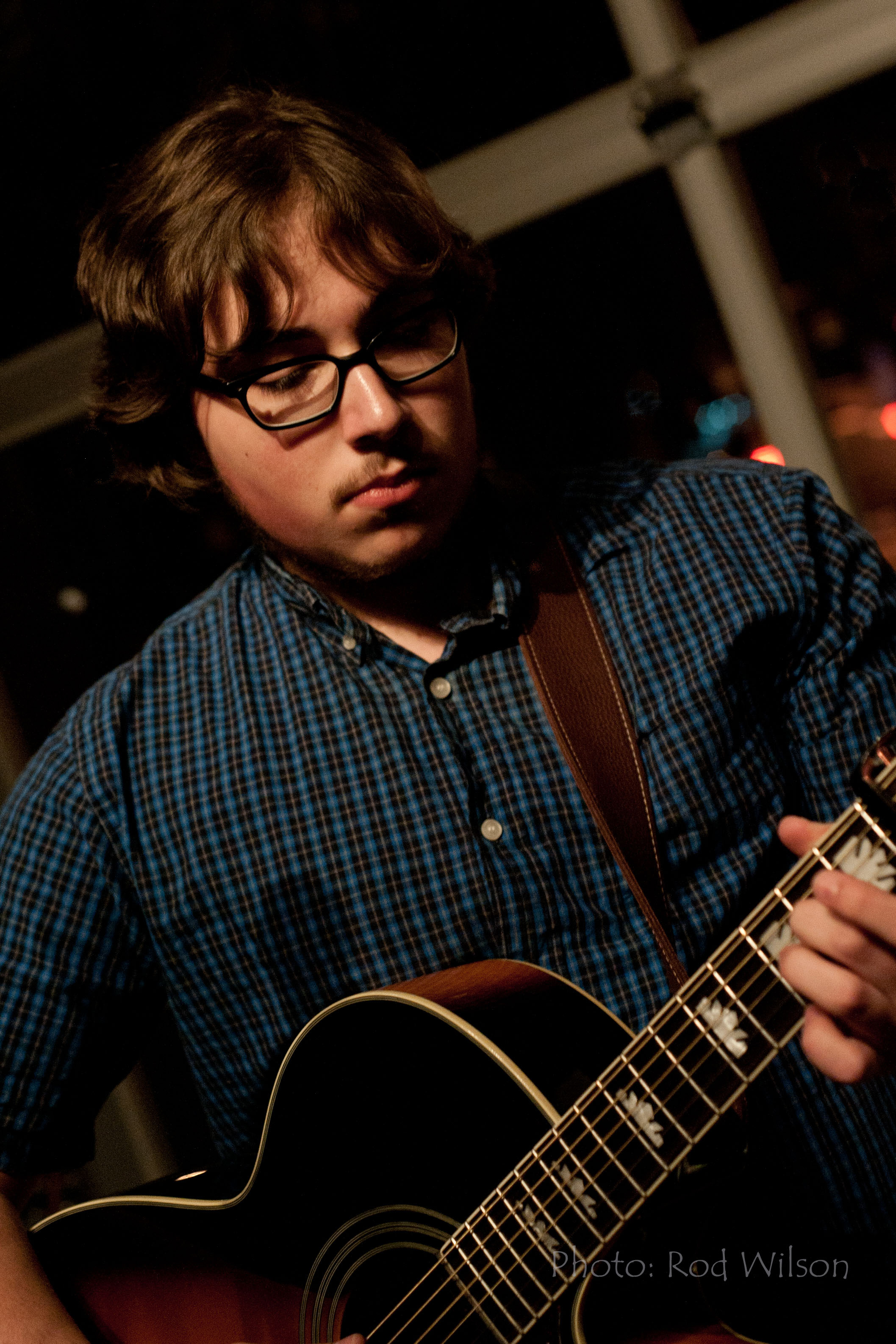
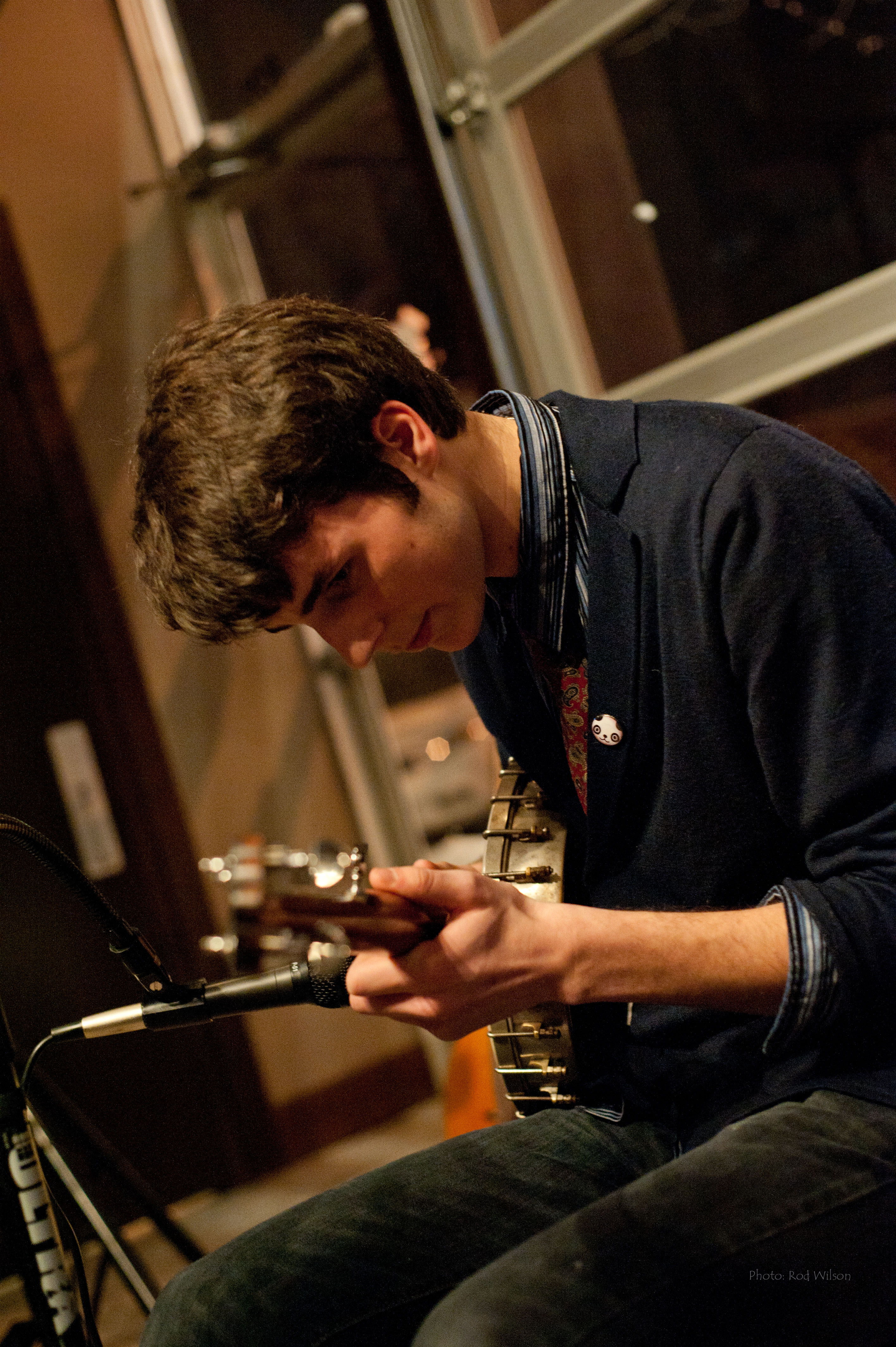
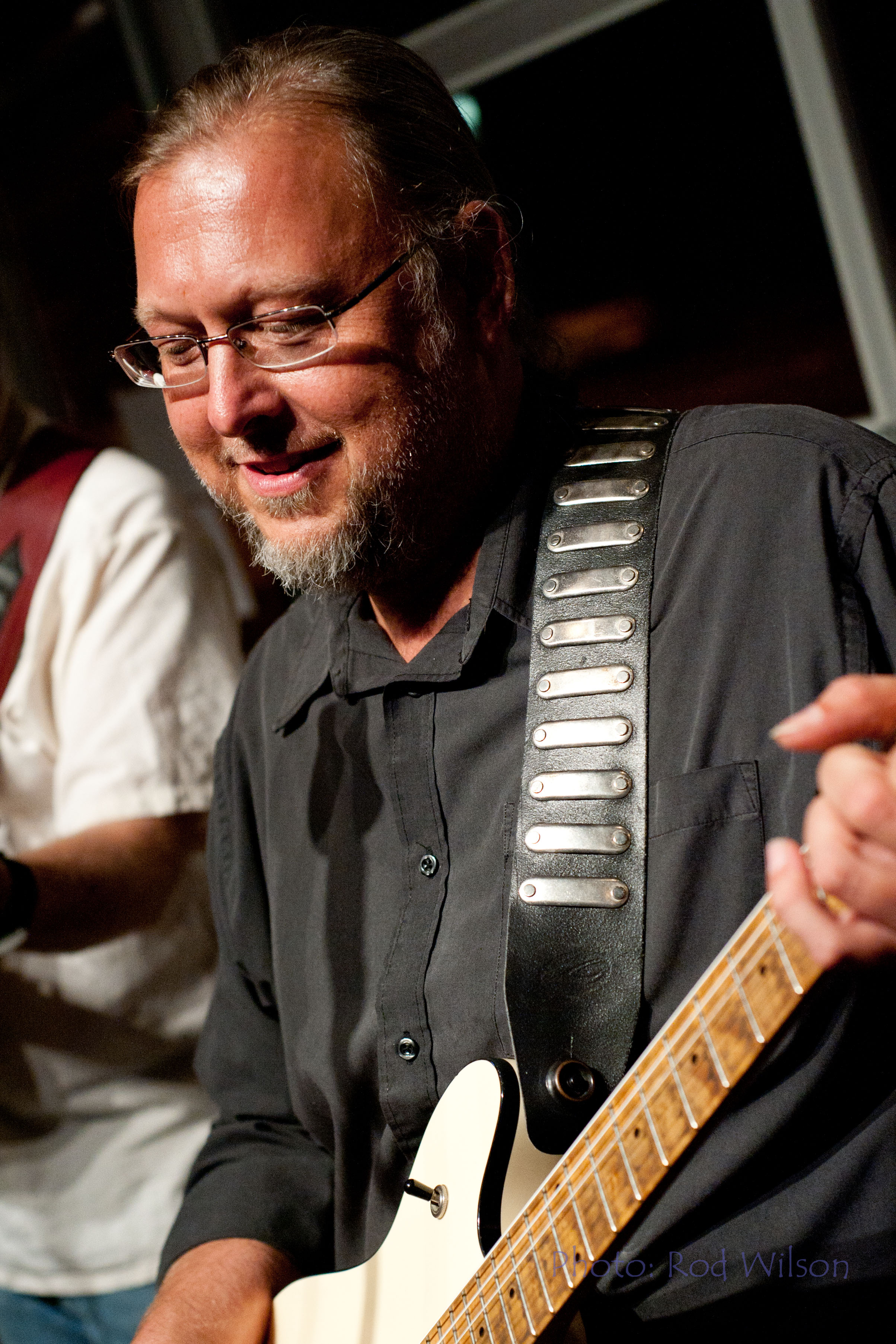
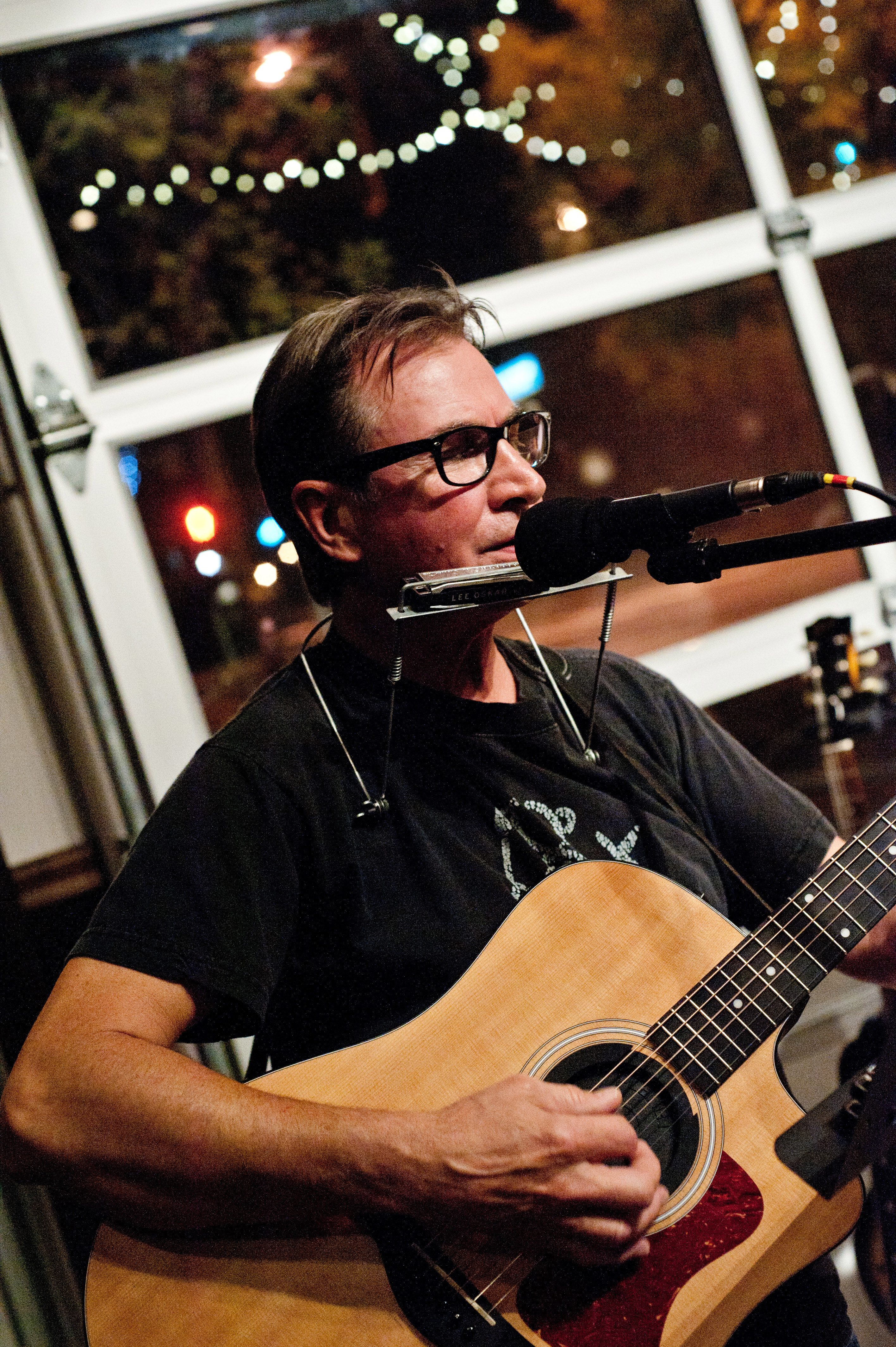
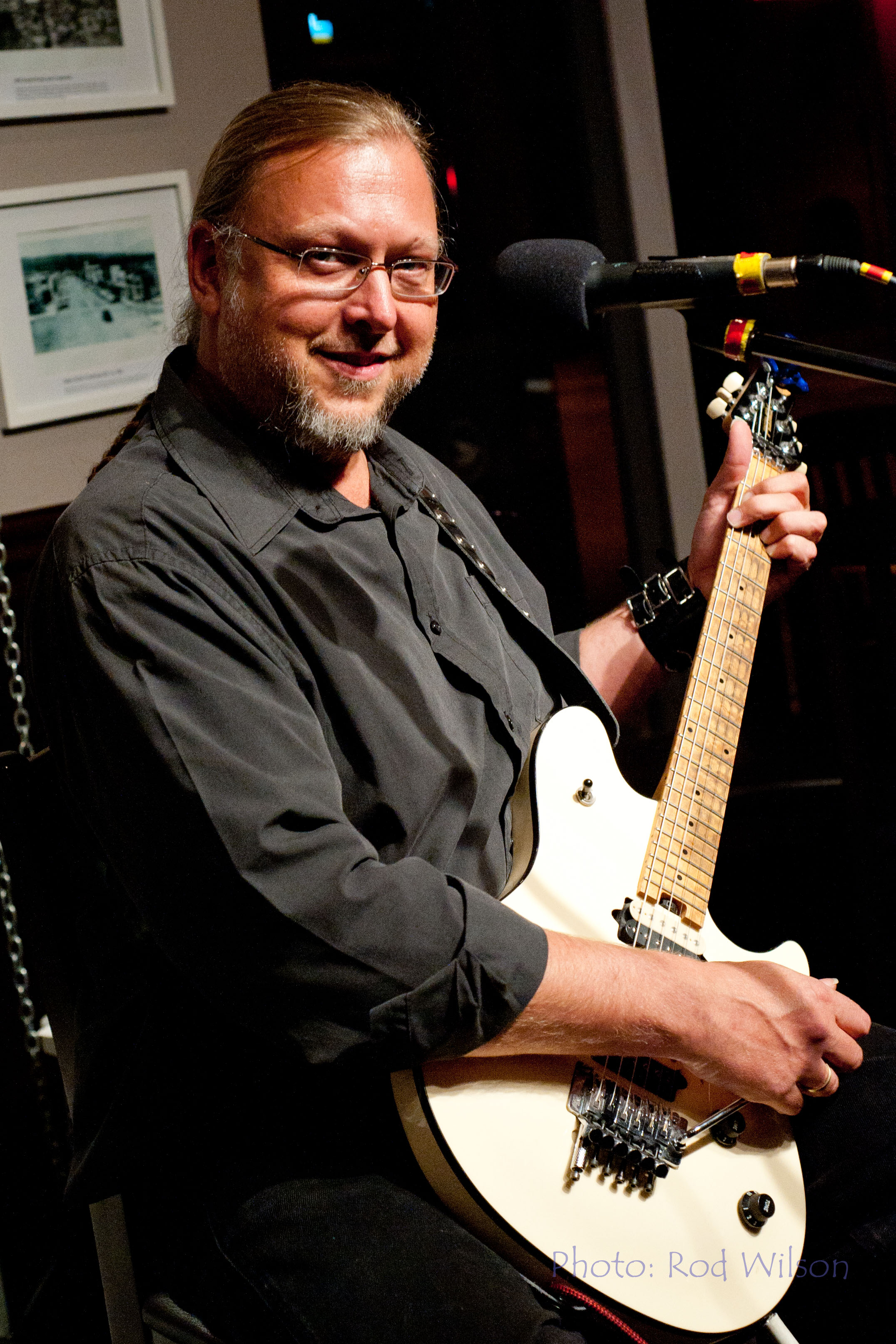
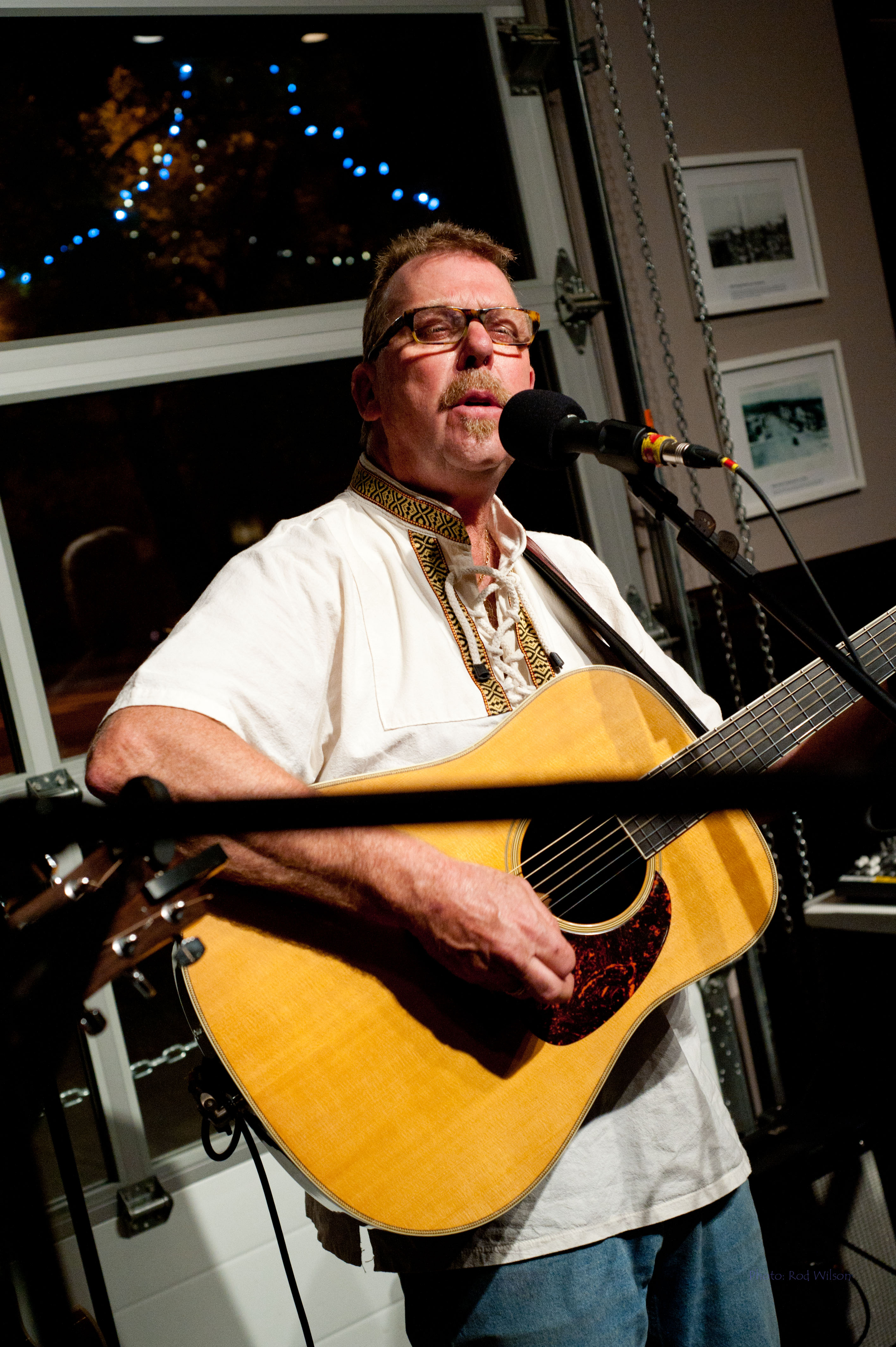
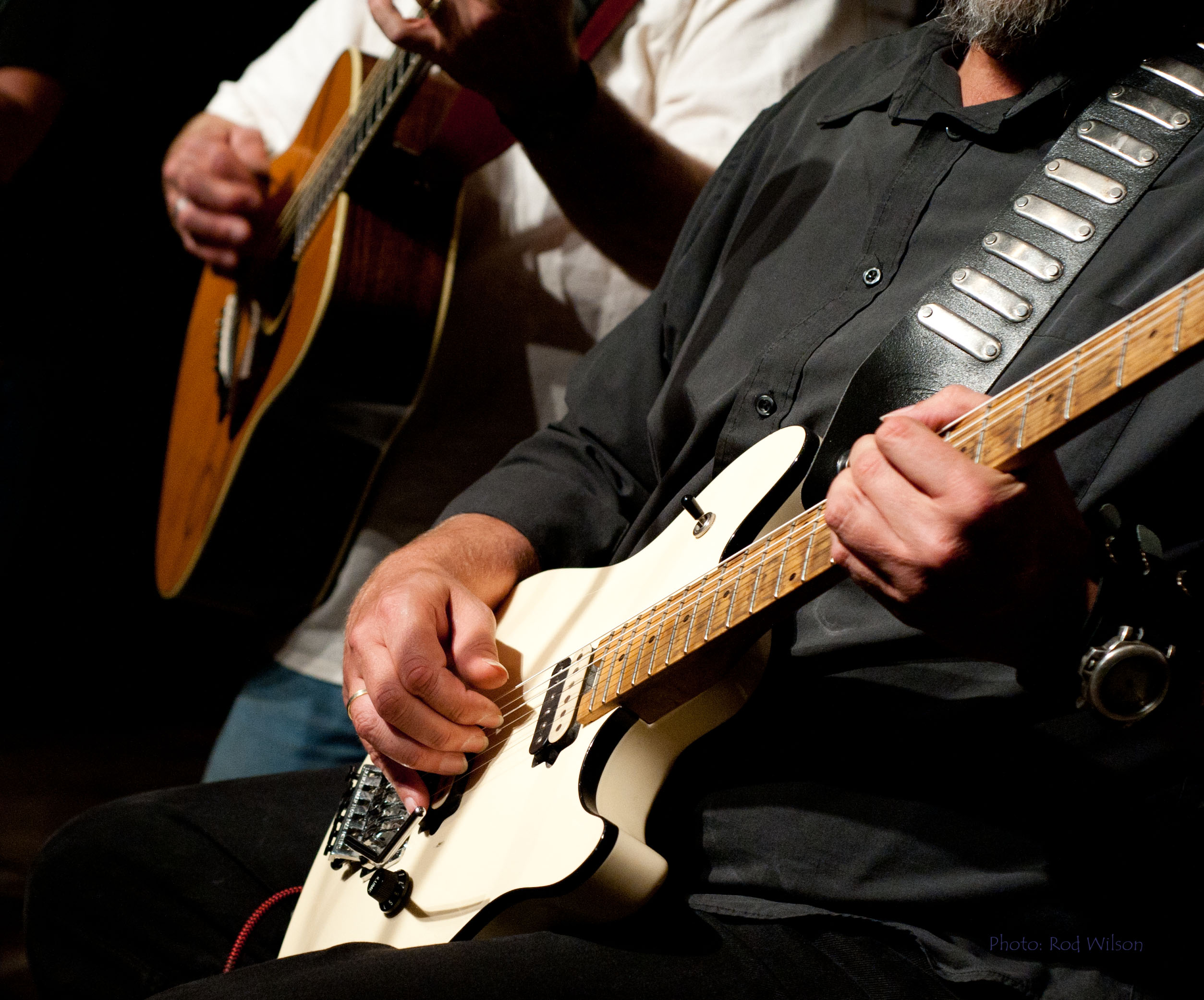
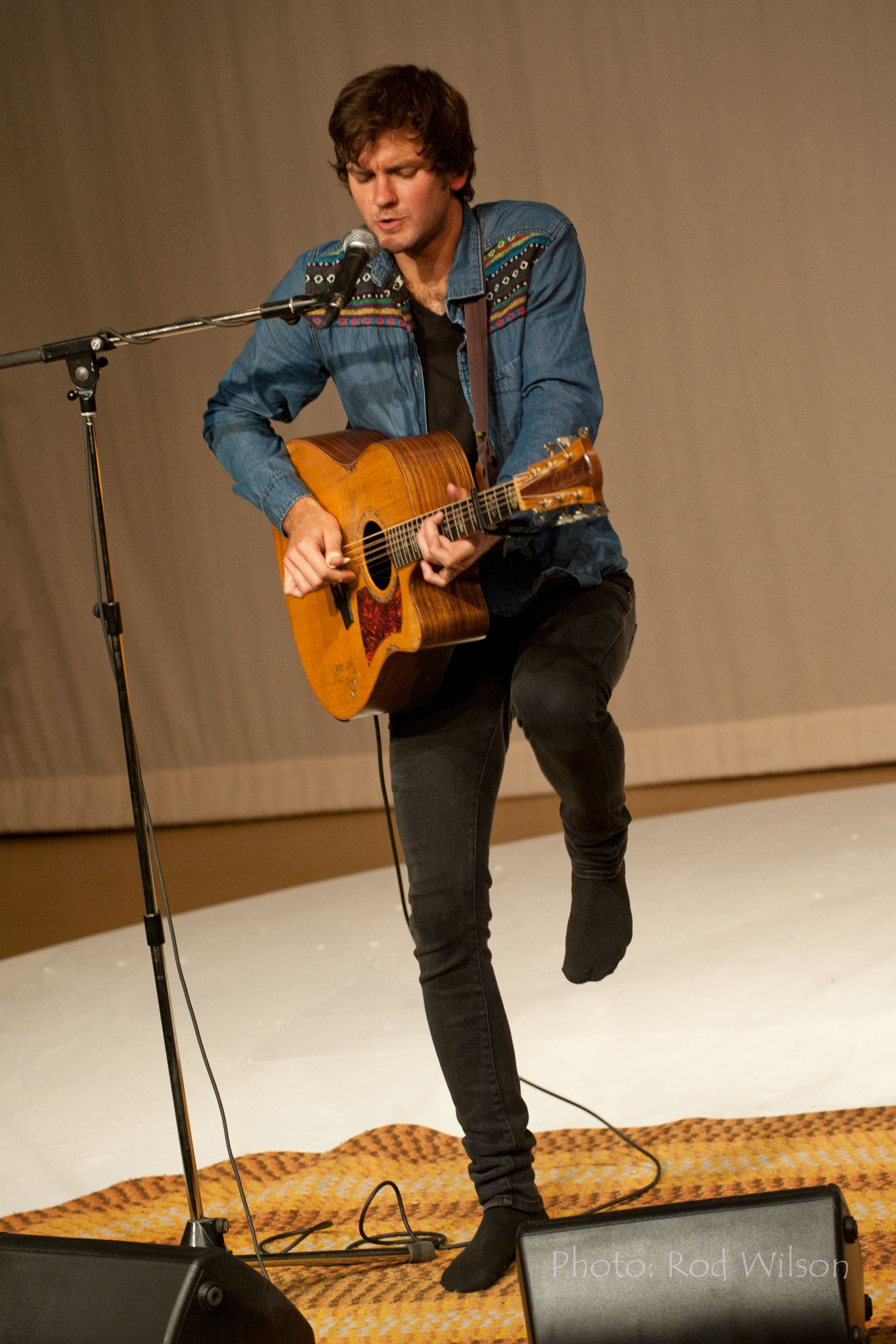
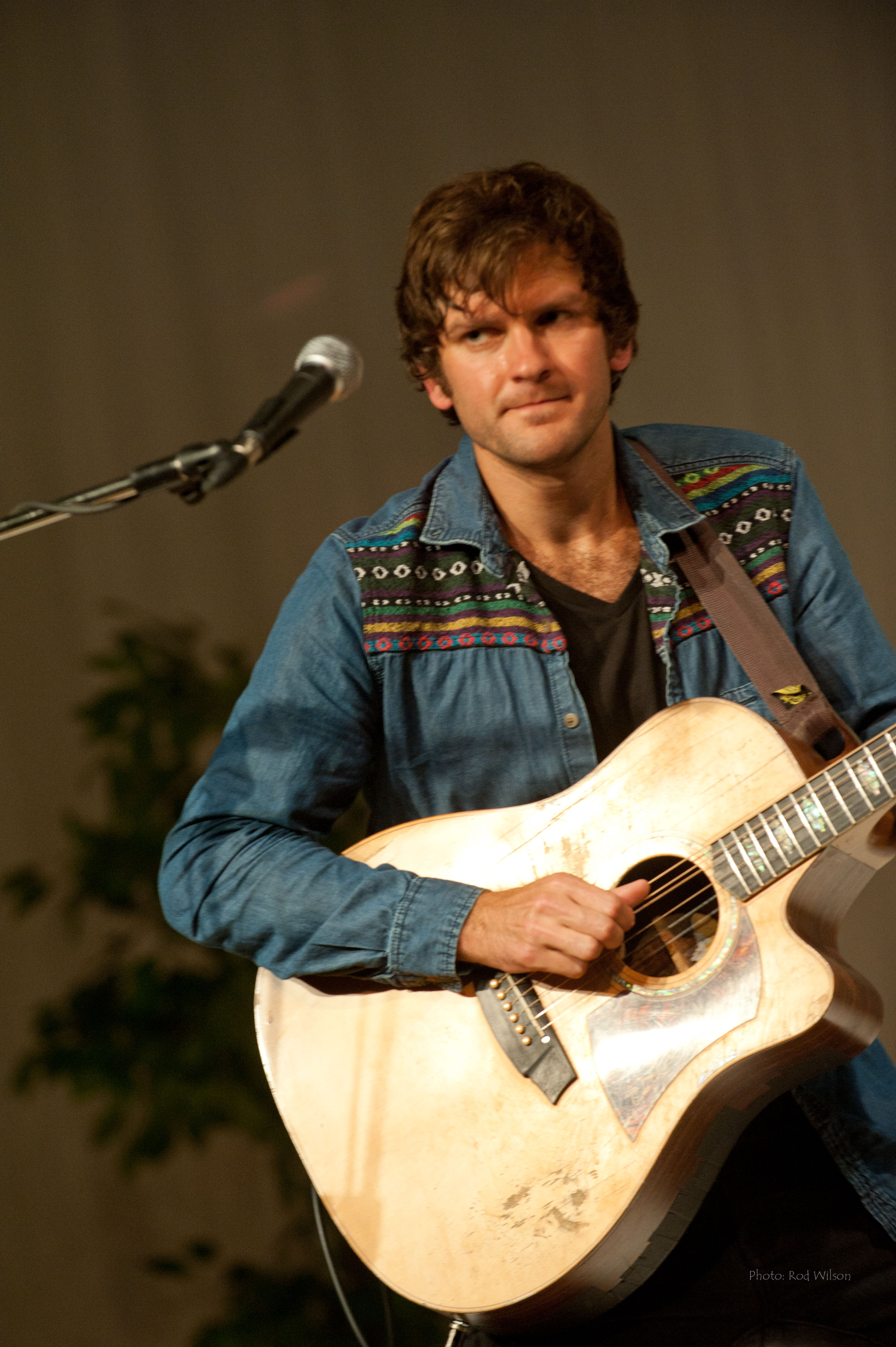
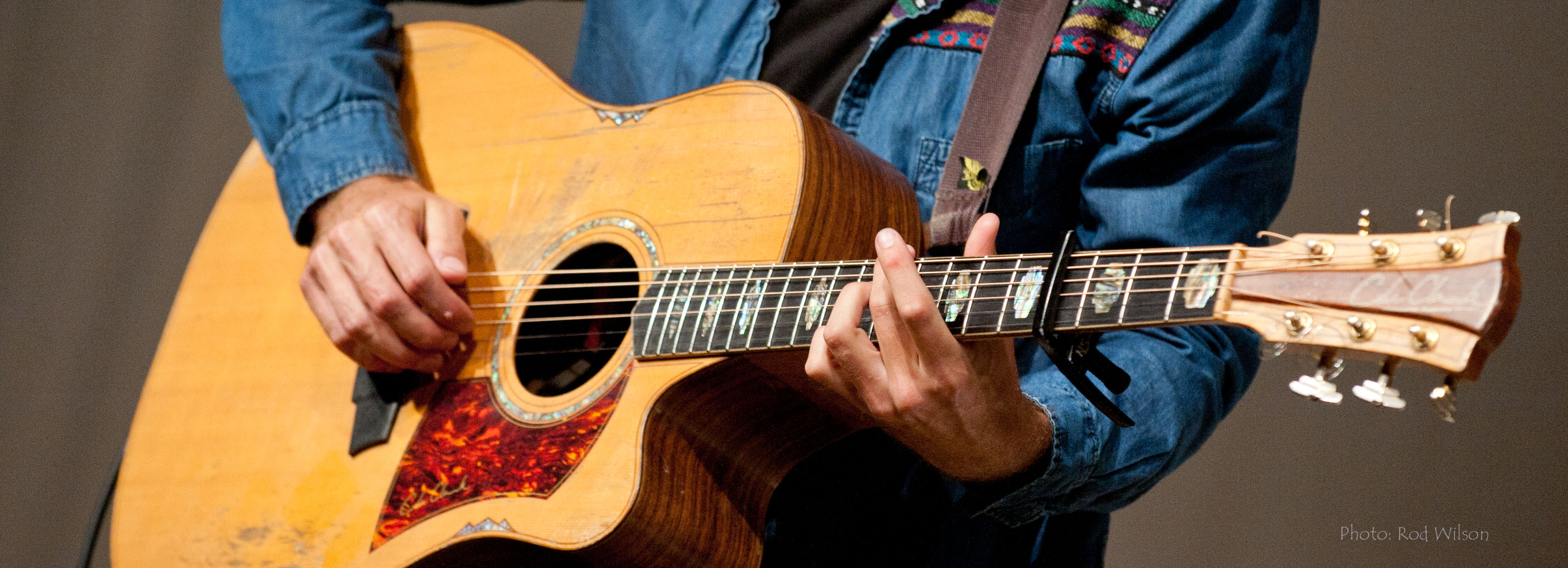
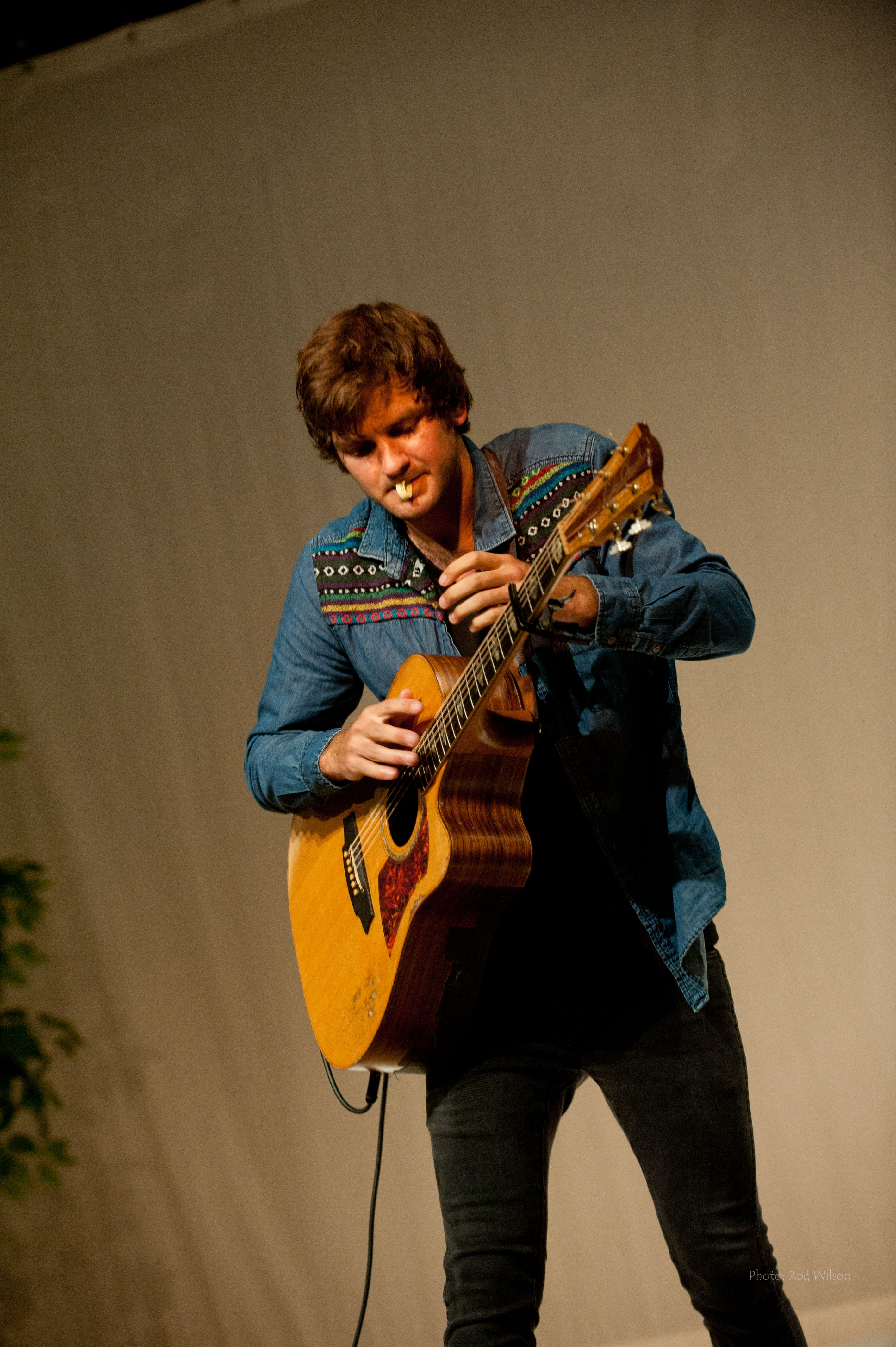
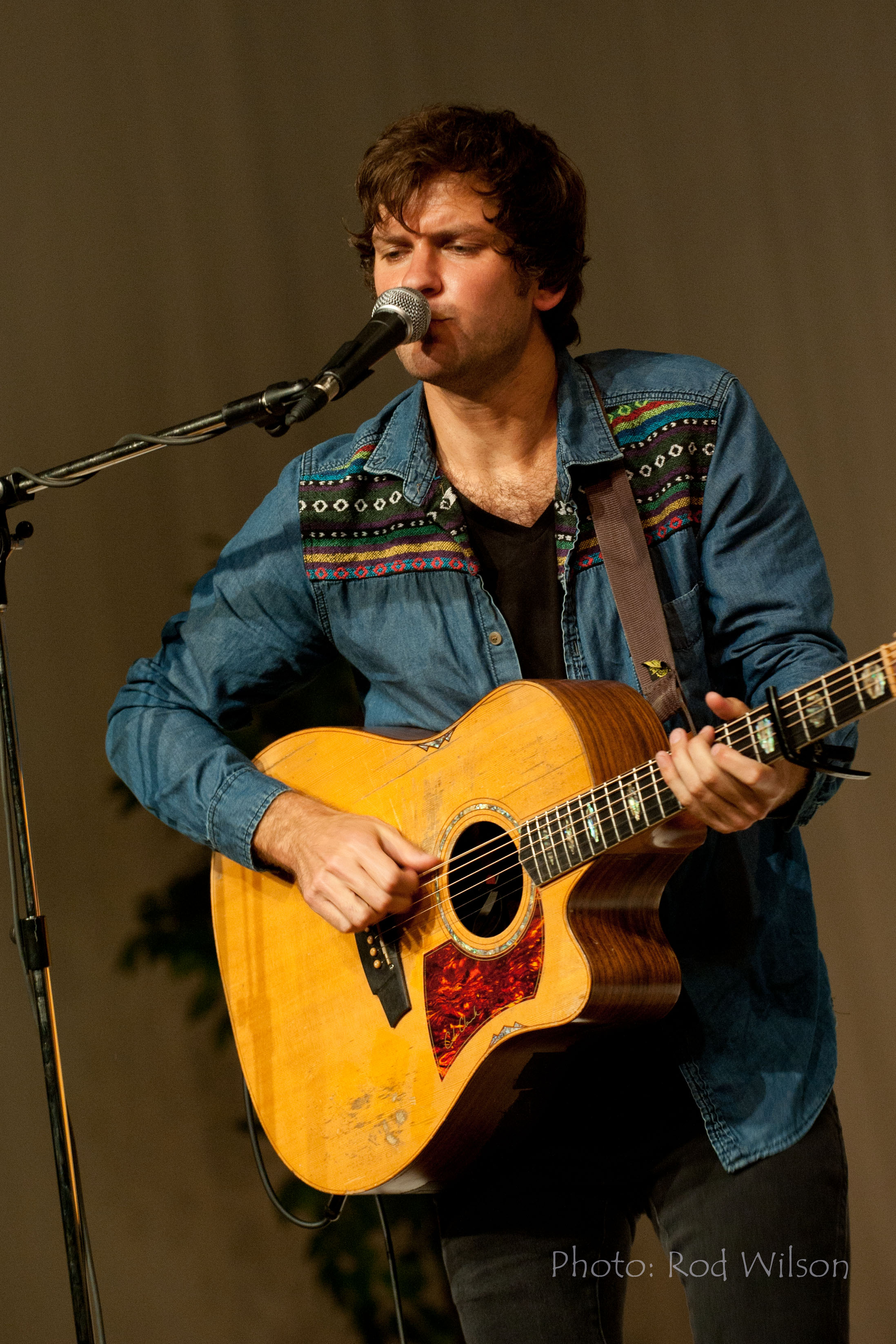
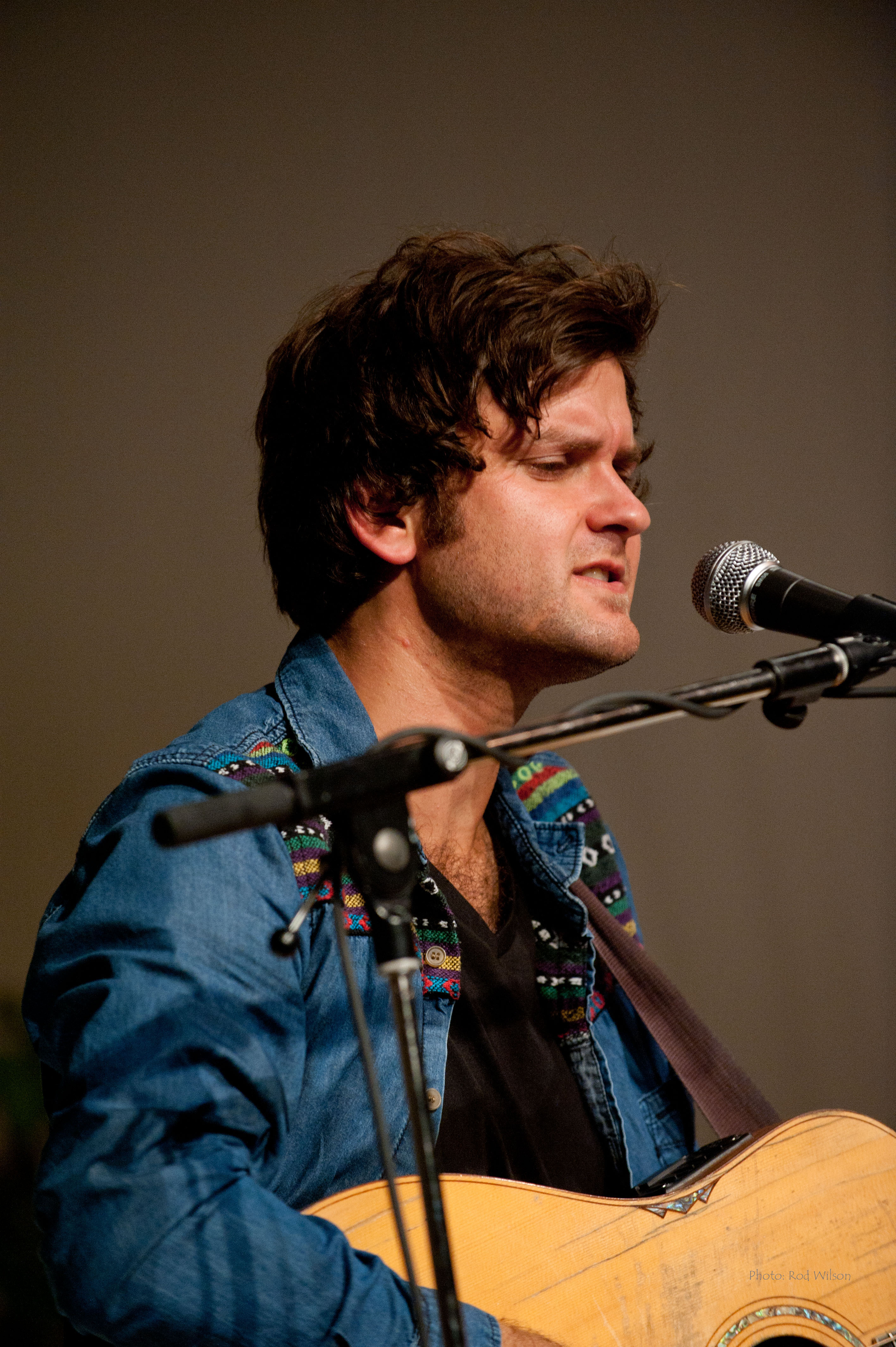
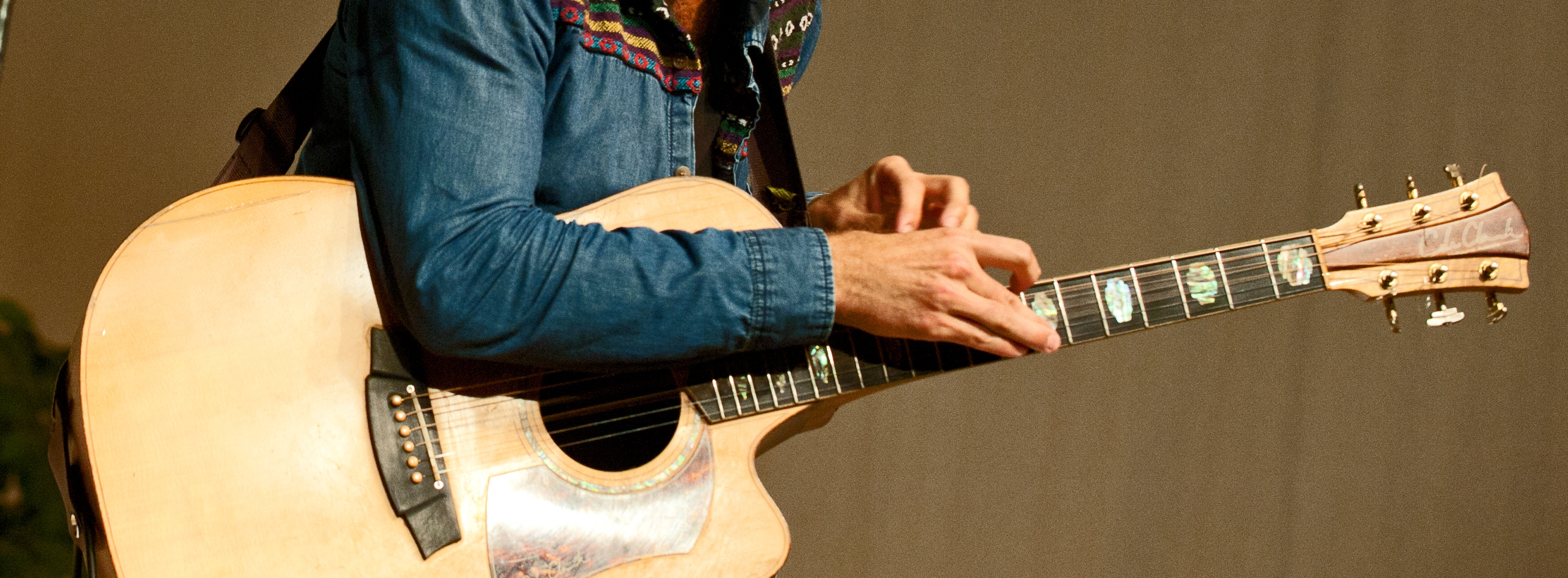
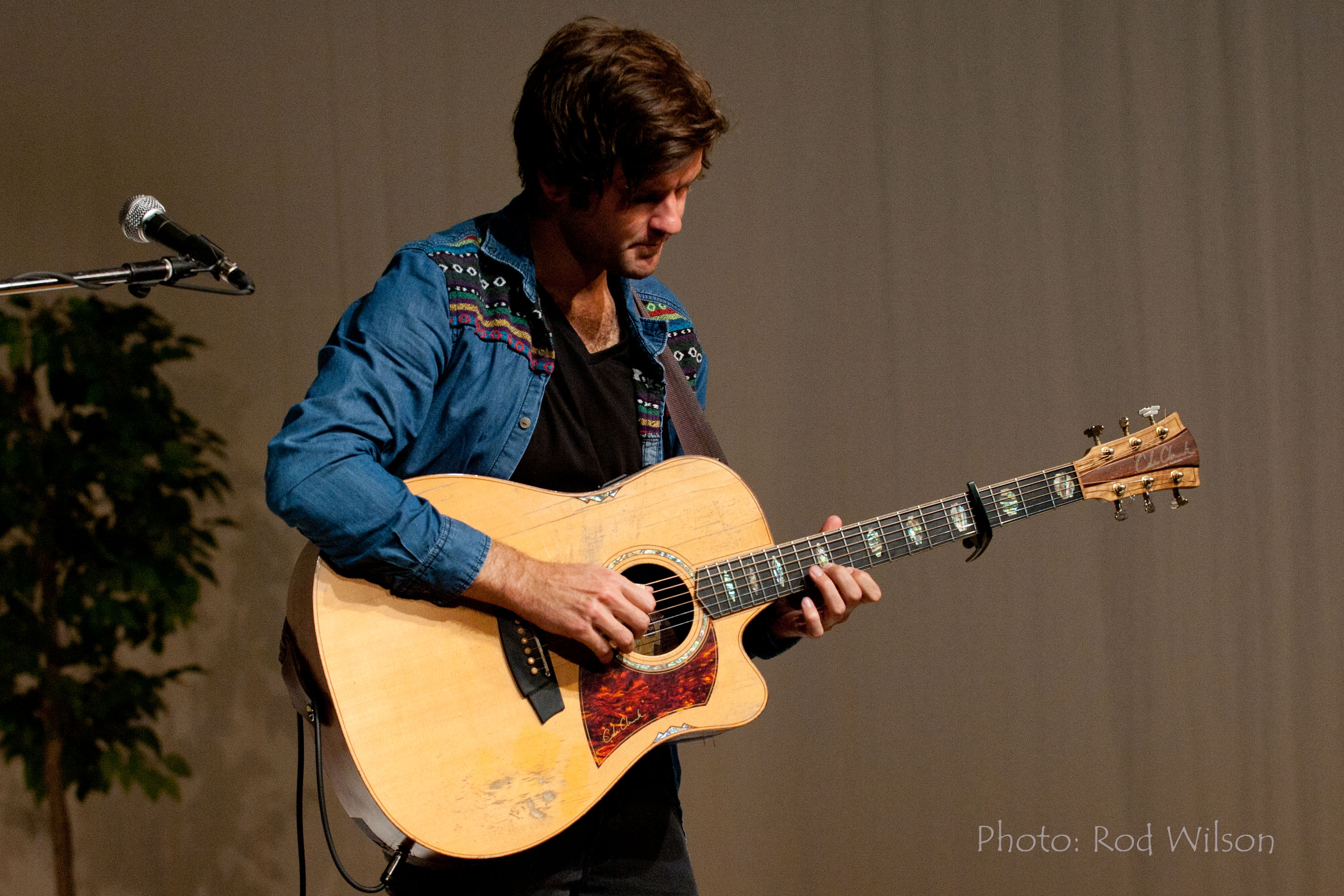
60 HERTZ – THE TRIO at BJs Creekside Pub, Saturday January 24, 2015, 8pm
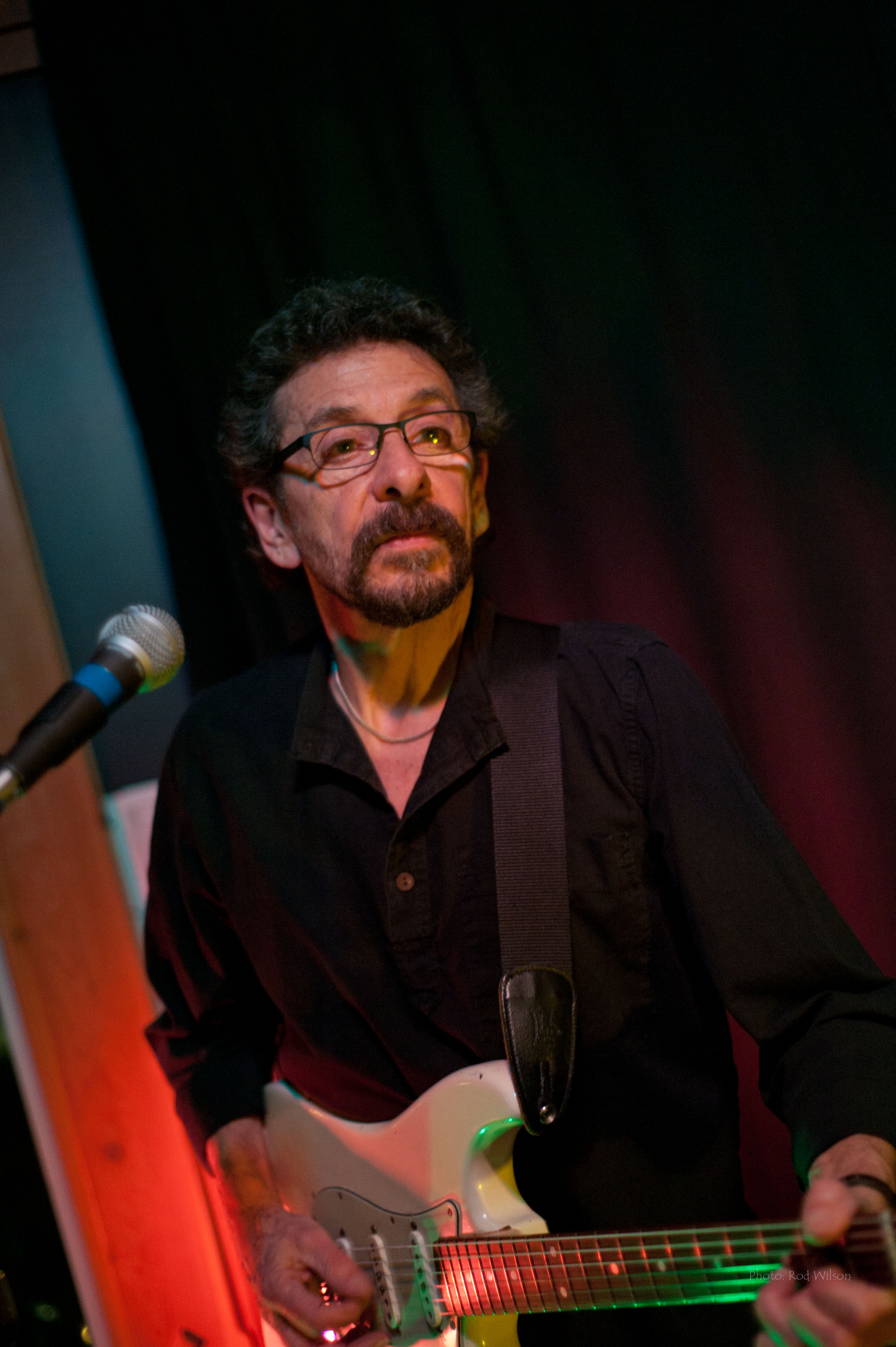
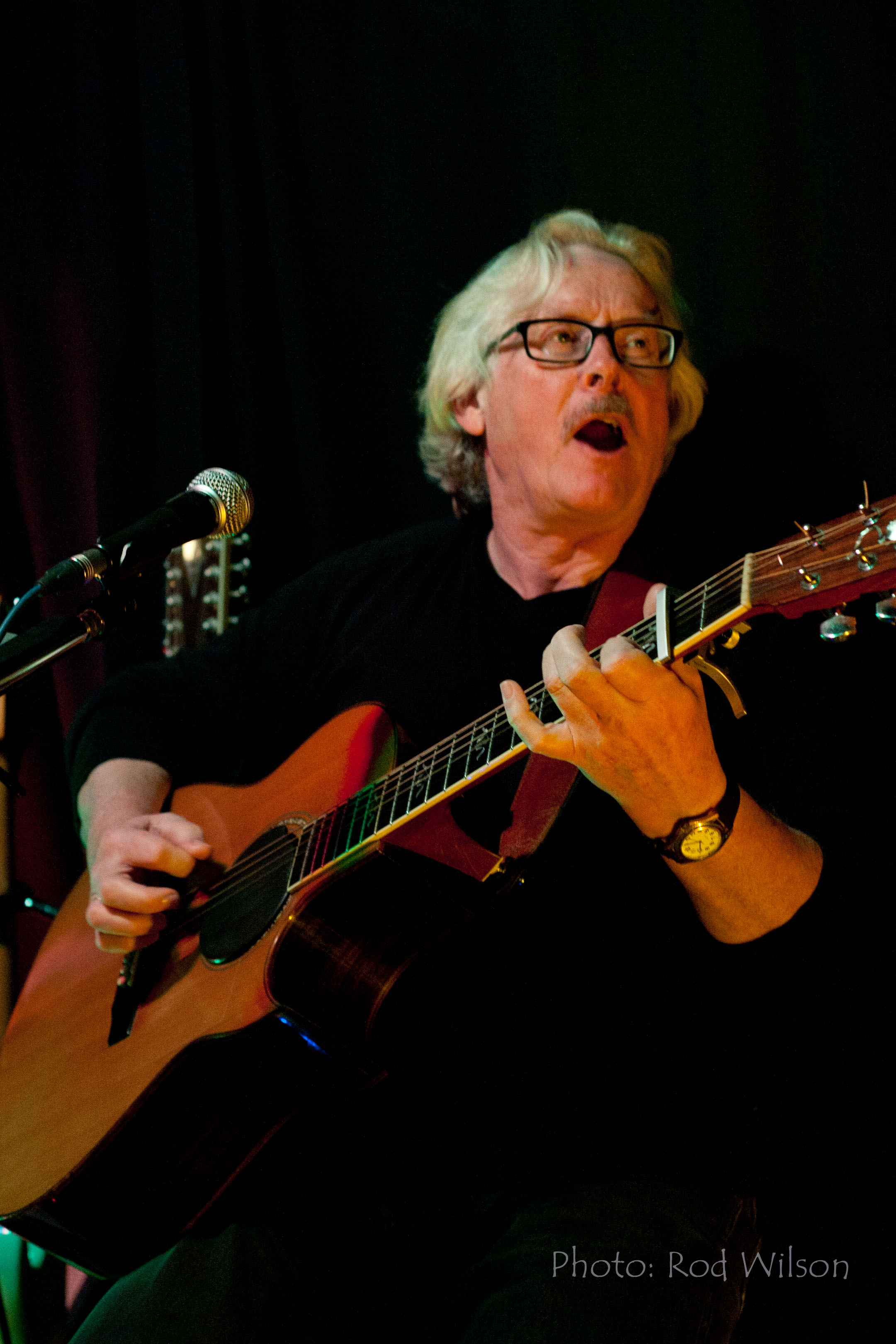
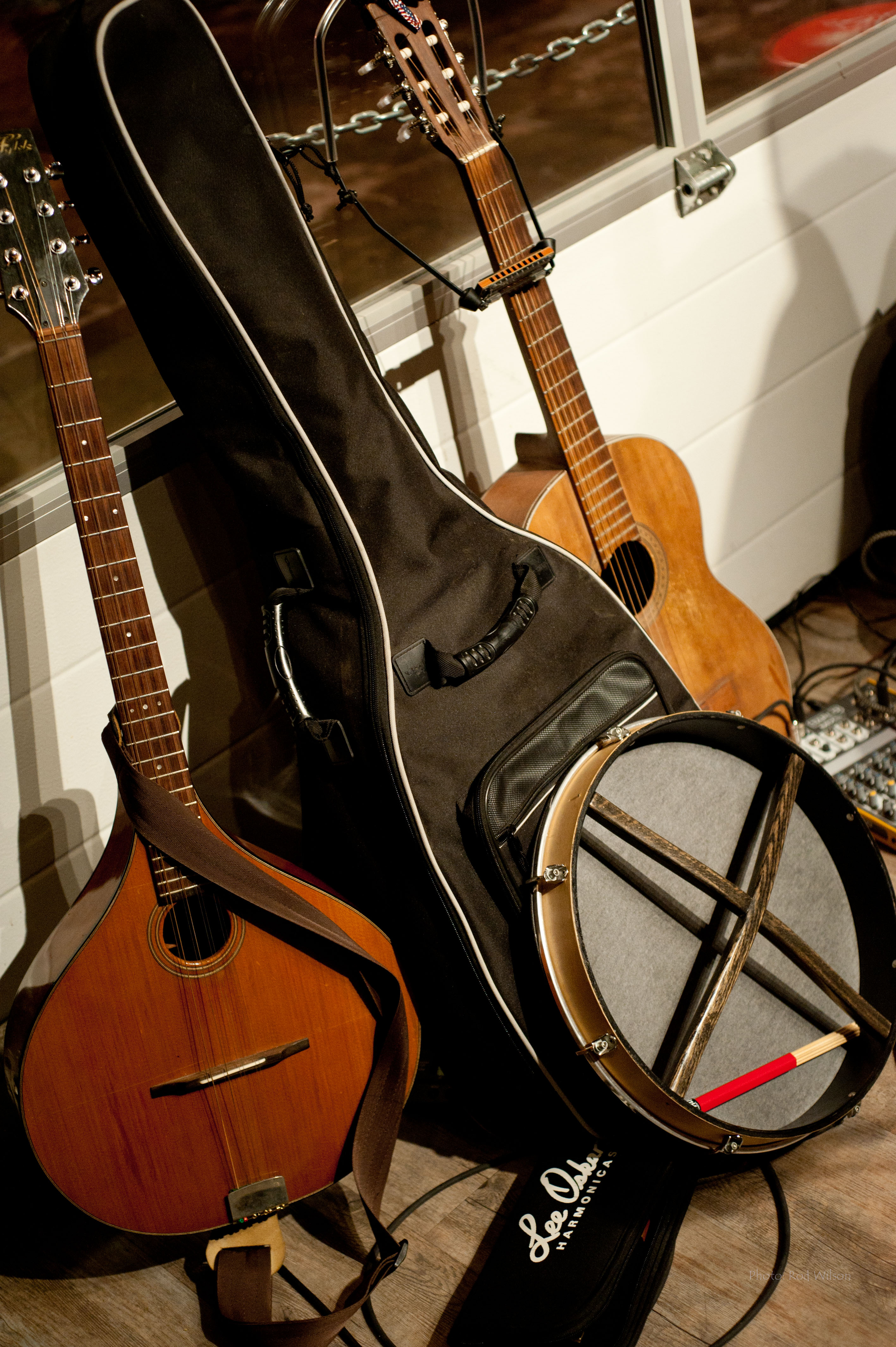
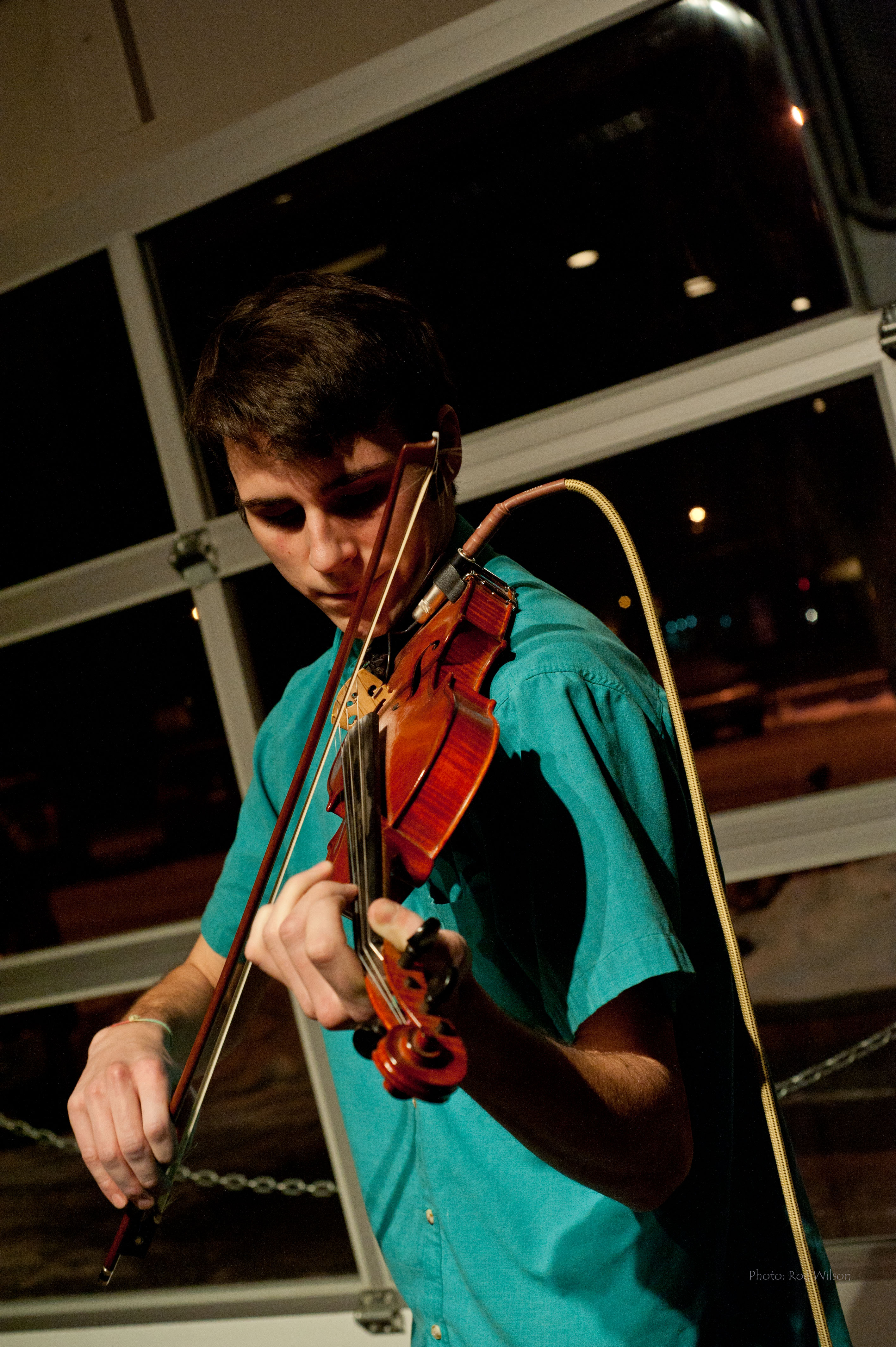
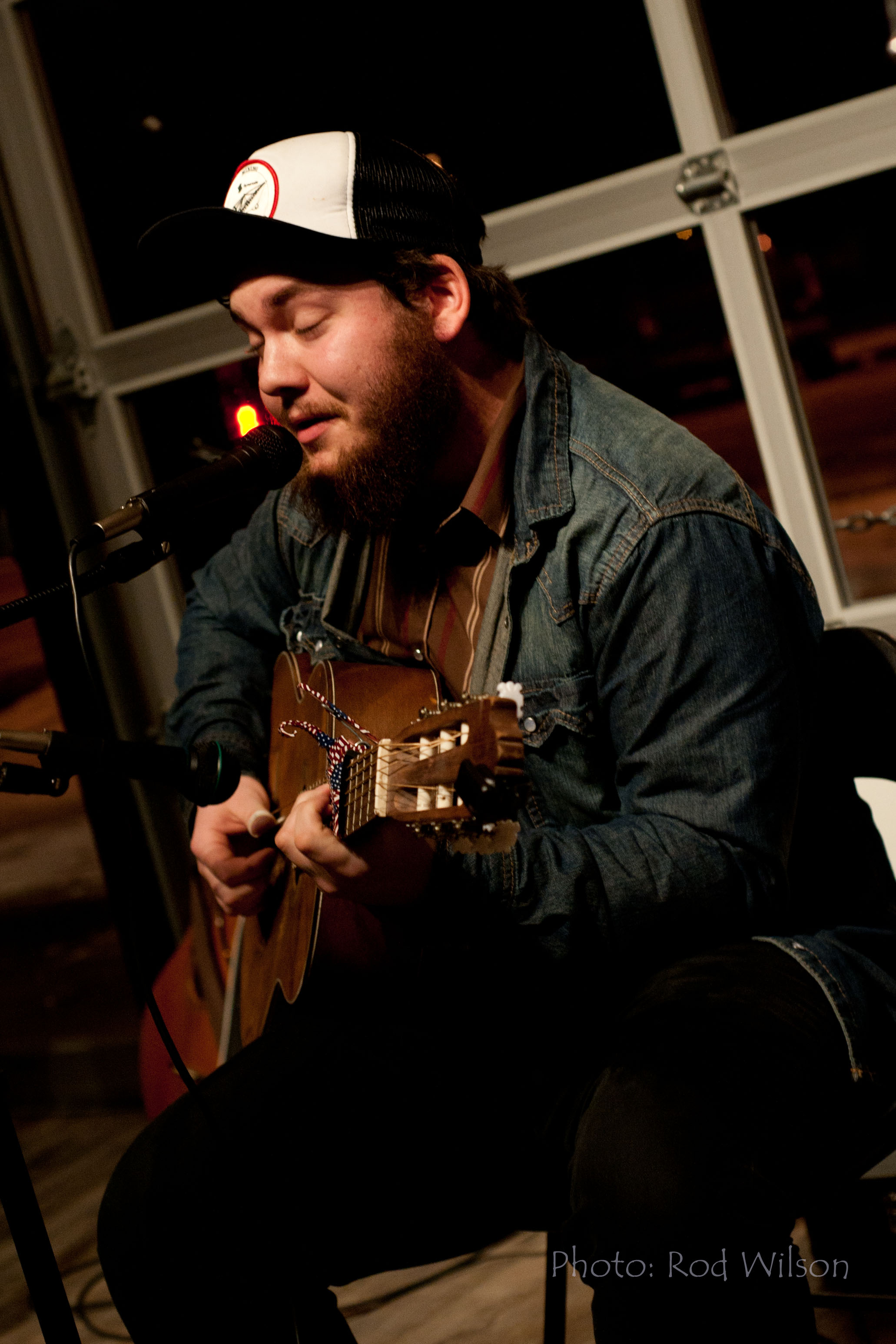
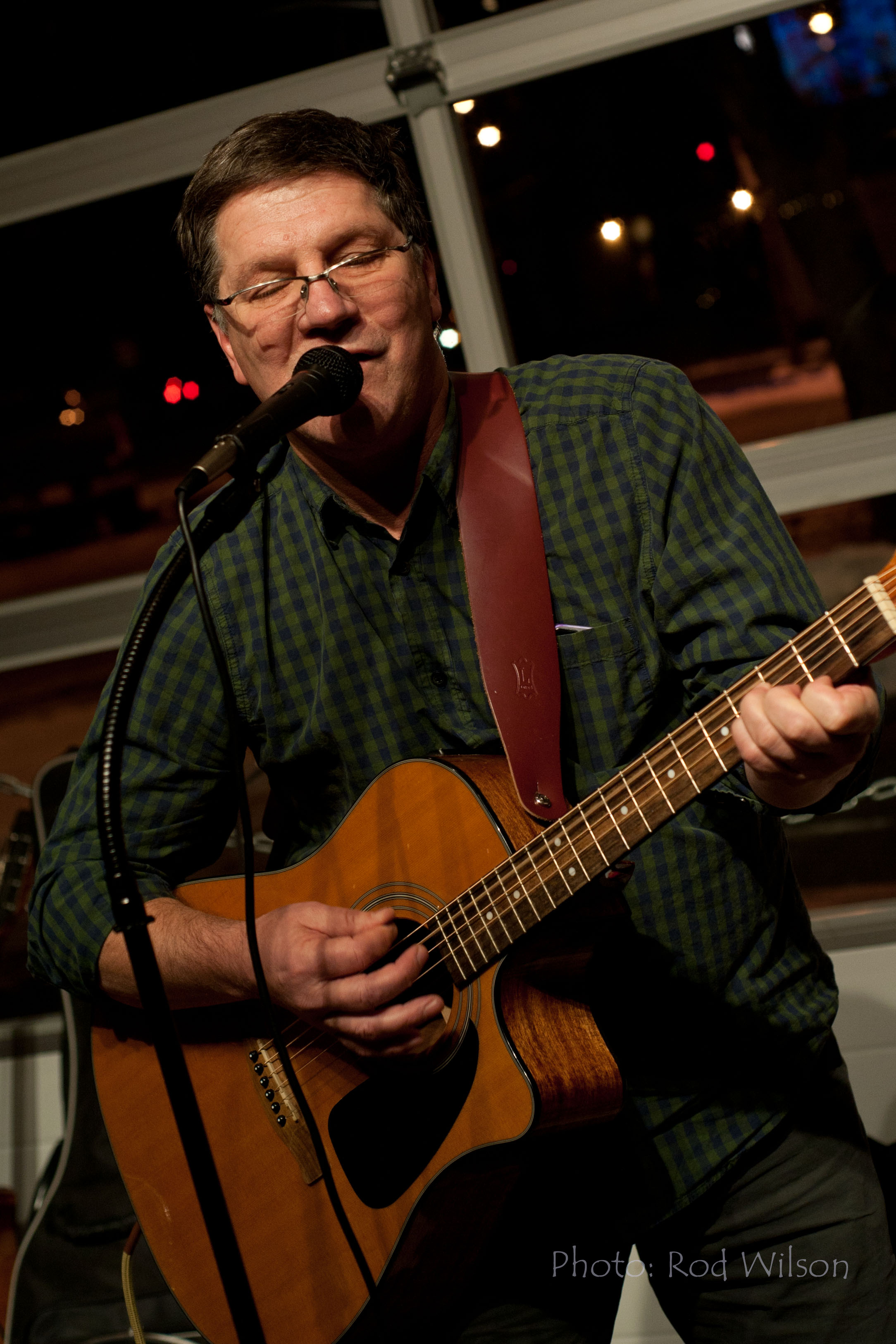
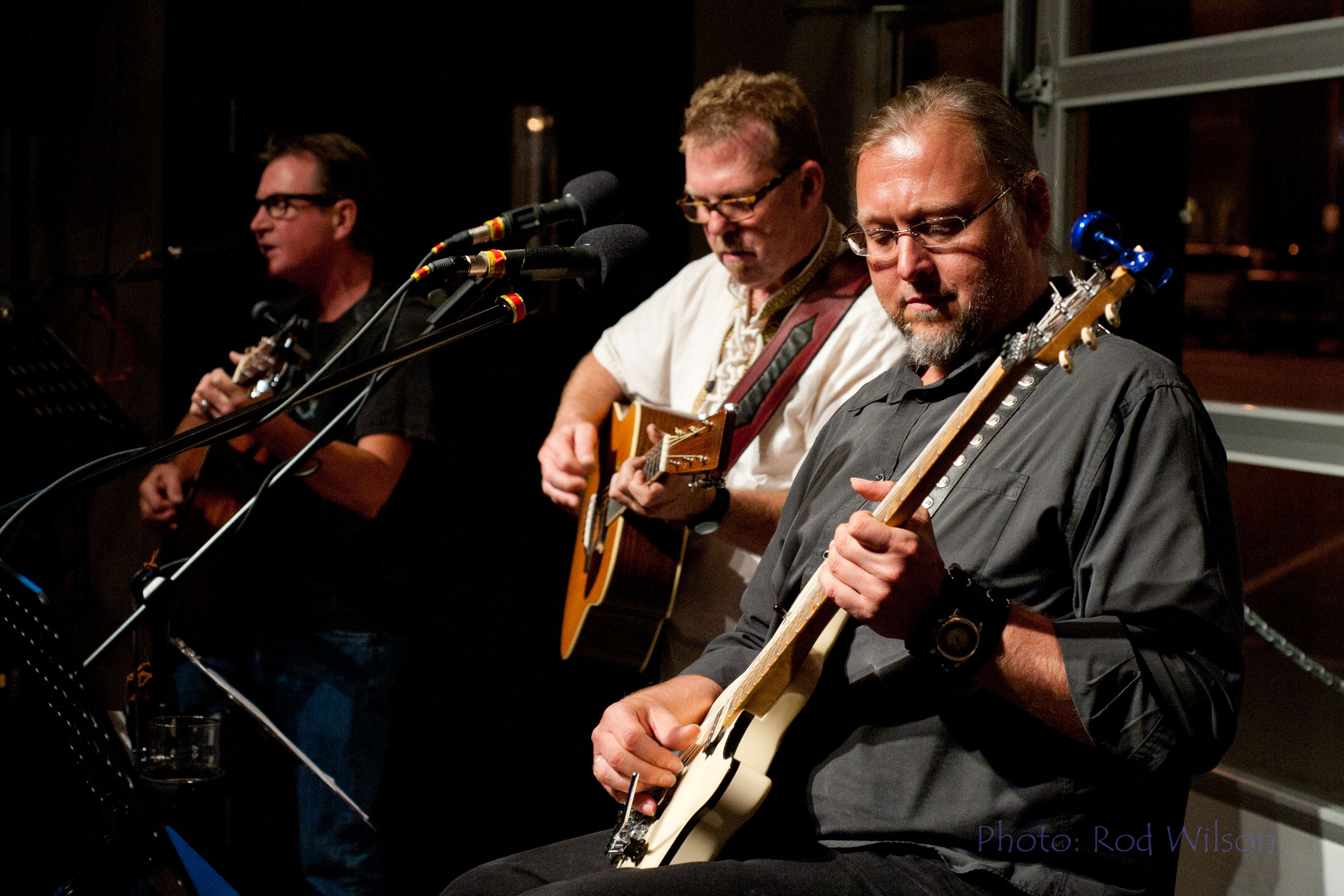
These three musicians, Rob Young (lead guitar, backup vocals), James Neve (singer / songwriter, 6 and 12 string guitars) and Dave Birch (backup vocals and bass guitar) have been playing music together for more years than our adult children have had birthdays. From time to time they have been joined by fine drummers (Gerry Bird, John Seiga or Marty Musser) to perform as your standard folk/rock band. The format may be standard but the music is more than a notch above the run of a mill folk/rock band. The most recent drummer, Marty Musser, who was an exceptionally fine fit for the band, has moved onto other “Pastures of Plenty” and 60 Hertz is back to performing as a trio. Not to worry! On Saturday night at Bj’s Creekside Pub they delivered James Neve’s signature songs with the same tight ensemble performances with Rob Young’s very tasteful guitar leads, Dave Birch’s dancing bass lines and James Neve’s vocals. As always their music on this evening was a cut above almost any other live band you are likely to encounter in the area. Here are some images from another exceptional night of music at BJs Creek side pub.
The Concerto de Aranjuez is a concerto for Classical Guitar and Orchestra that was composed in Paris in 1939 by the Spanish composerJoaquin Rodrigo. It is one of the few modern classical compositions to achieve widespread recognition and popularity. Just about every significant Classical Guitarist of the past fifty years has performed and recorded the piece. Although it is a three movement composition (Allegro con spirito, Adagio and Allegro gentile) it is the second movement with its slow pace, quiet melody and the interplay between the Guitar, Orchestra, Cor Anglias, Oboe and Bassoon that is the most recognized. Since its premier performance in 1940 the second movement has been re-interpreted in a number of non-classical context. The most famous non-classical interpretation is the 1960 Gil Evans / Miles Davis collaboration for the album Sketches of Spain. Over recent years the second movement has had many interpretation from the world of Rock, Jazz (including the Modern Jazz Quartet), Bluegrass (David Grisman Quintet) and Flamenco (Paco de Lucia). It has even been incorporated into film scores (the Grimthorpe Colliery Band in the movie Brassed Off). For me one of the most successful versions of the second movement is by the Jazz Guitarist Jim Hall. Recorded by Rudy Van Gelder at his studios in 1975 it featured three of the most lyrical jazz soloists of that era; Jim Hall on electric guitar, Chet Baker on Trumpet and Paul Desmond on Alto sax. The recording also featured the peerless rhythmic section of Roland Hanna on piano, Ron Carter on Bass and Steve Gadd on drums. Here is an audio YouTube clip.
The piece opens with a pizzicato bass tremolo followed by Jim Hall’s lyrical statement of the theme. Each of the soloists has ample opportunity to do justice to the magnificent melody before the rhythm section kicks in and they explore improvisational possibilities. Chet Baker’s initial statement of the theme confirms the Miles Davis comment: “That melody is so strong that the softer you play it, the stronger it gets, and the stronger you play it, the weaker it gets.” Chet Baker outdoes Miles Davis on this one. Not as well known as Miles, Chet Baker has been a Jazz icon since his early days with the ground breaking Gerry Mulligan Quartet way back in the fifties. Afflicted with a notorious heroin habit he survived many ups and down in his career including a brutal beating by drug thugs who broke all his teeth. This almost destroyed his career and his life. With incredible fortitude he rebuilt his embouchure and technique from scratch. His popularity underwent a resurgence in the 1980’s until his final demise at the hands of drug dealers. He was thrown out of an apartment window in Paris. He died May 13, 1988. Paul Desmond is best known for his contributions to the Dave Brubeck Quartet and the composition Take Five. This was pretty close to his last recording. He was in the final stages of Lung Cancer when he recorded this and he died shortly after in May 30, 1977. Despite his failing health this is an incredible chapter in a remarkable career. Jim Hall was unique in the music industry. Not only was he one of the premier Jazz Guitarists of his generation he was a very stable individual. No abuse problems; no personality problems; married to the same woman all his adult life. If one did no know of his accomplishments one would think he led a very unremarkable life. As this recording testifies that was far from the case. Jim died quietly last year still working and innovating right up to his death. One could write volumes about the rhythm section but the drummer Steve Gadd deserves special mention. Although I have been aware of his reputation for many years this is the first time I have heard him on record. When he enters the sonic landscape of this recording his subtle percussion lifts the recording to a whole new level.
Although this recording was originally released under Jim Hall’s name the release I have been listening to is Together – Chet Baker and Paul Desmond – The Complete Studio Recordings on an EPIC CD 472984 2. I highly recommend the recording for all the tracks that it contains.
A very significant after thought: Although there are many recordings of this composition by many prominent Classical Guitarists the one that has drawn special commendation by none other than the composer himself is the 1991 version by the Flamenco Guitarist Paco de Lucia. Check the YouTube version from the documentary Paco de Lucía-Light and Shade: A Portrait.
We all know the names; Spirit of the West, Ryan’s Fancy, Great Big Sea, The Rankins, Leahy and The Barra MacNeils. These are just some of the names that have become familiar over the years. Spirit of the West came out of Vancouver and were more Rock than Celtic; Ryan’s Fancy, a group of transplanted Irishmen living in Newfoundland; Great Big sea was a Pop/Rock/Celtic band from Newfoundland who dominated the Maritime music scene for more years than one could dare or care to count; Similarly, The Rankins with their signature vocals also had a grip on the scene for many years; Leahy and the Barra MacNeils have always had a significant niche in the Maritime Celtic scene. With the exception of Ryan’s Fancy all of these bands have performed in Cranbrook. Although they haven’t performed in Cranbrook (yet) I think we can safely add Coig to list. Their website (www.coig.ca ) describes them as “Còig ( “Ko-ig”. Scottish Gaelic for ‘five’) as an electrifying line-up of 5 solo acts. Originally formed as a promotional band for the Celtic Colours International Festival, these five award winning performers decided to continue to play as the Còig ensemble whenever possible!
WINNER of the 2014 Canadian Folk Music Award for Traditional Album of the Year
WINNER of the 2014 Music Nova Scotia Award for Traditional/Roots Recording of the Year.
The band consists of Colin Grant – fiddle; Darren McMullen – guitar, mandolin, banjo, bouzouki, whistles, vocals; Rachel Davis – fiddle, vocals; Chrissy Crowley – fiddle and Jason Roach – piano
Fiddler Chrissy Crowley, from Margaree, Cape Breton has an impressive list of awards, nominations, and international appearances. Chrissy embraces her Celtic roots and makes them her own, through original compositions coupled with contemporary arrangements of traditional tunes.
Darren McMullen, from Hardwood Lands, NS, is a highly sought after multi-instrumentalist. Easily switching between guitar, mandolin, whistle and banjo with Còig, this “Swiss-army knife” keeps the rhythm sound diverse, and is sure to impress with his lead playing of his various “on-stage weapons”.
Rachel Davis from Baddeck, Cape Breton spends her time switching from international festival stages to small local dances at home. In a genre that sees many performers pushing the envelope and testing new waters, her style of playing traditional tunes in a traditional way is a refreshing reminder of why the Cape Breton fiddle style drives so hard, and is so sought after.
Colin Grant from Sydney, Cape Breton has been touring steadily as a solo performer, as well as with Sprag Session. His respect for traditional style, combined with his drive to take the Celtic fiddle to new places results in an exciting sound that is as much Buddy MacMaster as it is Ashley MacIsaac
Jason Roach, from Chéticamp, Cape Breton is one of the most impressive piano players you will ever hear. With a style all his own, and an unparalleled intensity on the keys, you’ll have to remind yourself that there’s other players on the stage.
With a combined total of over 30 nominations and awards, each of Còig’s talented musicians have released their own successful solo albums, and have toured both at home and abroad before coming together as this exciting super group. Their much anticipated debut album “Five” was released in June, 2014 to rave reviews, and has earned the band the 2014 Canadian Folk Music Award for Traditional Album of the Year, and the Music Nova Scotia award for Traditional/Roots Recording of the Year”.
The band is a little different from Canadian Celtic bands of recent years. Coig is essentially an instrumental band of musicians steeped in the instrumental traditions of Cape Breton. Their does not seem to be any attempt or intent at crossing over into the Pop/Celtic mainstream. Here is a taste of Coig, and remember that in Cranbrook you heard it here first.
I would like to thank Angus MacDonald for bringing these sounds back to us from his recent visit to Prince Edward Island.
The Kitchen Party at the Heidout, hosted by Angus MacDonald and Angus Liedtke, Sunday December 21, 2014, 5pm.
Angus MacDonald (fiddle) and Angus Liedtke (vocals, guitar, harmonica) are two young Cranbrook musicians who, in the fall, headed down east to Holland College in Prince Edward island. Their quest was for more education and work related skills for a career in music and business. Naturally at Christmas they wanted to be back here it town to celebrate the season amongst friends and family. Part of the planned celebrations was a KITCHEN PARTY at the Heidout in Cranbrook. That was just an excuse to gather together their musical friends and have some fun. The night was kicked off by LEATHER BRITCHES (Angus MacDonald – fiddle; Will Nicholson – guitar and Rod Wilson – Irish Bouzouki) reprising some of their standard repertoire that included The Dr Shaw Set, and The Graduation Set. Angus Liedtke had spent the last four months polishing his song writing skills and judging from his first set it has been time well spent . What a Sorrow – a song about an old couple who lived in the woods and one day the wife dies and the old man has to bury her and deal with his grief; Pack of Cigarettes – a friend’s experience with heartbreak; You gave it your Best – a song about Louis Riel that started out as a song writing challenge by a friend. From there on the music just flowed from Steven Knowles (guitar and vocals), Blake Nowicki (electric guitar and vocals) and Justice Jones (guitar and vocals).
Angus Mac and Angus L were not the only lads back in town. Young country musician Connor Foote has been away for a while and he was back in town to hook up with his his musical compadre Clayton Parsons. They played a bracket of tunes from the good ol’ days in their band Gold Creek. Clayton had recently turned his hand to building guitars and now has also started playing the dobro (such a sweet sound).
After the young lads it was time for the “old” guys to add some of their solo performances to the evening. Tom Bungay, (guitar and vocals) pulled some songs from his immense standard repertoire; Mark Casey (guitar and vocals) obliged with some songs that included a special request for a Kinks song. Rod Wilson (cittern and vocals) obliges with some new tunes fresh from the press (so to speak) that included the Malachi Set (Malachi / Bondi Junction / The Heid Out), some older tunes (The Train Set – Come by Chance / The Train Stops Here / Sad Arrival on the Orient Express) and for good measure and old Irish ballad The Nightingale.
The two hosts returned to the stage to round out the evening. Angus Liedtke cruised though one song, Dressed in Red, in an imaginative Mexican scenario with his girlfriend before finishing up his set with with Hearts of Fire and This Old Bed (an ode to high school days in Cranbrook). Angus MacDonald set the place on fire with a bracket of extended tunes that he has gleaned from the traditional music sessions in PEI. The first set included Gordon Duncan’s Tune / Christy Crowley’s / Superfly; the second set Marie Hughes Jig (from Tim Chaisson) / Dan Collins Farther’s Jig / Don MacKinnon’s Reel / and a reel from Brenda Stubbert. The not too gentle rhythmic stamp of feet that accompanied this bracket of tunes was a real joy to hear.
Here are the money shots from the evening – Angus MacDonald and Mark Casey.
Before he leaves town Angus MacDonald will be back with more down east fiddle music with Leather Britches at the Heid Out on January 9, 2015 6:30 pm.
@@@@@@@@@@@@@@@@
ONCE MORE WITH FEELING
As promised Leather Britches returned to the Heid Out on January 9, 2015, 6:30 – 9:30 pm for some more down- east fiddle music prior to Angus MacDonald’s return to PEI for the spring semester at Holland College. Here a couple of images of William Nicholson and Angus from the evening:
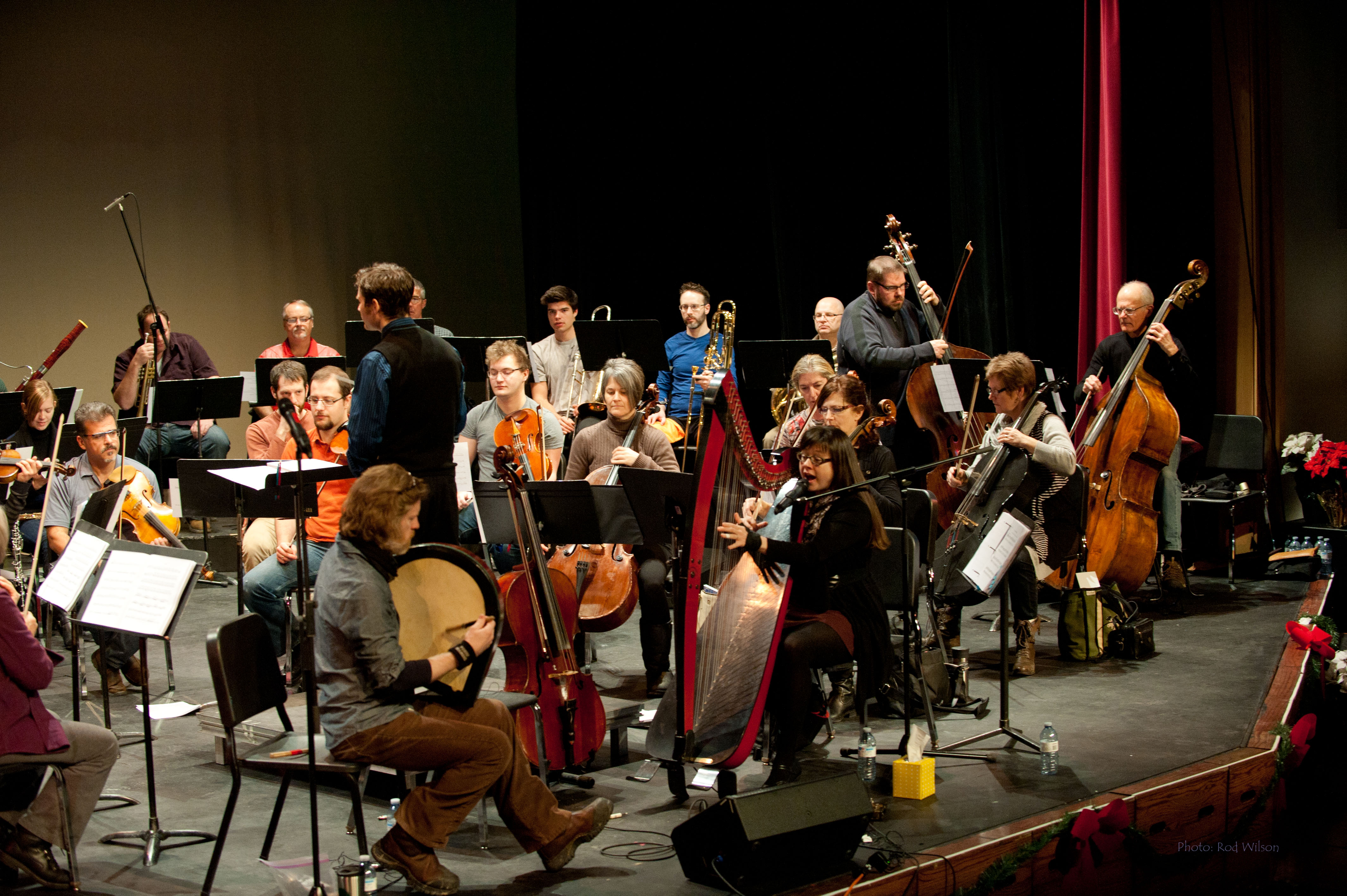
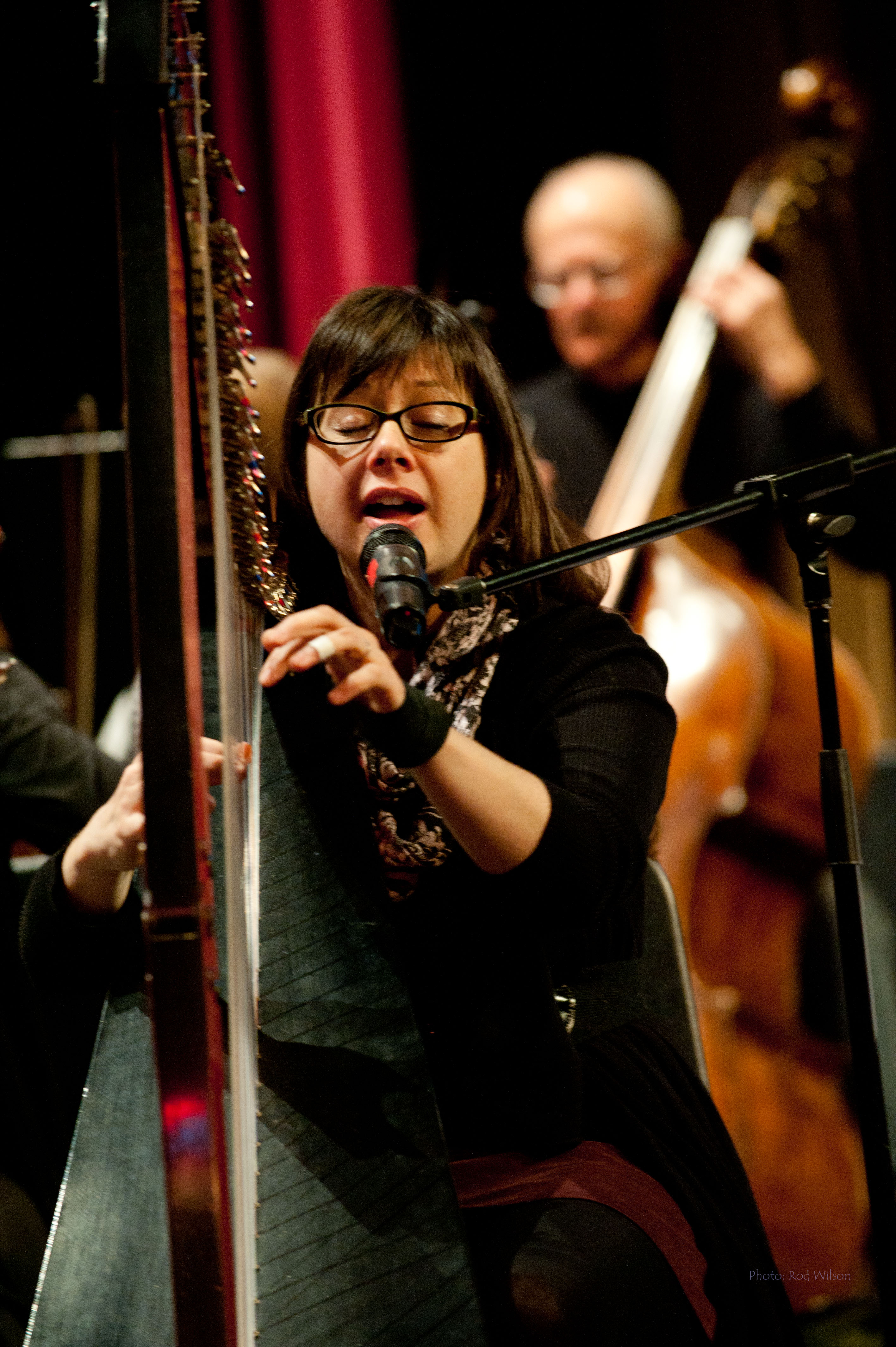
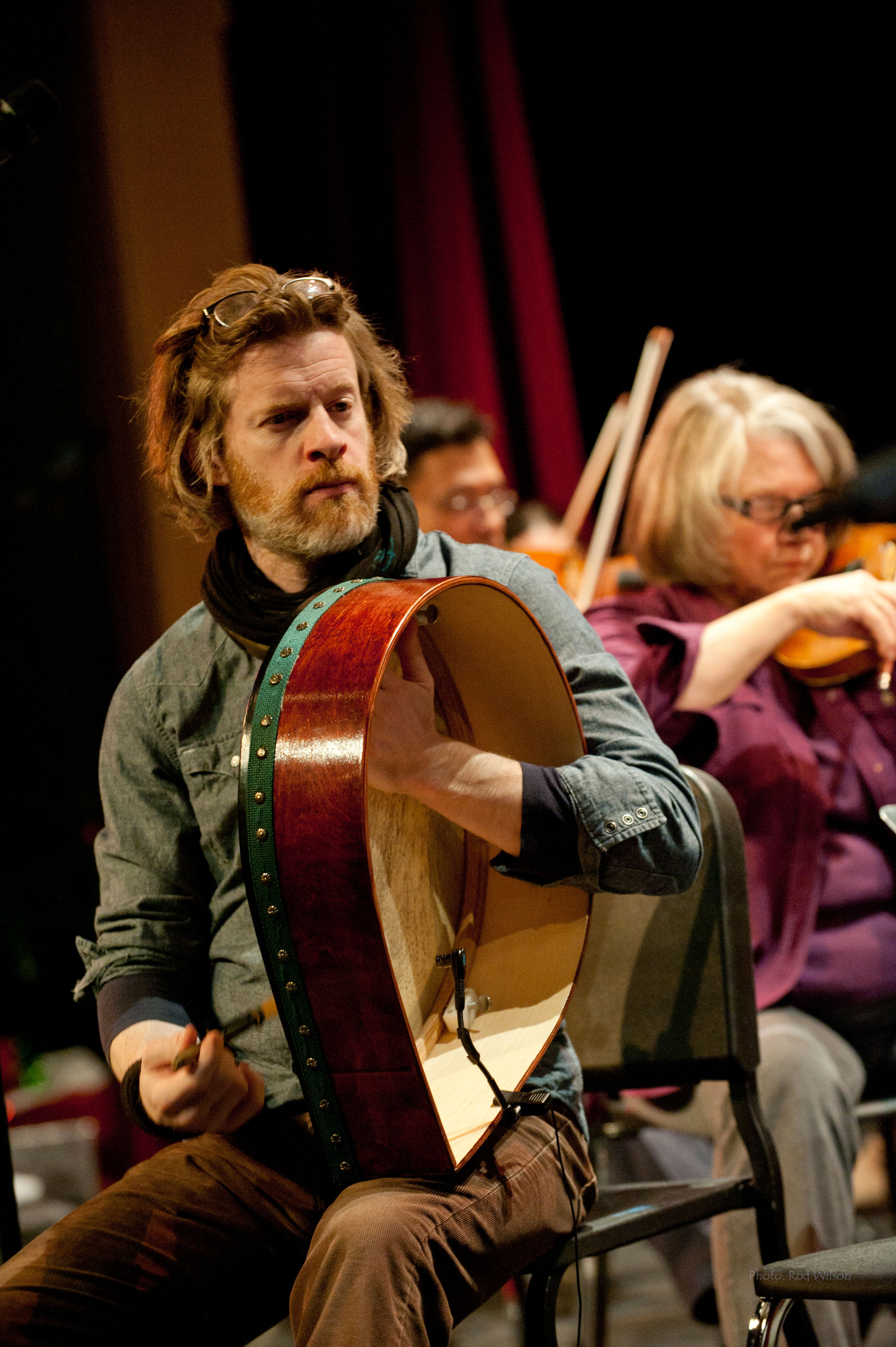
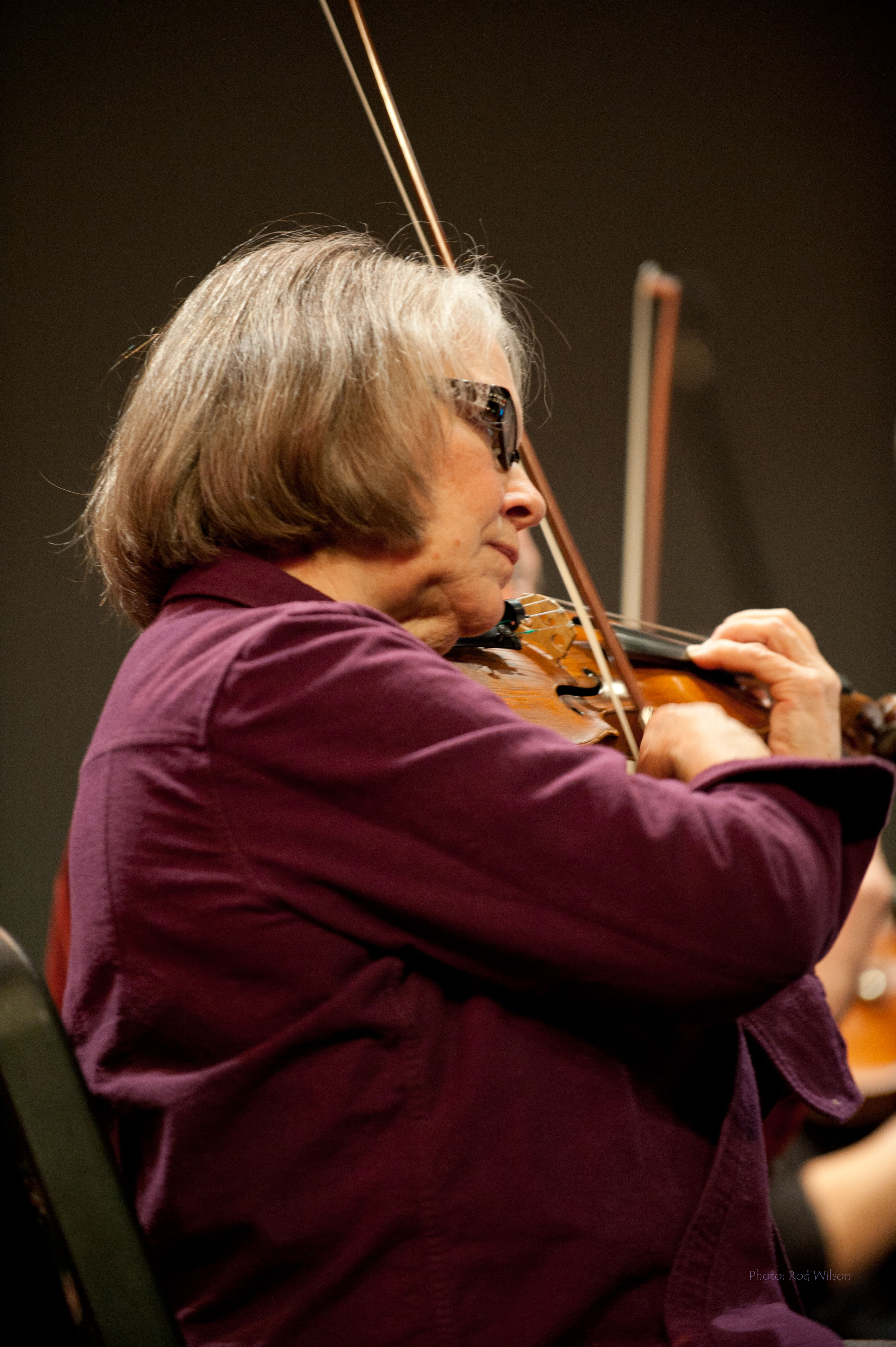
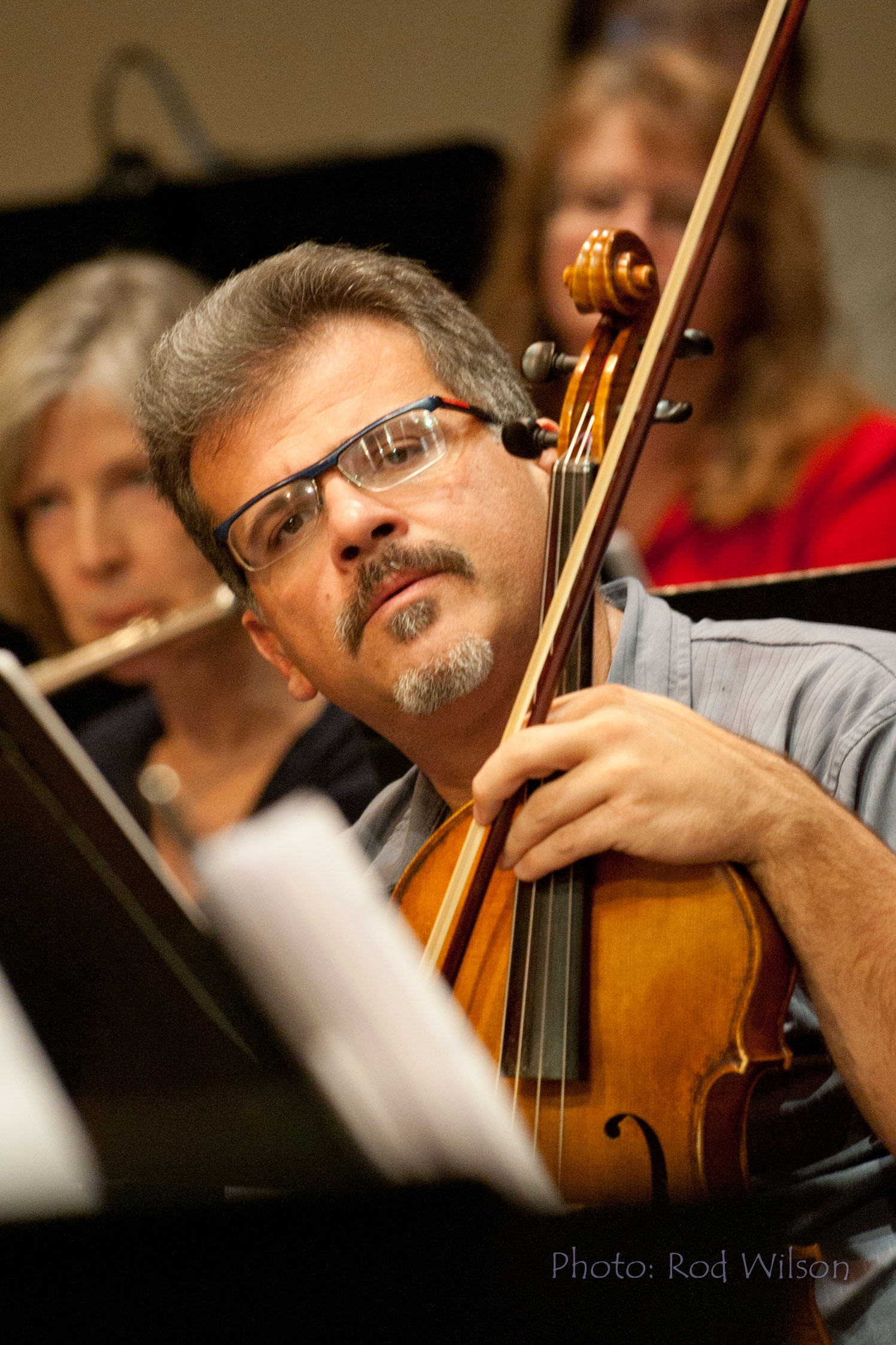
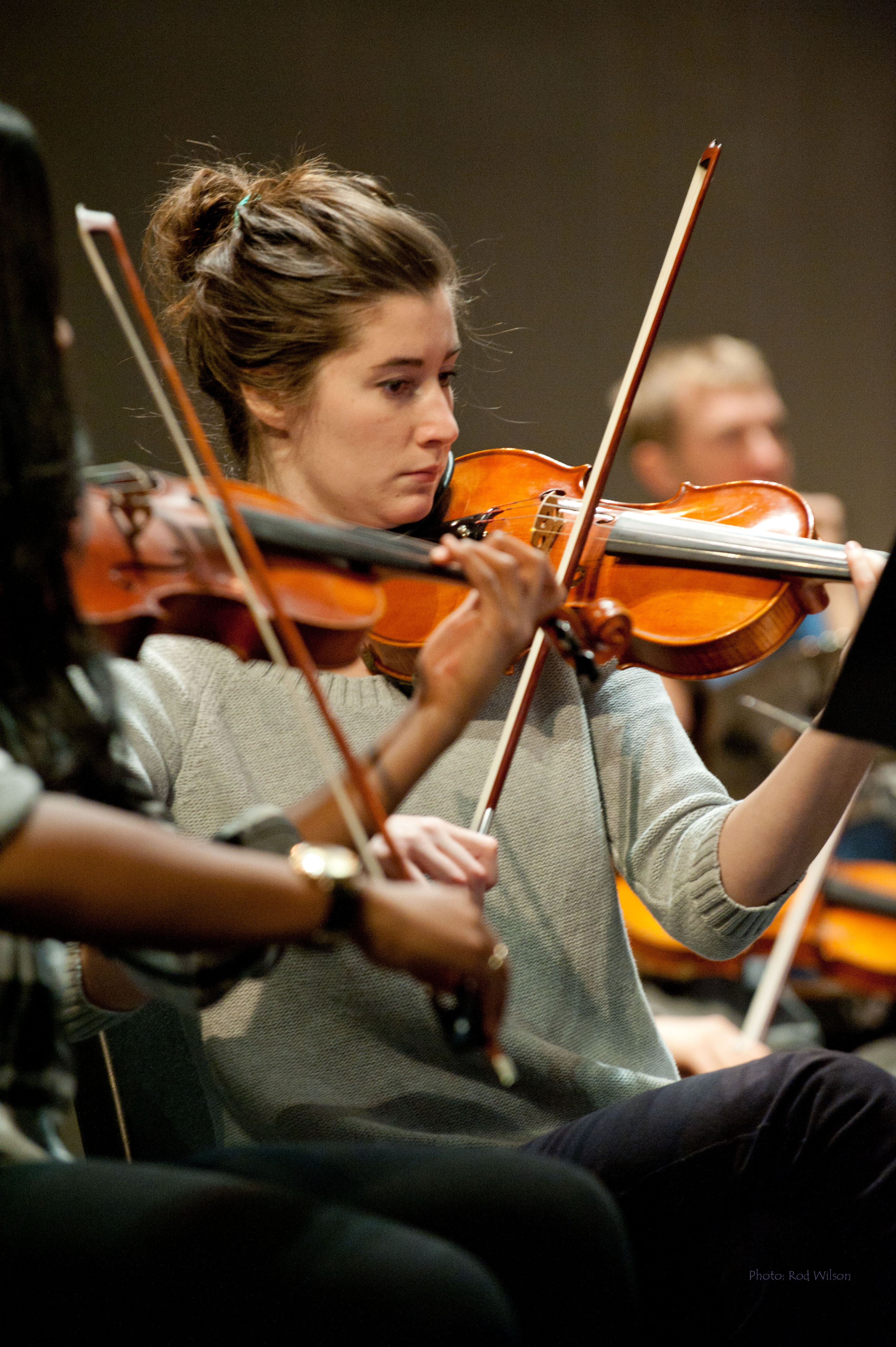
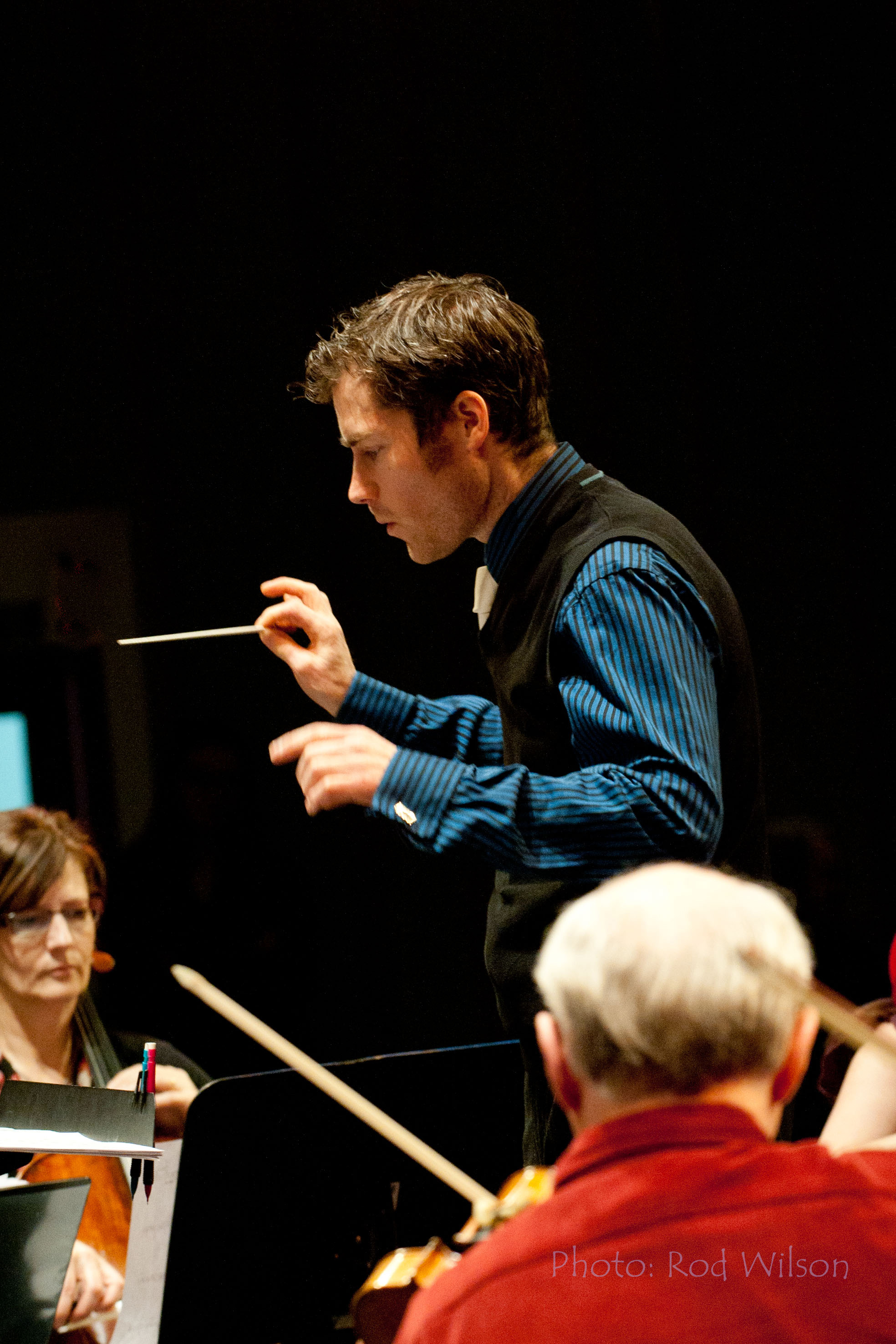
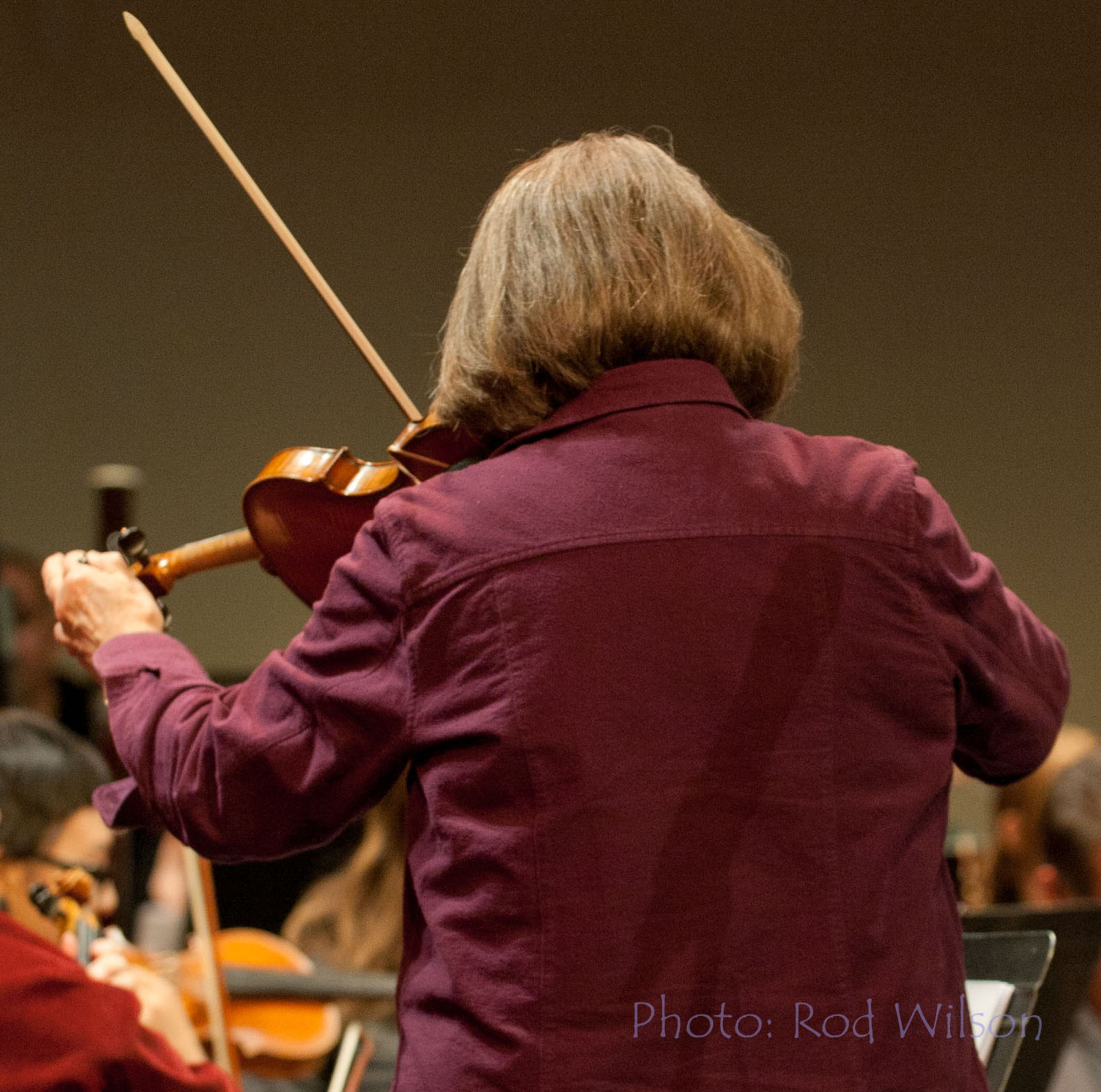
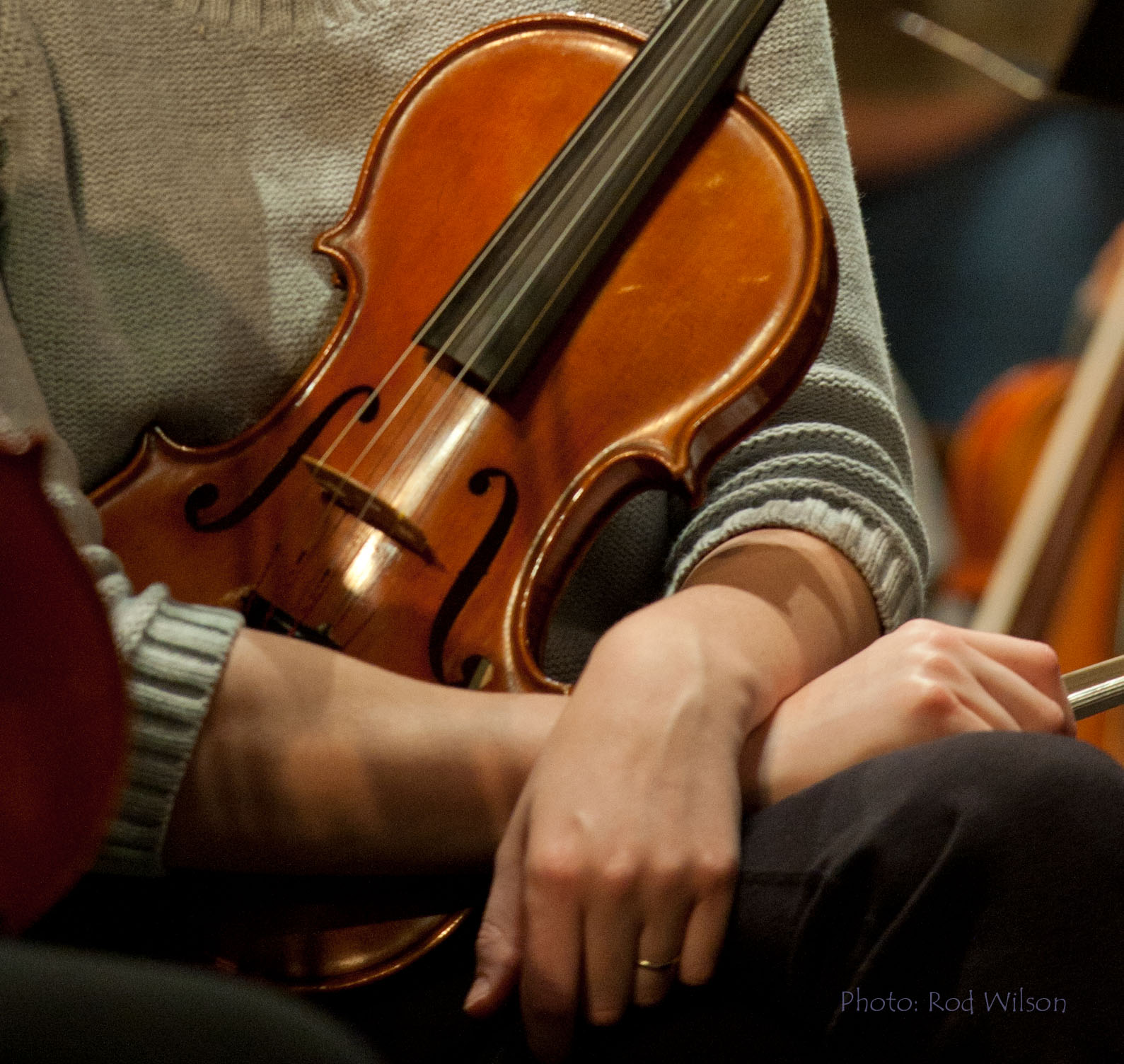
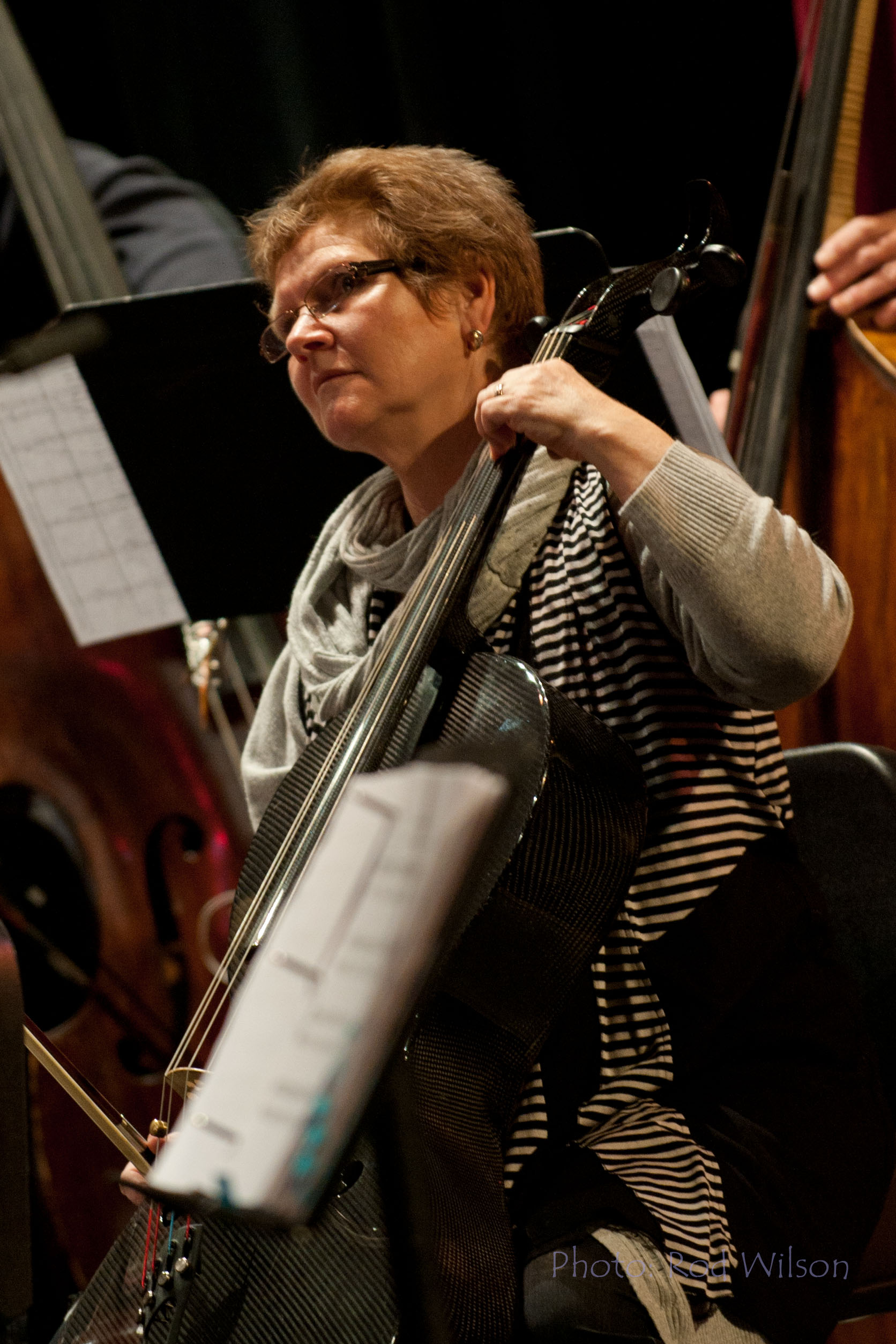
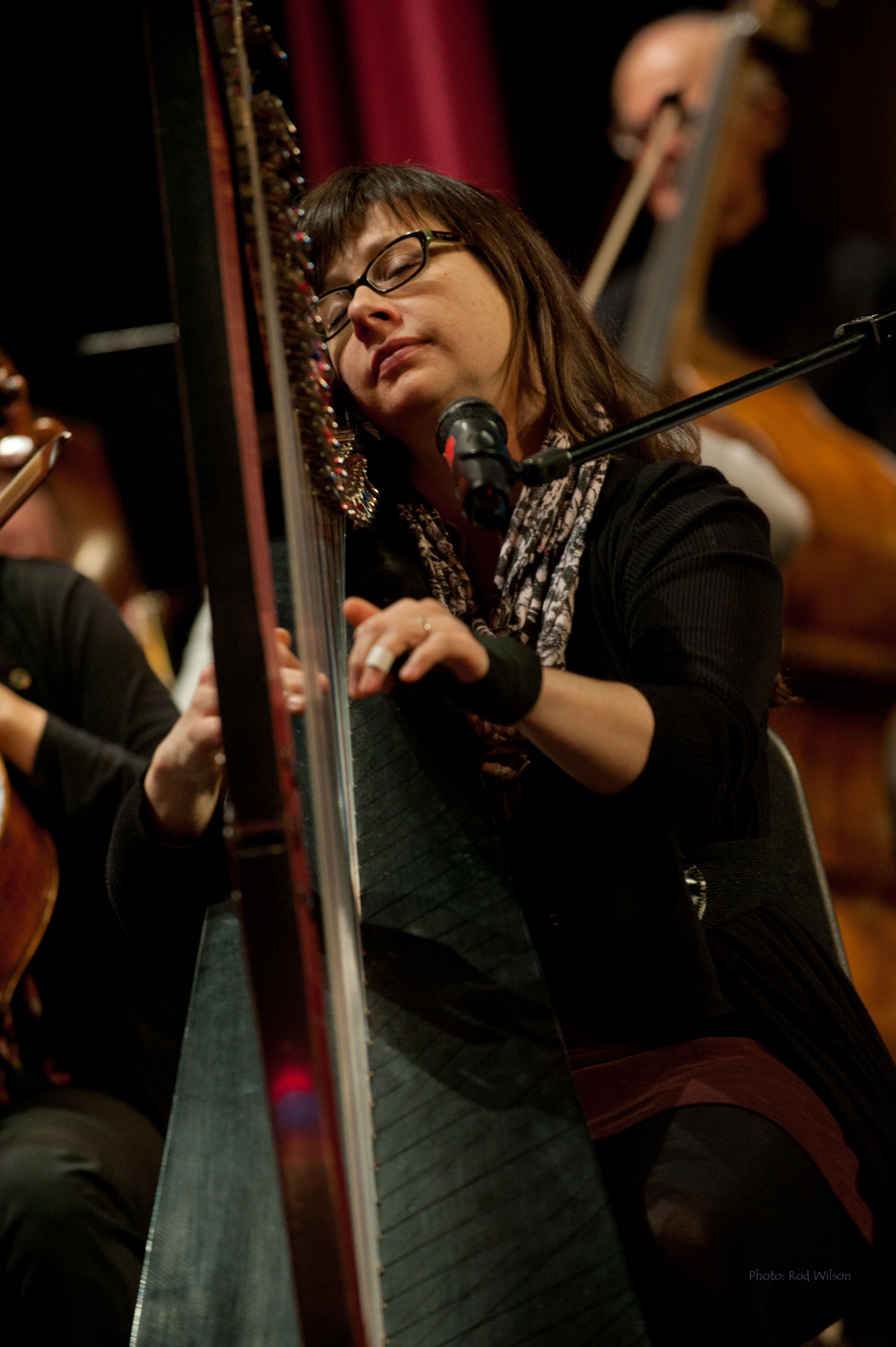
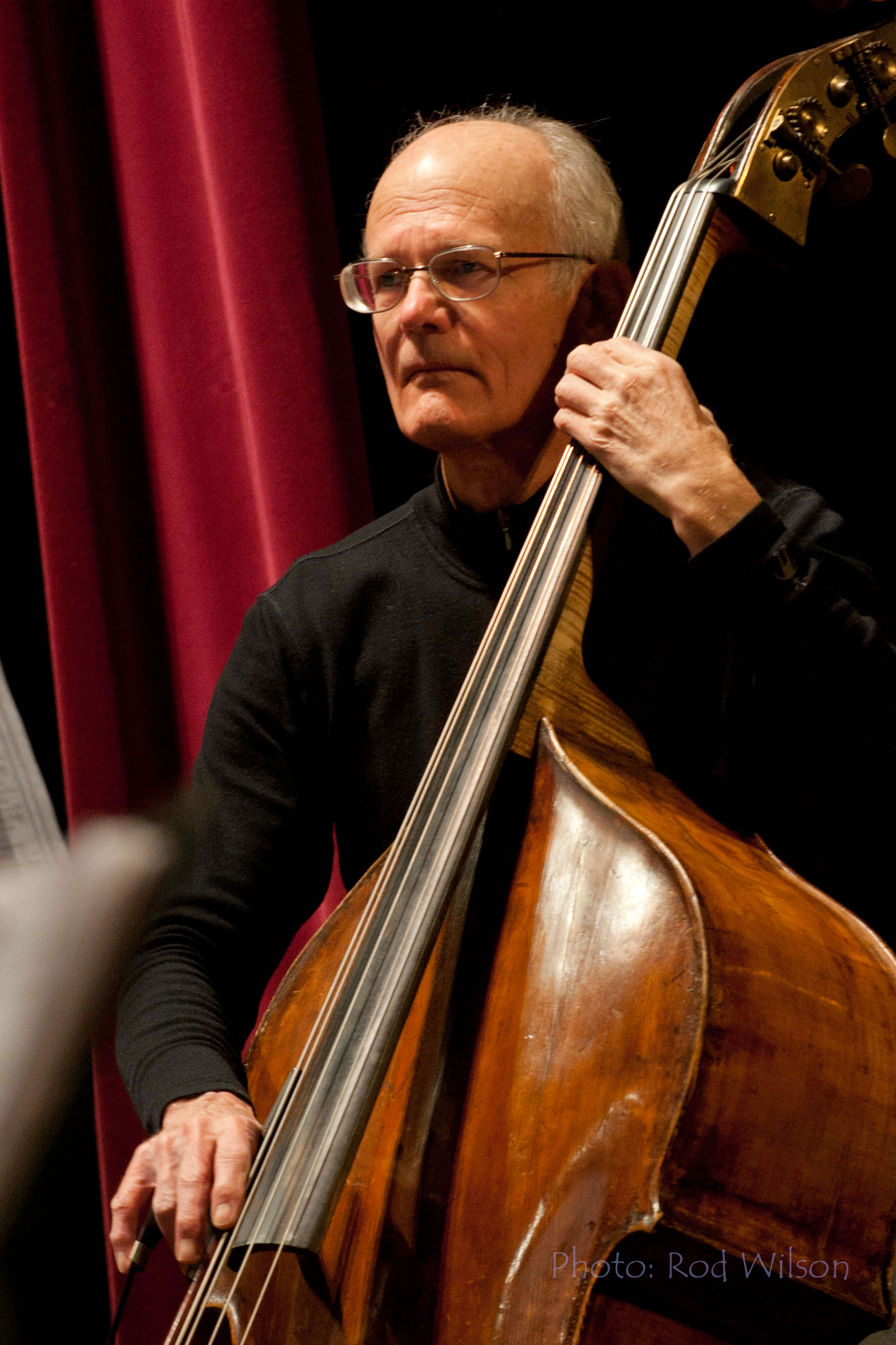
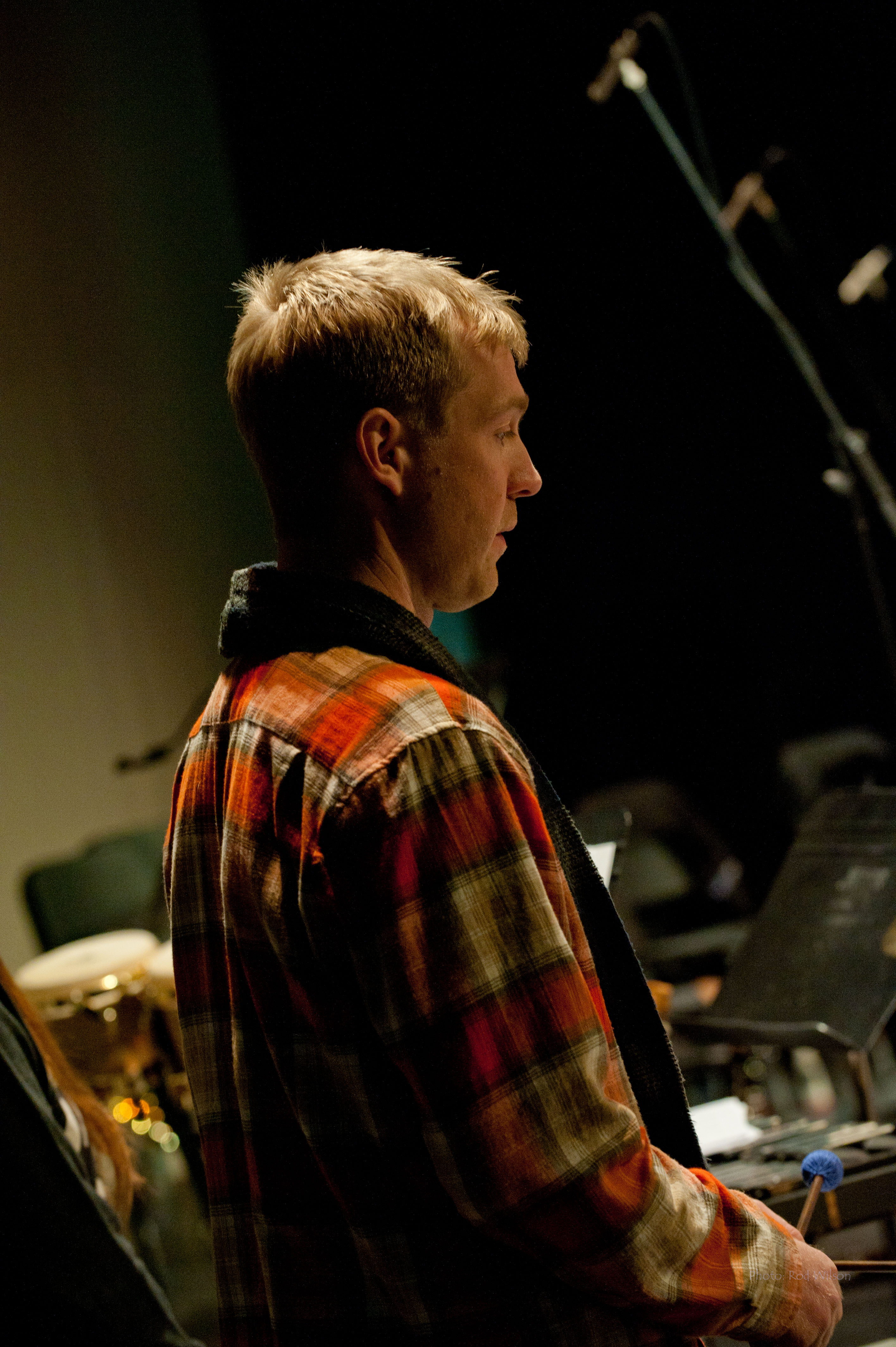
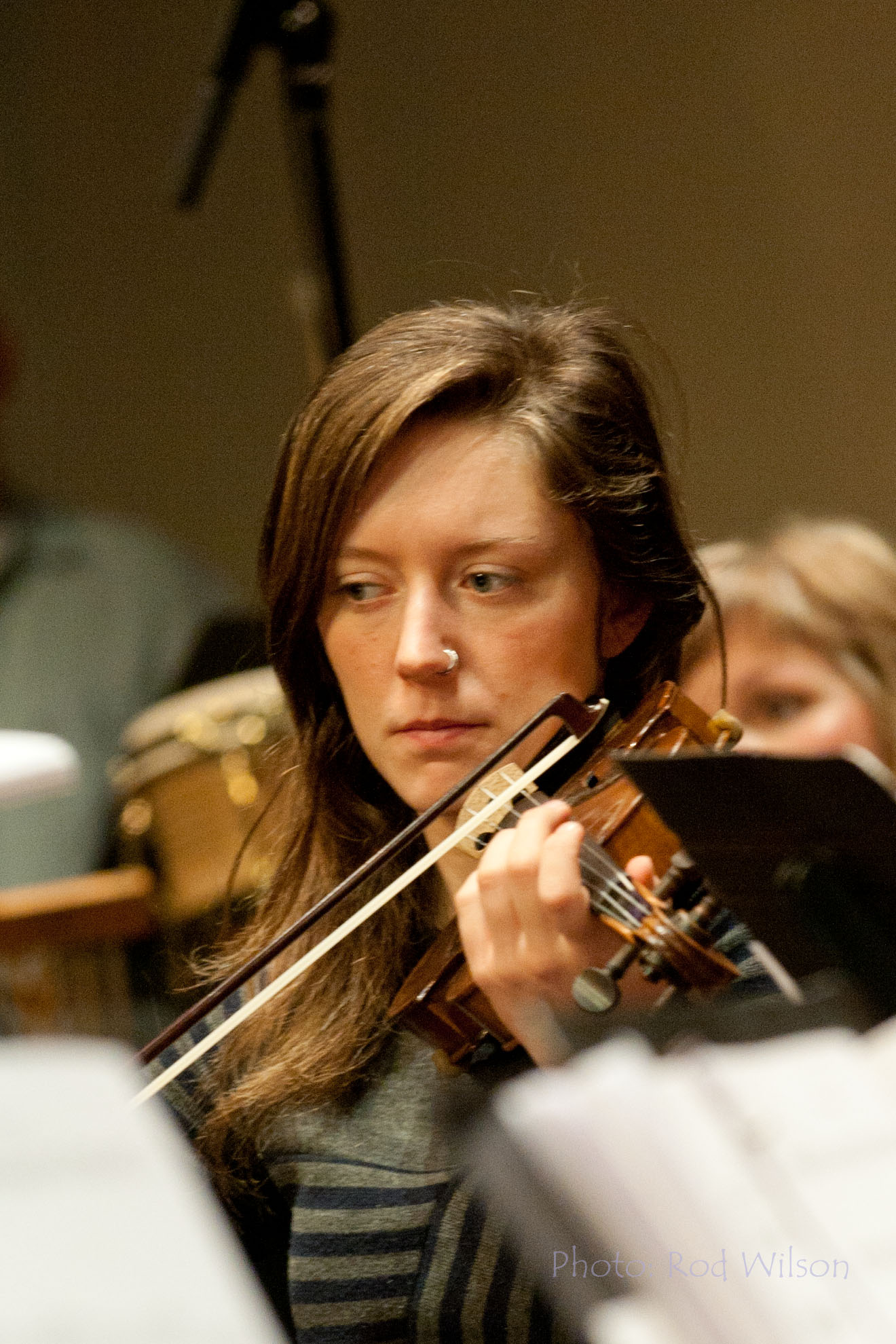
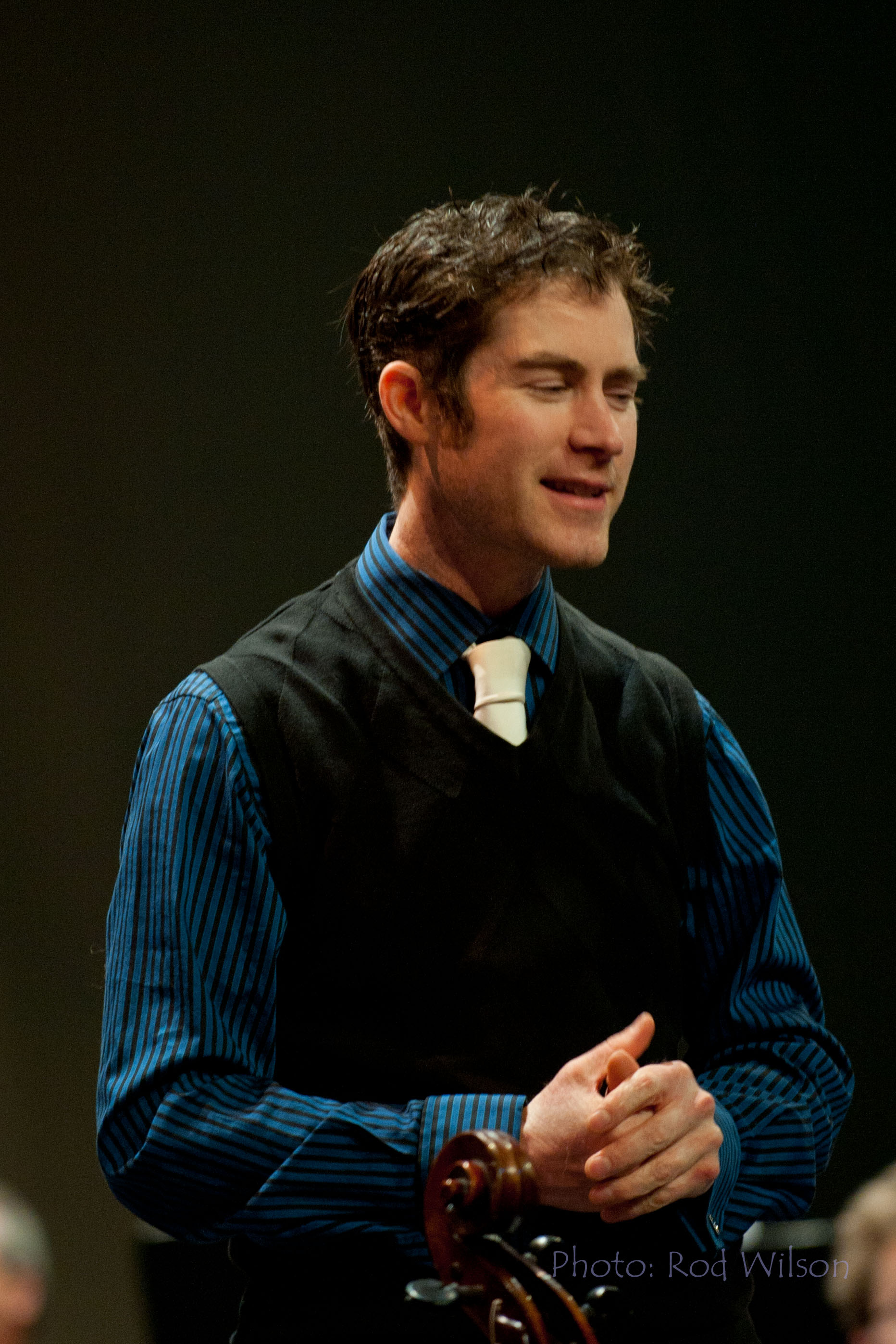
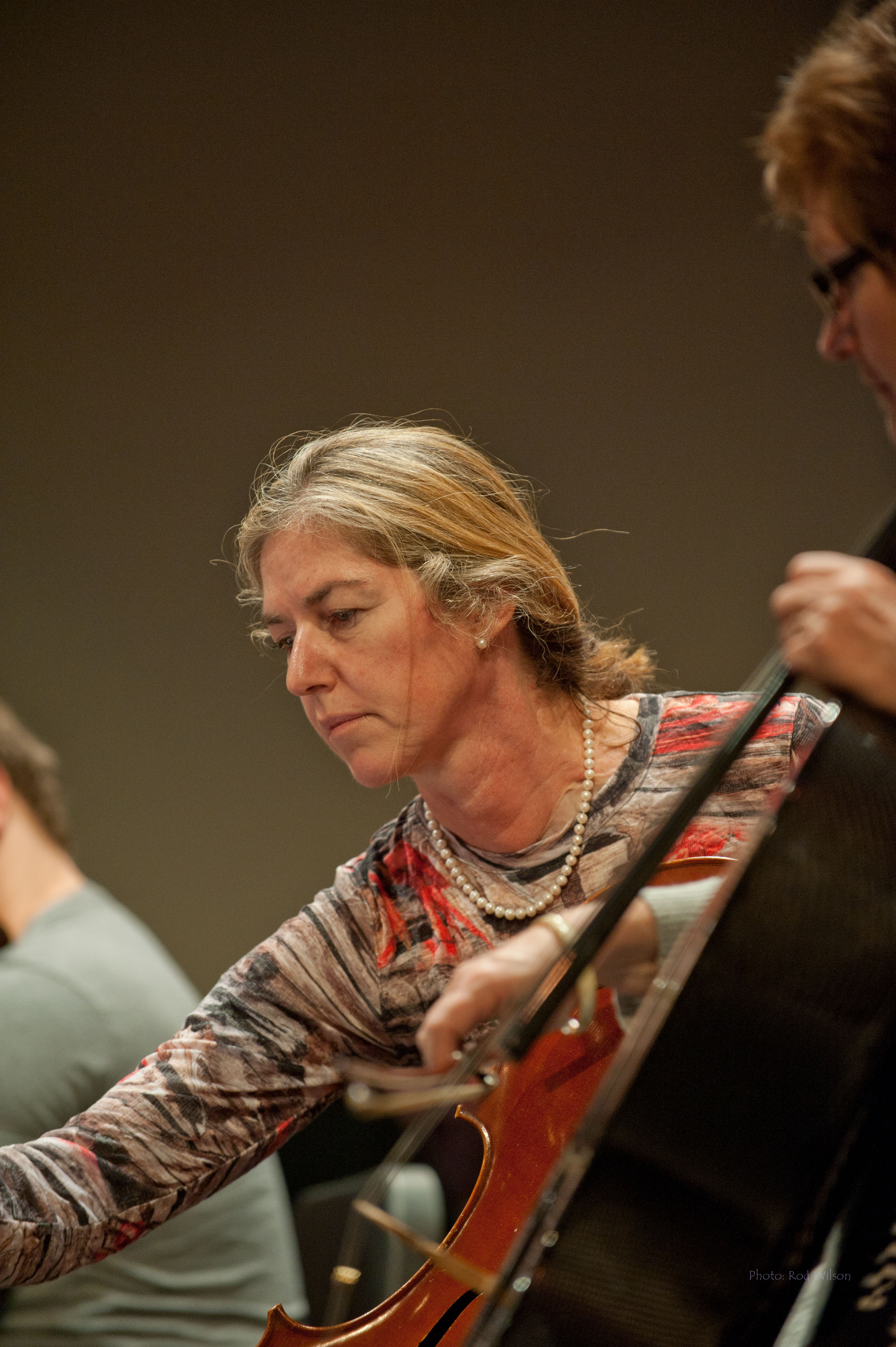
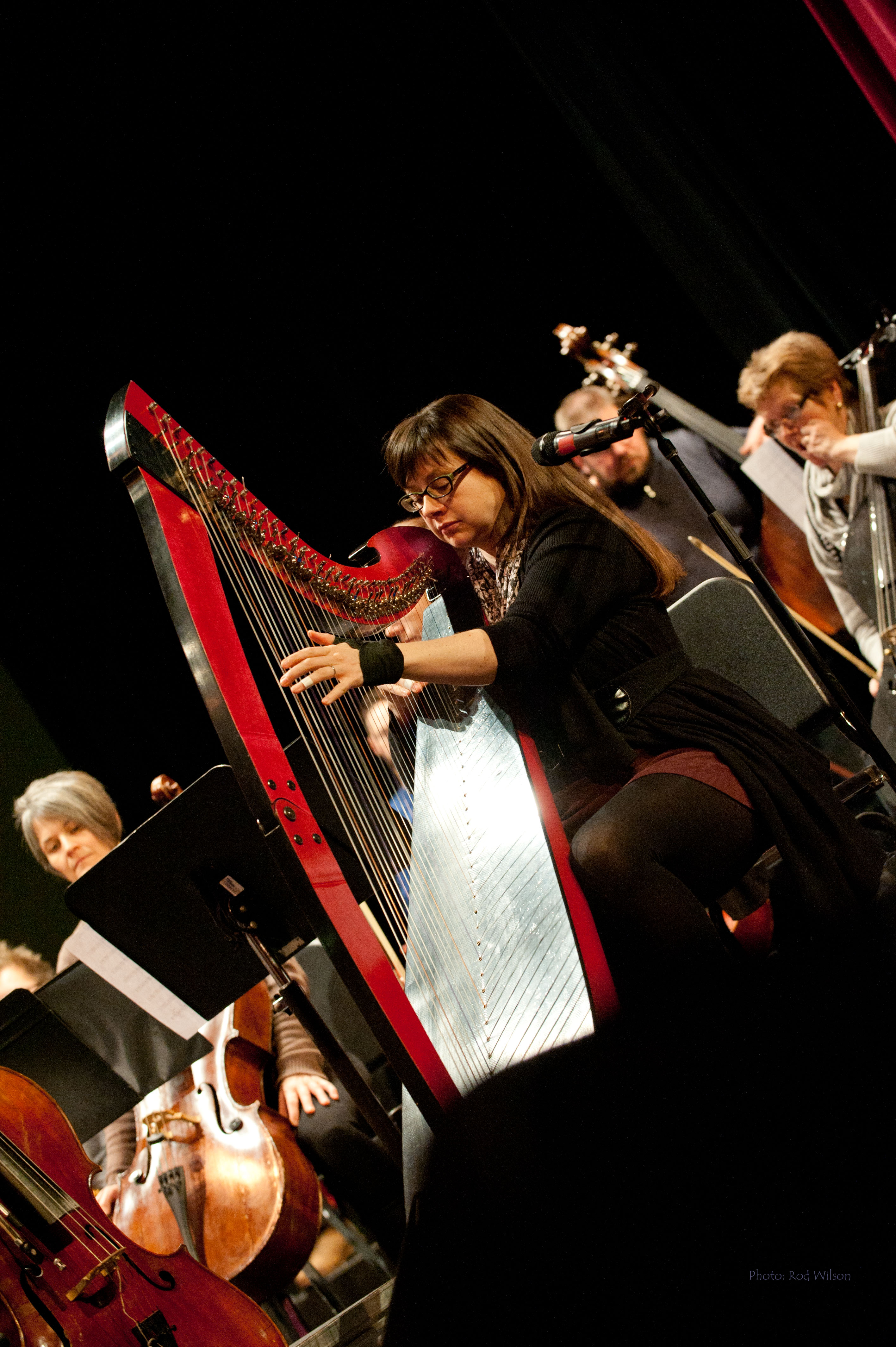
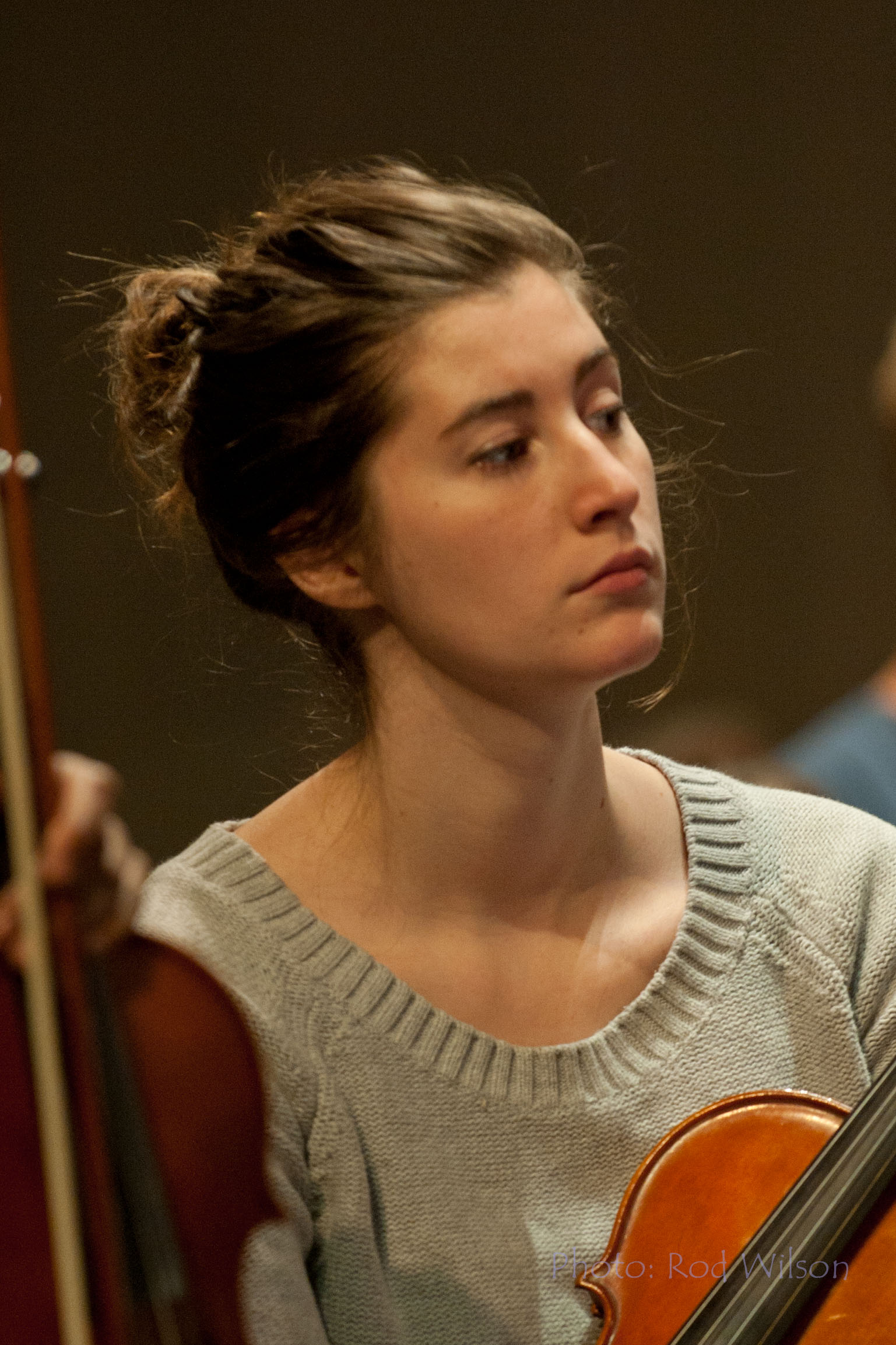
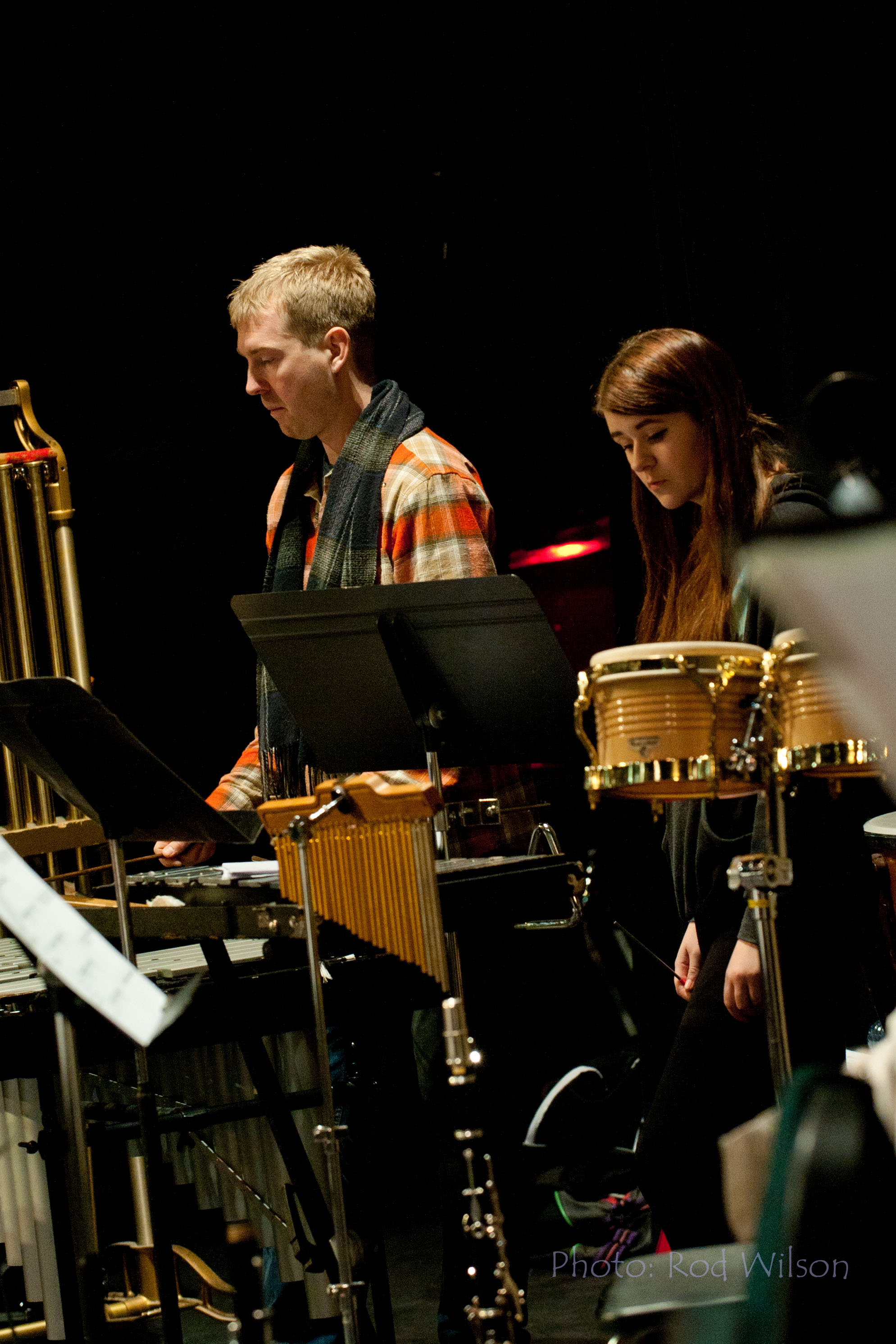
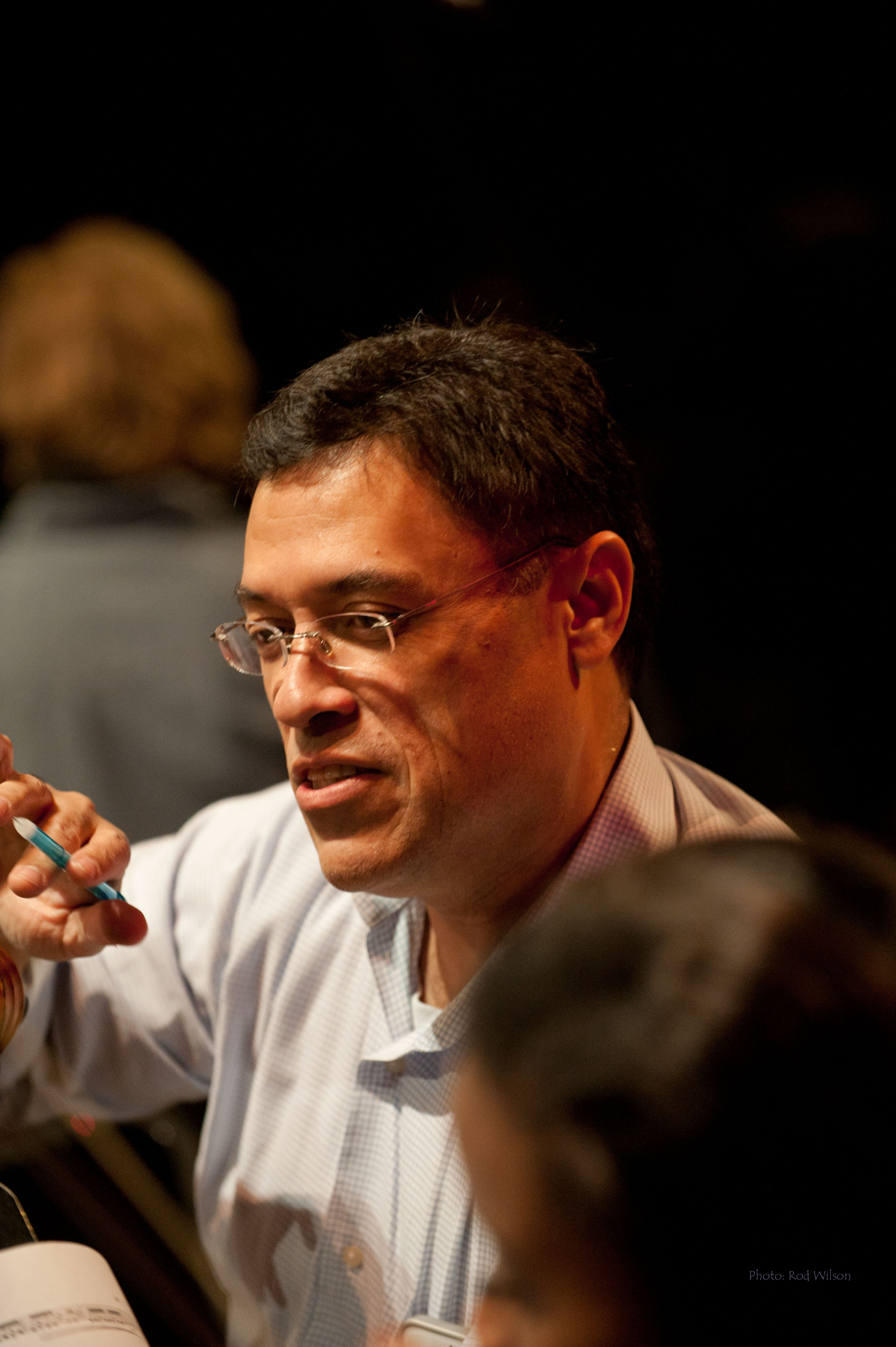
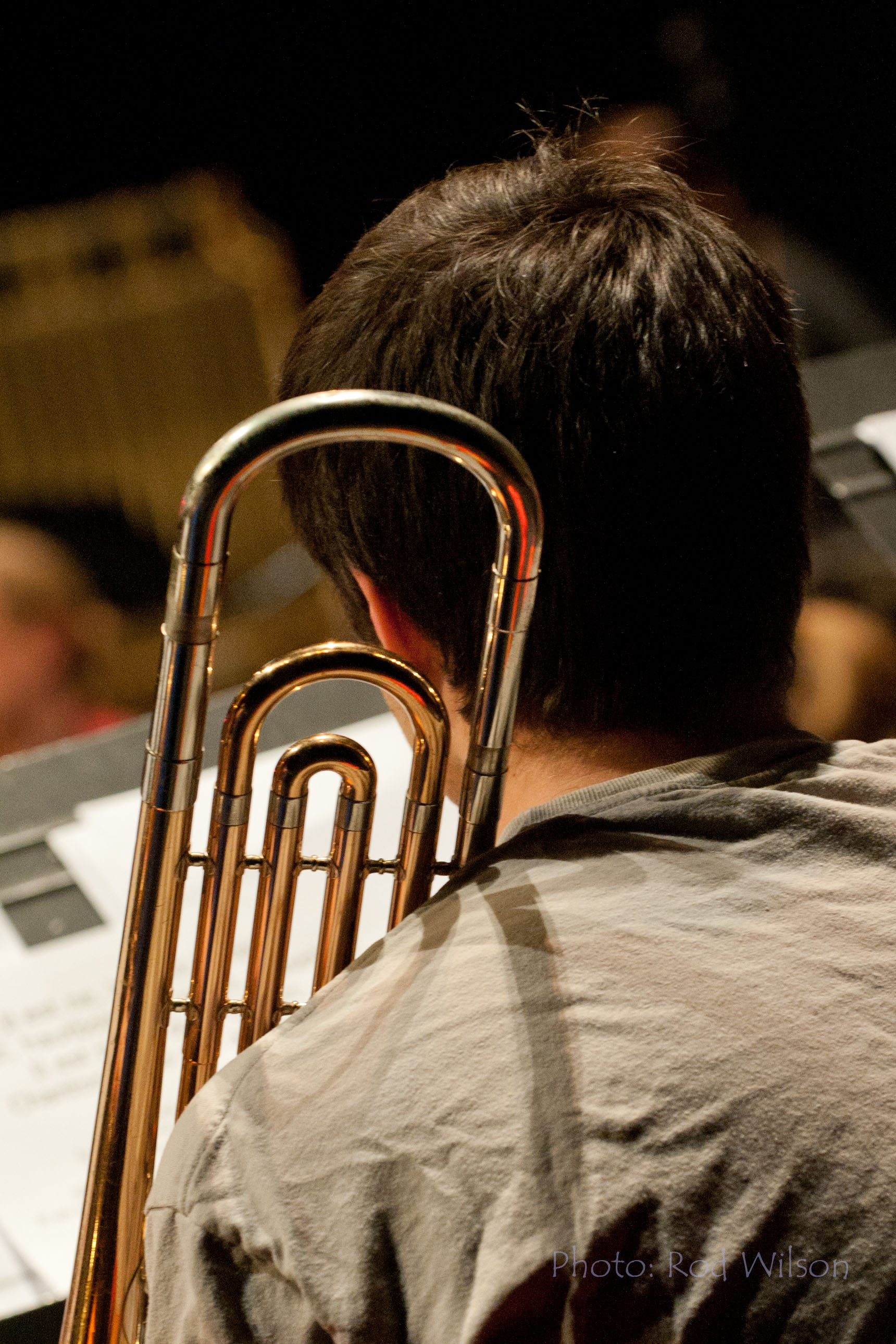
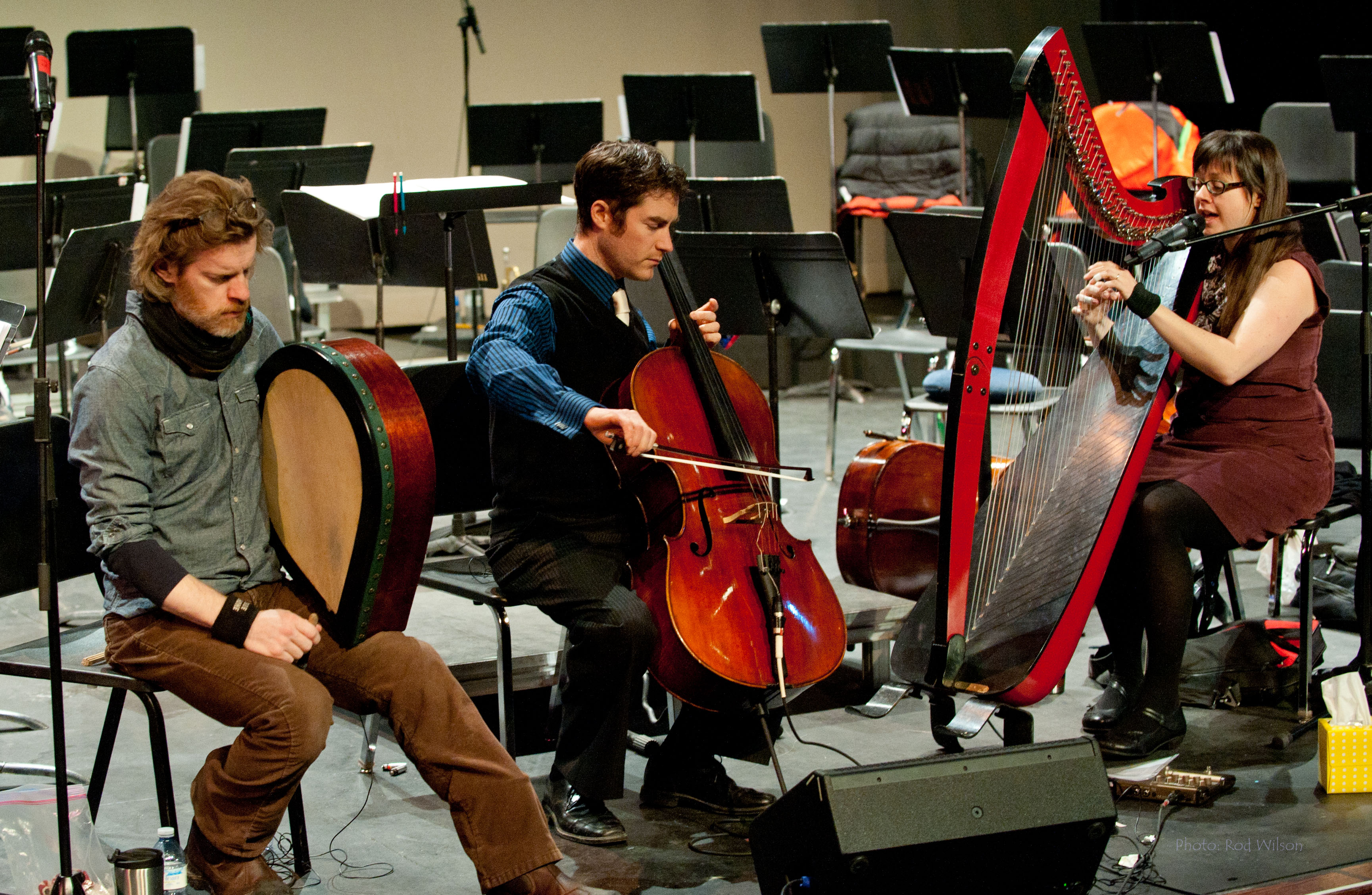
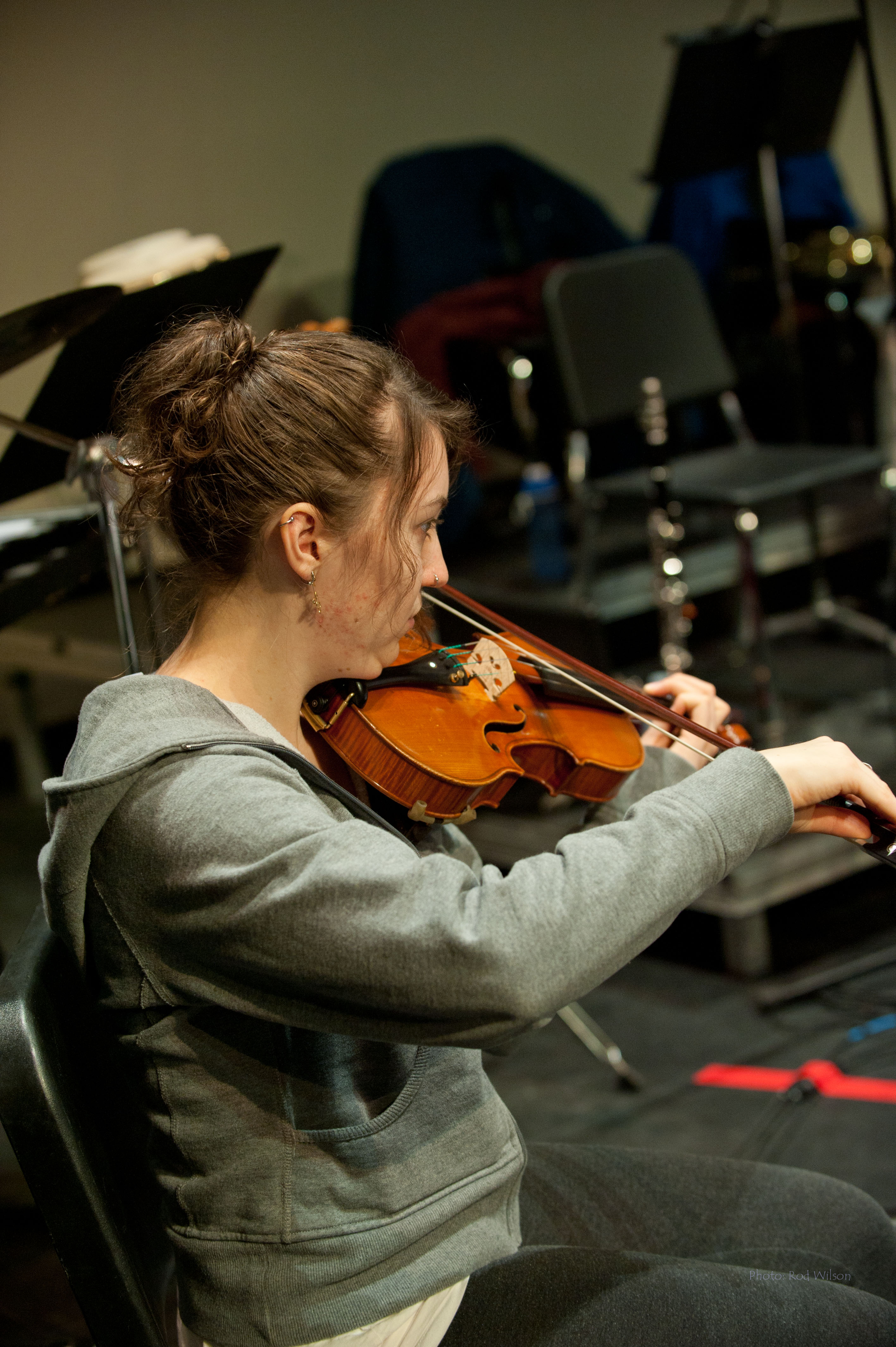
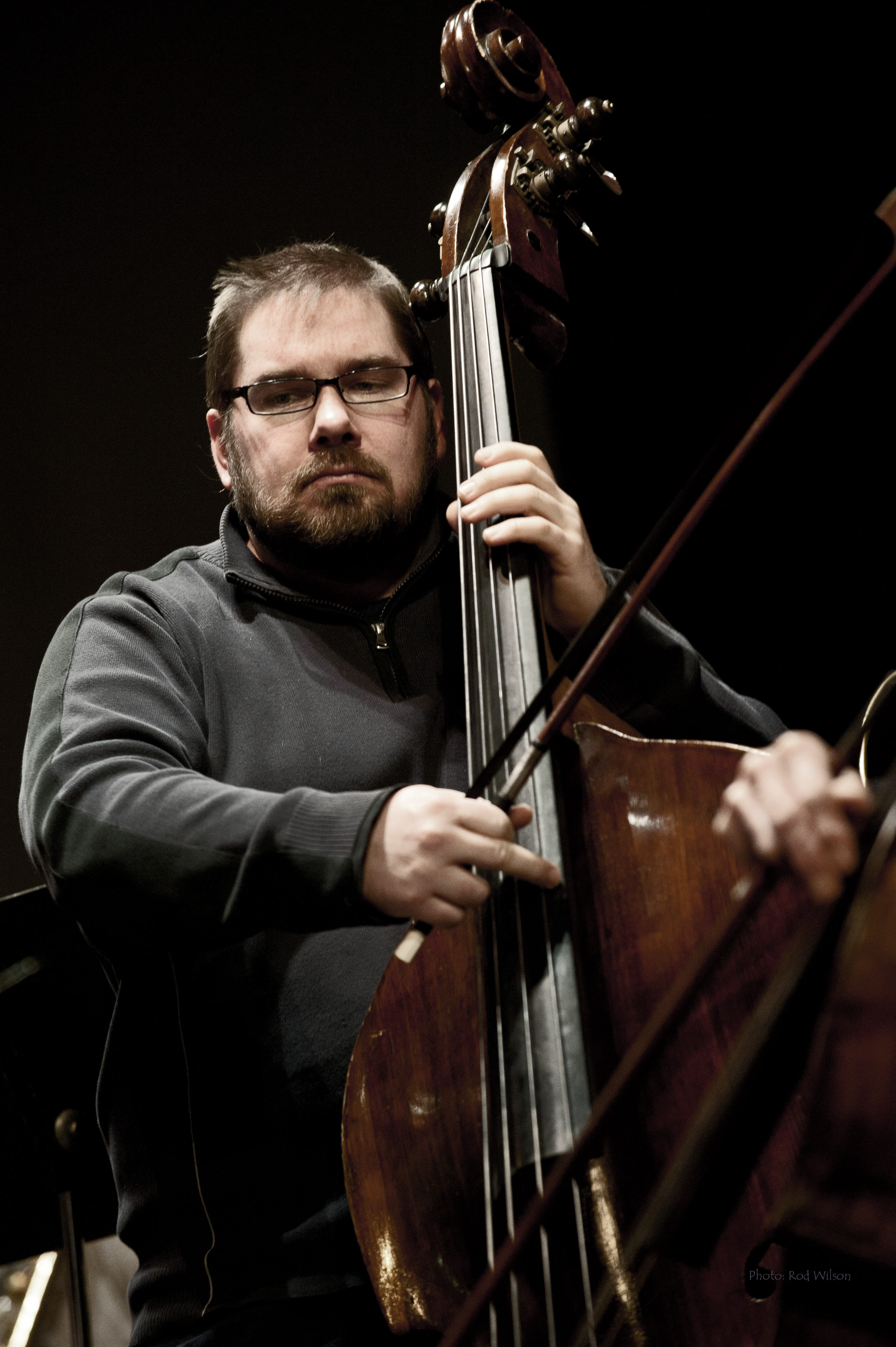
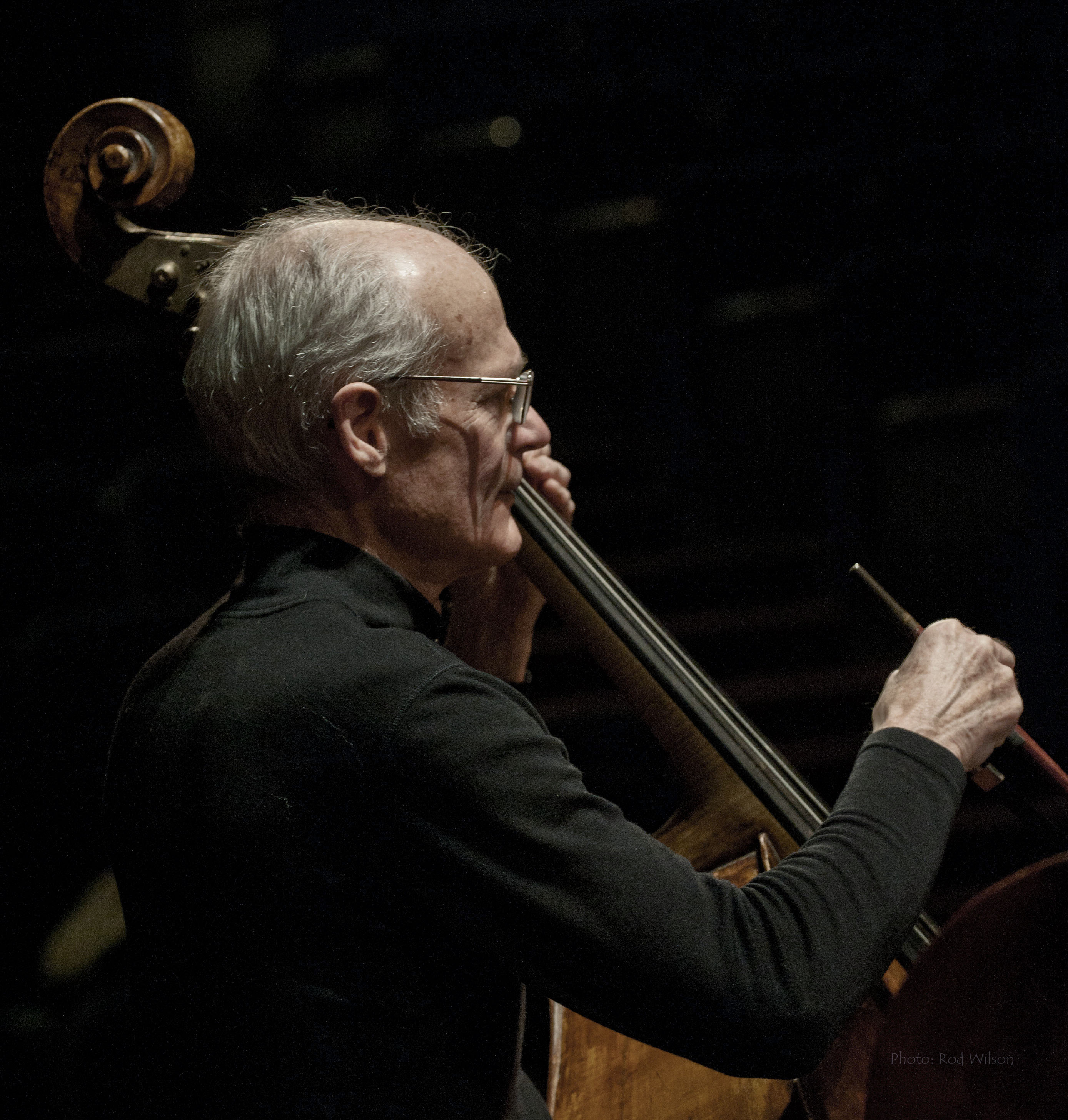
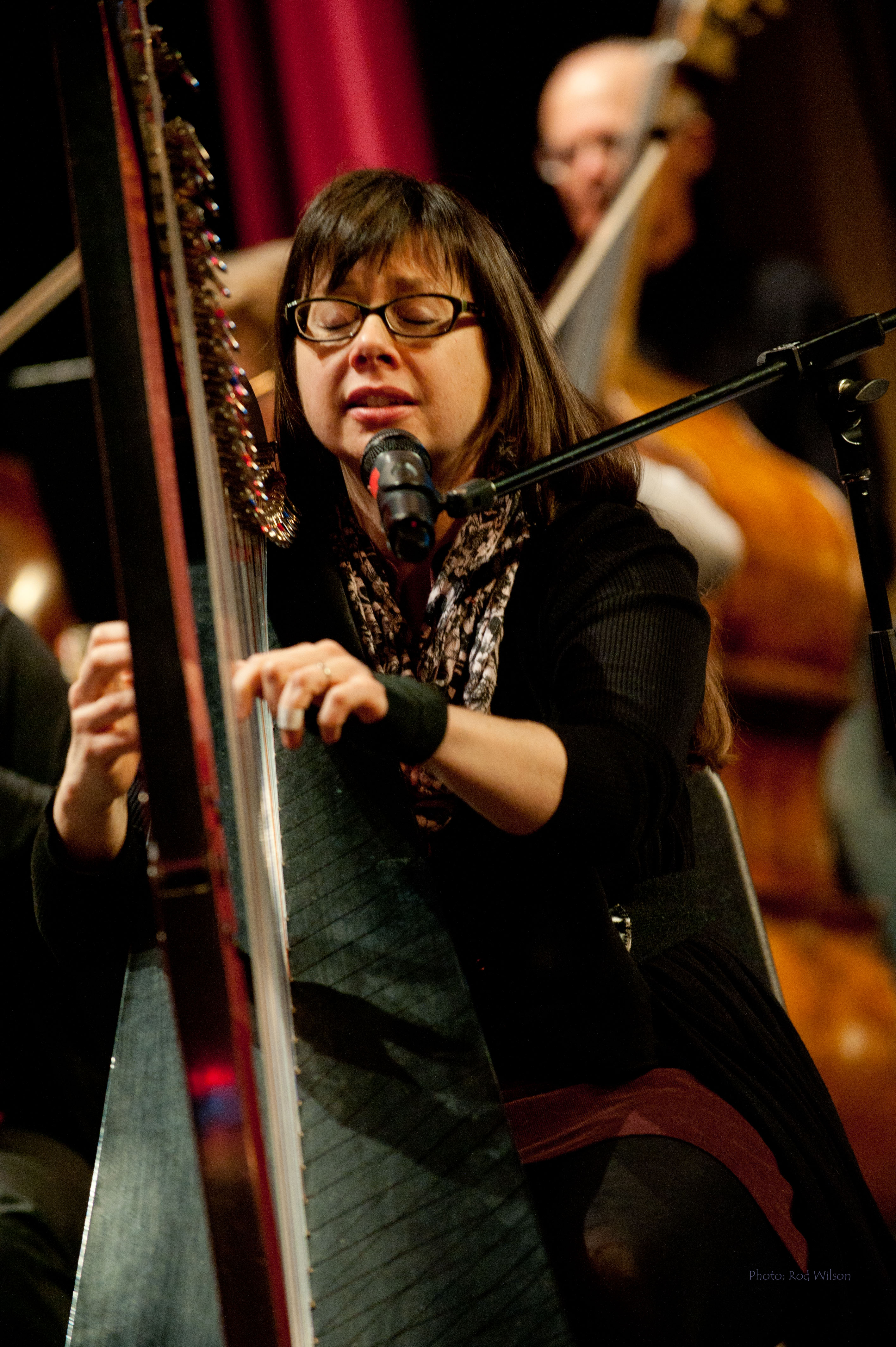
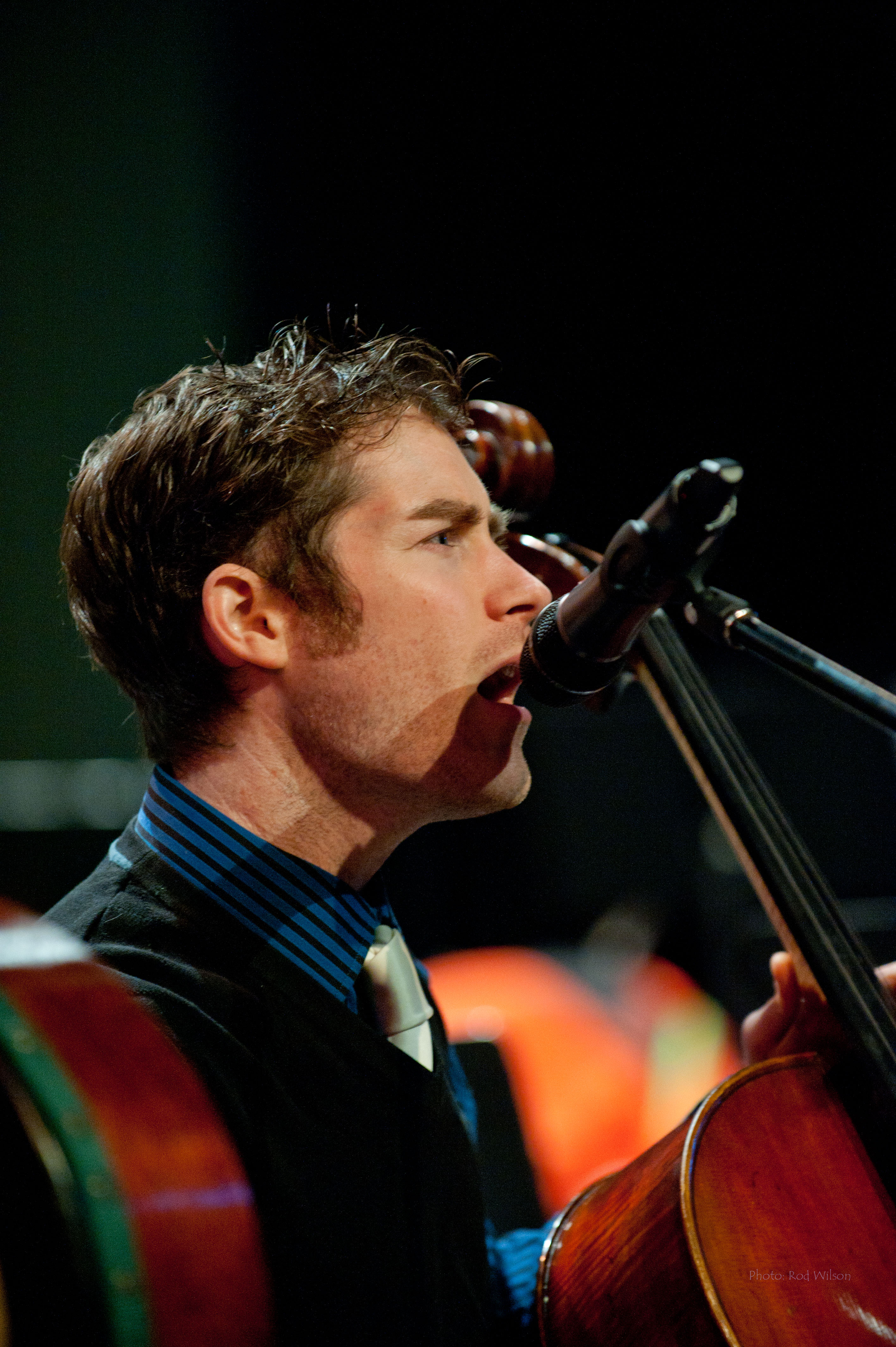
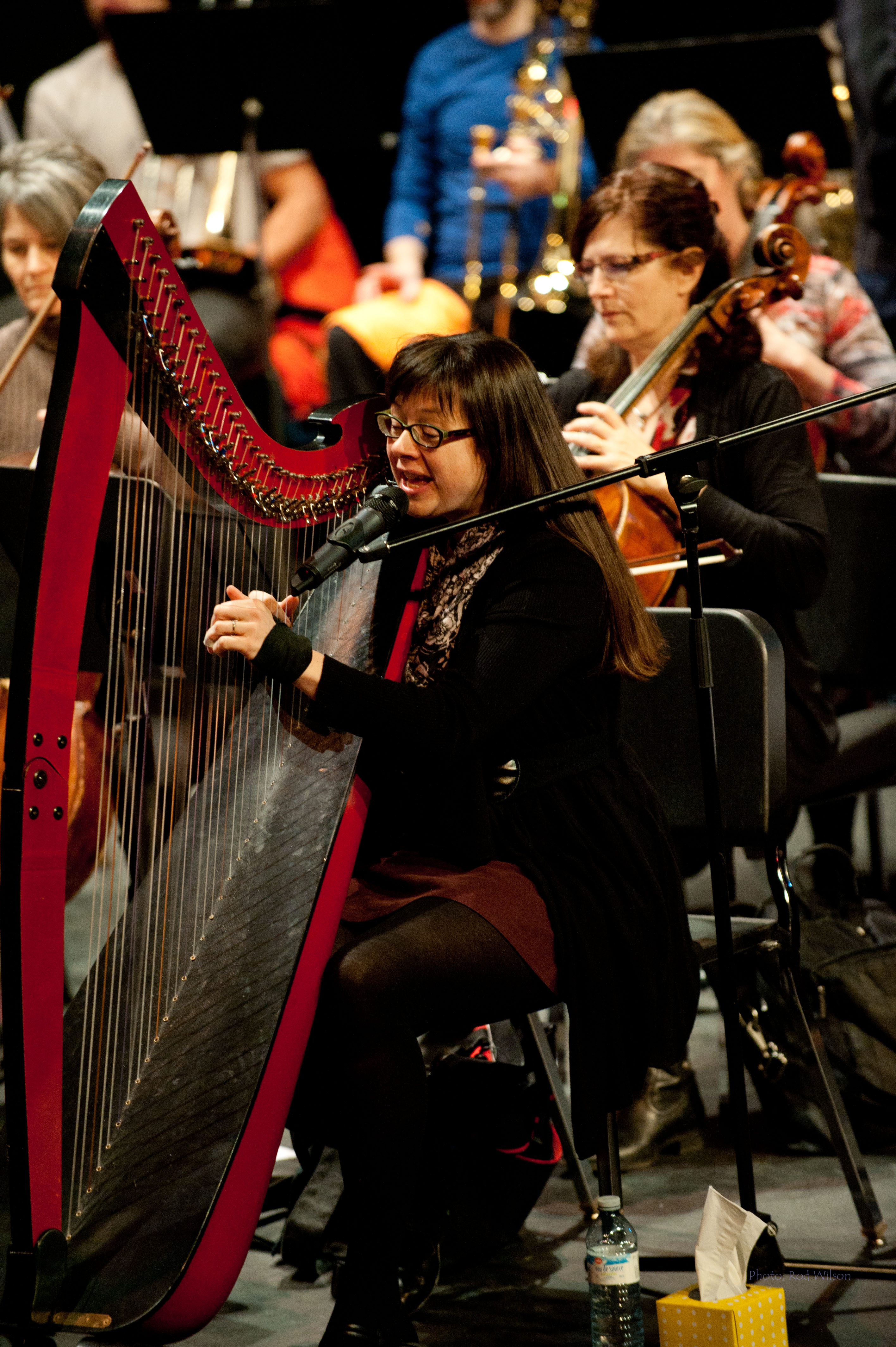
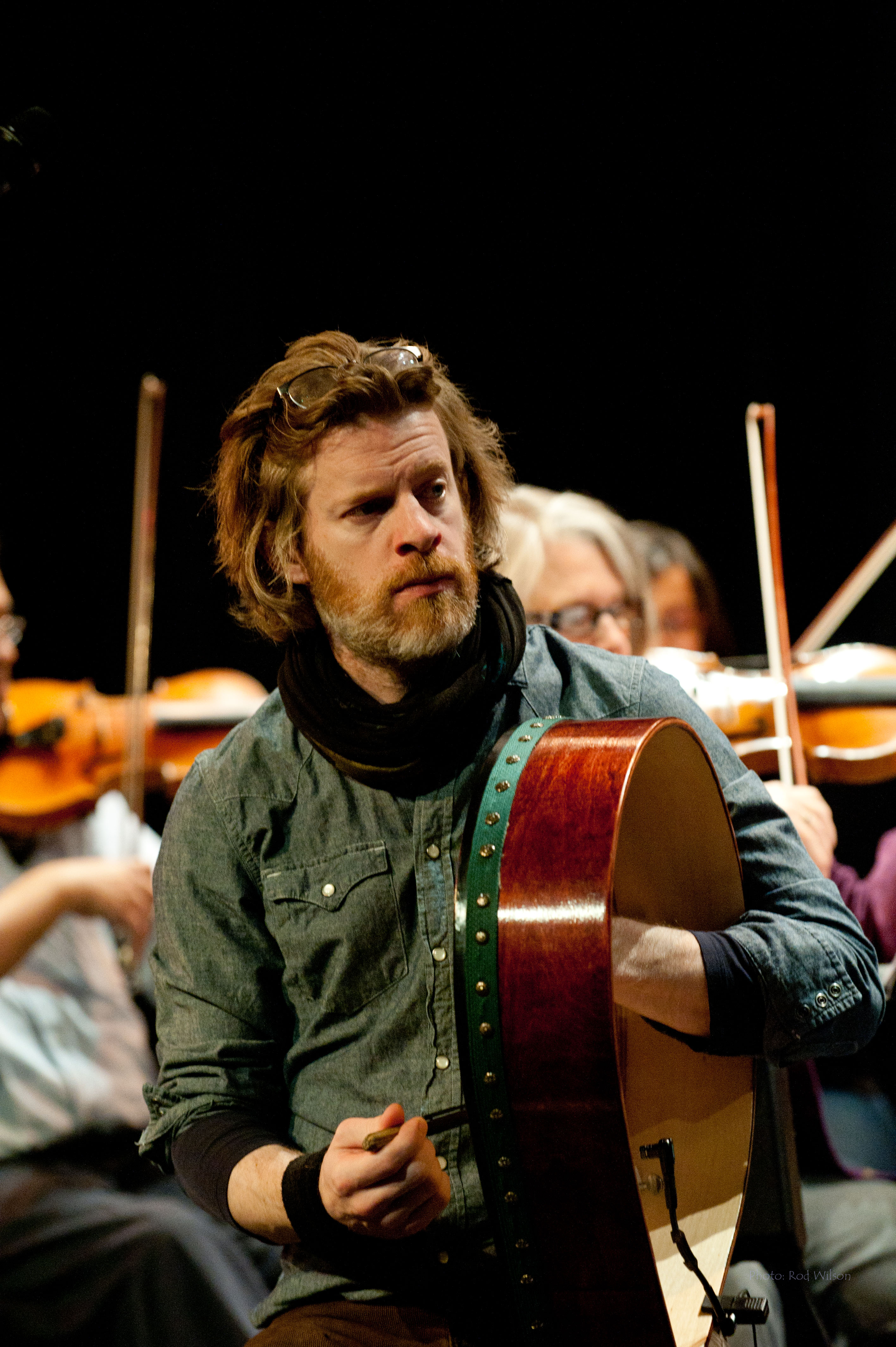
A Celtic Christmas – A Winter’s Ramble with Harpist and Singer Keri Lynn Zwicker : The rehearsal at the Key City Theatre, Saturday December 6, 2014 12-1:30 pm.I have always felt that there was something missing from Christmas. In recent years my attendance at a Winter Solstice celebration in Vancouver gave me pause to think but I was still unable to arrive at a conclusion. At the Symphony of the Kootenays (SOK) rehearsal on Saturday it finally clicked. When the Bodhran (the Irish Frame drum) roared into life within a rousing Celtic tune I had an epiphany. What has been missing all these years is the essential pagan element of the season’s celebration. The season has been diluted and polluted with so much tinsel town garbage over the years that we have forgotten, that despite the Christian overlay, from the beginning of time the Winter Solstice (Christmas) is essentially a pagan festival. The SOK, Harpist Keri Lynn Zwicker and the Bodhran player Nathan McCavana restored some of that essential pagan essence to the music of the season. Sure, it was Christmas music but with a primordial pagan pulse that gives new life and vitality to a musical landscape that, over the years, has become kinda blah. After all, how many times can we listen to I’m Dreaming of a White Christmas and still be emotionally stirred? Here are some images from the rehearsal.
and now for the essential pagan element : THE BODHRAN – here is the wikipedia entry:
“The bodhrán (/ˈbɔrɑːn/[1] or /ˈbaʊrɑːn/; plural bodhráns) is an Irishframe drum ranging from 25 to 65 cm (10″ to 26″) in diameter, with most drums measuring 35 to 45 cm (14″ to 18″). The sides of the drum are 9 to 20 cm (3½” to 8″) deep. A goatskin head is tacked to one side (synthetic heads or other animal skins are sometimes used). The other side is open-ended for one hand to be placed against the inside of the drum head to control the pitch and timbre. One or two crossbars, sometimes removable, may be inside the frame, but this is increasingly rare on modern instruments. Some professional modern bodhráns integrate mechanical tuning systems similar to those used on drums found in drum kits. It is usually with a hex key that the bodhrán skins are tightened or loosened depending on the atmospheric conditions.” Frame drums are found all over the world and the wikipedia articles goes on to list around 40 different regional variations. Nathan’s Bodhran is a little different fron the traditional in that it is tear dropped shaped. Like a lot of modern players, Nathan uses “bamboo bundles” as a beater. He also uses a small condenser clip-on microphone to re-enforce the sound (after all he is competing with a symphony orchestra). Also note the black “electrical tape” trim around the top. This is used to reduced unwanted overtones.
The final pagan bonus in the rehearsal and one that may not have made it to the actual concert was Nathan’s rousing rendition of THE POGUES The Fairy Tale of New York with its classic line “And the bells are ringing out for Christmas Day” – a far cry from I’m Dreaming of a White Christmas:
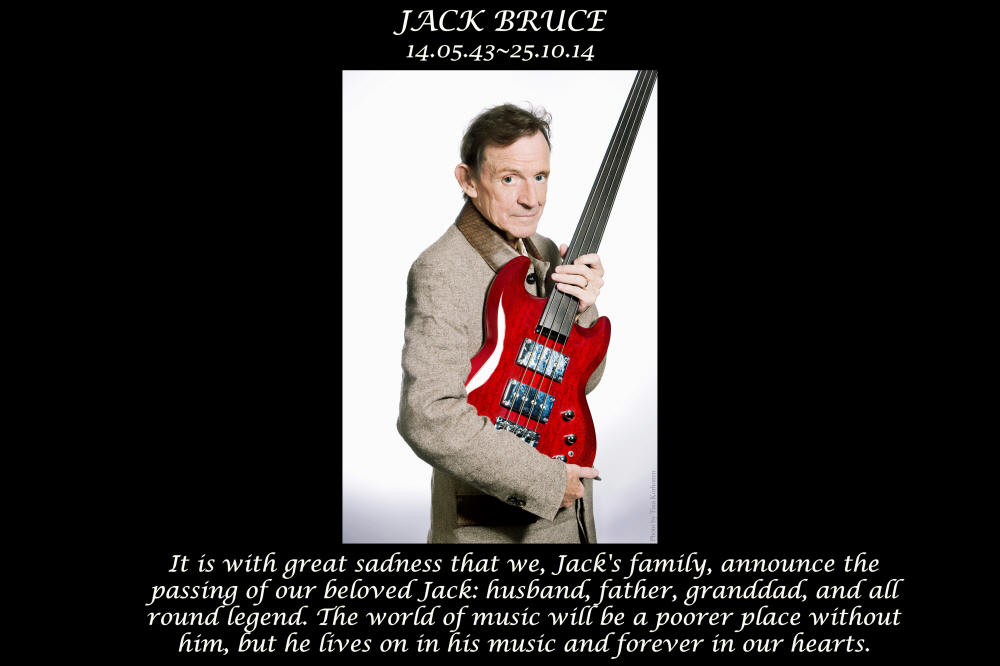
It’s an age thing. There comes a time when we become that caricature of the elderly pensioner whose first scan of the newspaper is the obituaries. I am not quite there yet but it seems to be getting closer. It seems that these days there is an overabundance of legendary musicians “passing away”. In the last little while the list seems enormous – Charlie Haden, Jim Hall, Johnny Winters, Buddy MacMasters, Dave Brubeck, Joe Sample, Gerald Wilson, Pete Seeger and Paco de Lucia, just to name a few. The latest is Jack Bruce. Here is reprint of a very recent Down Beat article.
“Jack Bruce—singer, keyboardist, bassist, harmonica player, guitarist and composer—died of liver disease at his home in Suffolk, England, on Oct. 25. He was 71. A significant influence on generations of electric bass players, he attained rock-star renown as a member of the 1960s band Cream with guitarist Eric Clapton and drummer Ginger Baker. In a long solo career away from the glaring lights of pop music, Bruce found his true calling as an adventurer in jazz and its creative offshoots. Soon after Bruce’s passing, Clapton released a statement: “He was a great musician and composer and a tremendous inspiration to me.” Baker also issued a statement: “I am very sad to learn of the loss of a fine man.”
Born on May 14, 1943, in Glasgow, Scotland, John Symon Asher Bruce was first exposed to music by his father, who played Fats Waller-style jazz piano at home, and by his mother’s folk-song singing. A gifted classical cellist, he attended the Royal Scottish Academy of Music and Drama and studied composition as a youth. He heard jazz performed jazz performed at concerts by the Modern Jazz Quartet with Percy Heath and the Jazz at the Philharmonic band with Ray Brown during the 1950s.
Bruce took an interest in the string bass at age 14, and by his late teens, he was working in jazz combos at U.S. Air Force bases in Italy. “Once a week there was a jazz evening when people would play records,” he told DownBeat in a February 2009 article. “They had an amazing record library, and me being a bass player, one of the guys said, ‘You’ve got to hear this guy!’ There it was: Charles Mingus. That changed the direction of my thinking because he became the person that I wanted to emulate. Before that it was a player like Scott LaFaro, but Mingus was a composer, which was what I wanted to be.”
After moving to London, Bruce joined other up-and-coming musicians in jazz groups that absorbed the bebop and free-jazz emanating from the States. Drummer Jon Hiseman was part of the scene. Hours after Bruce’s passing, he recalled that playing with the double bassist “was like working with an erupting volcano beside you.”
Encouraged by saxophonist Dick Heckstall-Smith, Bruce brought his Mingus-like jazz sensibilities to guitarist Alexis Korner’s Blues Incorporated band, whose drummer in 1962 was a fresh faced Baker. When Blues Incorporated’s singer-organist-alto saxophonist Graham Bond quit to form his own jazz-rock band, the Graham Bond Organisation, he took Bruce and Baker with him and soon added guitarist John McLaughlin.
In 1966 Bruce and Baker joined heavily hyped guitar deity Eric Clapton, fresh out of John Mayall’s Bluesbreakers, in the blues-rock power trio Cream, which ascended to global popularity before its wild two-year run ended in 1968. Lengthy flights of improvisations on songs like “Crossroads” and “Spoonful’ were a band hallmark, as were well-crafted, quick-witted songs composed by Bruce with Beat poet and lyricist Pete Brown. Clapton lent them a hand in composing “Sunshine Of Your Love.” Both “White Room” and “Sunshine Of Your Love” were Top 10 pop hits in the States in 1968. Cream reunited for shows in 1993 and 2005.
Bruce’s infallible musicianship and his relentless curiosity and ardor for jazz, blues and probing rock placed him in good stead for solo projects from the late 1960s to his last days. His acclaimed jazz album Things We Like (recorded before Cream disbanded but released in 1970) featured Bruce alongside McLaughlin, Hiseman and Heckstall-Smith. One of the album’s highlights, “HCKHH Blues,” pointed to Mingus.
The rock masterpieces Songs For A Tailor (1969) and Harmony Row (1971) further illustrated Bruce’s boundless musical imagination, combining elements of hard-bop, blues, folk, Bach, Messiaen and the British music hall tradition.
Bruce sang on keyboardist-composer Carla Bley and wordsmith Paul Haines’ jazz-opera LP Escalator Over The Hill (1971), and he employed Bley for one of his 1970s bands. Bruce worked with saxophonist-keyboardist John Surman and Hiseman in an excellent but little-known free-jazz trio, and he also recorded with Frank Zappa.
The bassist was a member of drummer Tony Williams’ 1970s band Lifetime. In the 2000s, Bruce saluted Lifetime. In the 2000s, Bruce saluted Lifetime with concerts in Japan. He joined drummer Cindy Blackman Santana, guitarist Vernon Reid and keyboardist John Medeski in the Liftetime tribute band Spectrum Road. That band released a self-titled album on the Palmetto label in 2012.
“We can freely improvise and come up with a sophisticated form,” Bruce said in a July 2012 DownBeat cover story on Spectrum Road. “It’s a revelation that I can go onstage and just play a bass line or melody and everyone will pick up on it and it will become a thing, not just jamming, but some music with an identity.”
Additionally, Bruce collaborated with rock guitarist Robin Trower for albums and tours, fronted two German jazz big bands, performed as often as he could with keyboardist Bernie Worrell, played occasionally with Ringo Starr’s All-Starr Band and expressed his enthusiasm for Afro-Cuban and Latin jazz playing with fellow free spirit Kip Hanrahan and other notables. In early 2014, Bruce released the last of about 20 albums, Silver Rails, which generated favorable reviews.
As news of Bruce’s death spread, he received an outpouring of high praise from colleagues.
Trower said, “[Jack was] one of the few musicians that can be truly called a force of nature.”
Hiseman offered, “He was more than the most fantastic singer, player and composer. He was so far ahead, I suspect no one has caught up yet. They probably never will.”
McLaughlin wrote, “Jack Bruce and I were playing together by 1964. At that time he only played acoustic bass, but great! We were with Ginger Baker in Graham Bond’s band, and it was a trip from start to finish. Not only was Jack a fine musician, he also had a very funny sense of humour. I learned a lot in that band, and playing with Jack was a treat. We parted ways, and the next thing I knew, he had joined Manfred Mann. I thought, what he is he doing with Manfred? It didn’t last long, as Cream came along and Jack had moved to bass guitar and singing, and playing blues harp. Our occasional jams with Duffy Power had really influenced him
Cream was a great band. A couple of years later, I introduced him to Tony Williams and he joined Lifetime for a year. Jack was a real character and a fine musician, and I’ll miss him.”
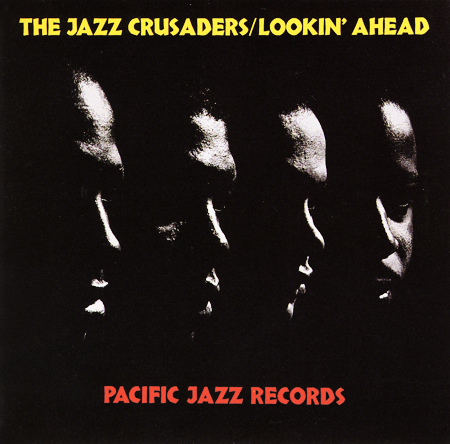
The Jazz Crusaders – The Pacific Jazz Quintet Studio Sessions (6 CD Boxed Set : Mosaic MD6-230)I am more a child of the “Hard Bop Era” than the “Hard Rock Era”. While in my 20’s Art Blakey, Horace Silver, Miles Davis, early John Coltrane, Julian Adderley and many others were very much part of my musical soundtrack. So it came as a surprise when I recently stumbled on a Mosaic Boxed Set of The Jazz Crusaders. Despite my Hard Bop inclinations I was not familiar with their music.
For those who don’t know the name, Mosaic it is a boutique Jazz label that specializes in “complete” collections of the significant jazz performers of the past century. (check their website Mosaic Records.) They are not into the actual recording of performances but rather they obtain a license from the original recording company(s), track down the best recording masters, clean up the sound, research and document the artists, and publish the recordings as collections in limited numbered editions. Once the edition is either sold out or the license expires the set is off the market. I keep an eye on their website to make sure I don’t miss something of interest. Occasionally I misstep and a prized set gets by me. I am still cursing the day when I missed out on the Complete Gerry Mulligan Quartet Pacific Jazz boxed set. On Mosaic’s recent “running low list” The Jazz Crusaders were about to be deleted from their catalogue. Jazz Crusaders ???? who are they???? As I have mentioned in previous blogs it is possible to live through a musical era and not be aware of what may be common knowledge. I guess for me The Jazz Crusaders fits into that category. I checked the sample tracks on the website and I was intrigued by the music. Who are these musicians and how did they get by me? A little research revealed that they were a “territory band” originally out of Houston Texas who are thoroughly schooled in the Texas Funk Blues tradition.
For most casual jazz fans the geographical jazz universe revolved around New Orleans, Chicago and New York. But a more serious look reveals that Kansas City, that capital of sex, sin and gangsters in the 1930’s also had a huge influence on the evolution of Jazz. Kansas City was the epicentre of “the Territory Bands” . After the city was “cleaned up” many noted bands and musicians, after leaving Kansas City, went onto shape jazz as we know it. Count Basie’s band was the most famous to come out of the “territories” along with the legendary bassist Walter Page, tenor sax player Lester Young and that giant of post WWII modern jazz Charlie Parker. They all came out of Kansas City. The list is almost endless. Without Kansas City the “swing era” would not have swung as much and modern jazz may not have been invented.
Good jazz in “the territories” didn’t end in the 1930s. The case in point is The Jazz Crusaders originally out of Houston Texas. In the late 1950s, as a teenager, Joe Sample (piano and keyboards) formed a band with tenor sax player Wilton Felder, drummer Nesbert “Stix” Cooper and trombonist Wayne Henderson. This was a “hard bop” outfit from Houston Texas who relocated to California in the 1960s and in an over a nine year period, recorded 16 albums on The Pacific Jazz label. In some ways it was an odd coupling. The Jazz Crusaders were hard bop “jazzers” and The Pacific Jazz label was better known for its associations with the West Coast “cool jazz” school. At the end of the association with Pacific Jazz the band changed their name to The Crusaders and went onto to become a major force in the jazz/pop/soul music of the 1970s and 80s. While the style of their music underwent a change from their original emphasis on hard bop to a Texas funk /soul sound and later on when they incorporated electric keyboards, synthesizers, drum machines bass guitar onto a more smooth jazz sound the common denominator remained a tight front line of tenor sax and trombone. That, along with great arrangements and strong instrumental have left their mark on both Jazz and Pop music. As The Crusaders, in the period from 1971 through 2004, they recorded over twenty albums.
What can I say about this box set? There is so much material – over six hours and over 100 tracks and all of it first rate. From the opening track, the 6/8 blues The Geek, right through to the final track Another Blues, it is all worth adding to a play list. The only weakness, for me, in the whole set, are some of the shorter tracks that were intended for release as singles. On these compositions longer solos would have been welcome. The style of The Jazz Crusaders continue to mature throughout their career and towards the end of this boxed set there is strong evidence of the influence of John Coltrane on their music. One track that deserves special mention on disc one is the performance of Freedom Sound. This composition became one of the jazz world’s civil rights anthems. It is right up there with Charles Mingus’ The Fables of Faubus.
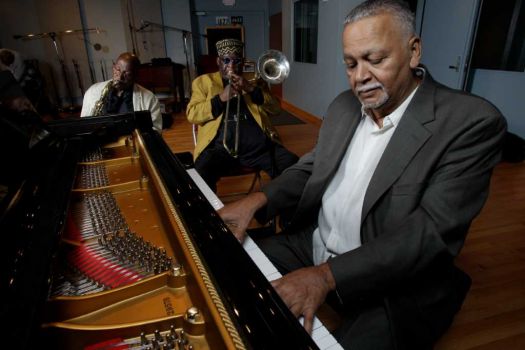
On a sad note, reported in the November 2014 issue of Downbeat, Joe Sample, the keyboard player in The Jazz Crusaders and The Crusaders passed away from Lung Cancer in a Houston Hospital on September 12, 2014. He was 75 years old.
No, this is not a financial report. Vested Interests is the folk/rock (or something like that) group who performs regularly at The Heid Out in Cranbrook. I suppose, true to their name, they do have a vested interest in the place. The better they perform the more likely patrons will be happy and the band will continue to be invited back. The original Vested Interests was Dave Prinn on vocals and guitars, and Bill Renwick, also on vocals and guitars. Brian Noer has joined to group to fill out the vocal harmonies and add some tasty licks on lead guitar.
Vested Interests at the Heid Out in Cranbrook, September 12, 2014, live music until 11pm.
What can I say that I haven’t said before. I arrived late after taking in the Daniel Champagne show at the Studio / Stage Door but I was amply rewarded with some great sounds as the group played right through to 11pm. Always keep the Heid Out in mind for great food, great beer and great music. This coming Friday (September 26, 2014 6:30pm) will feature OUT OF MIND – THE MUSIC OF JAMES NEVE with Lonesome Jim on vocals, guitars and effects and percussionist Juan Havana…… Be there. Here are some images from the Heid Out’s Friday show.
Daniel Champagneat the Studio/Stage Door, September 12, 2014 8pm.
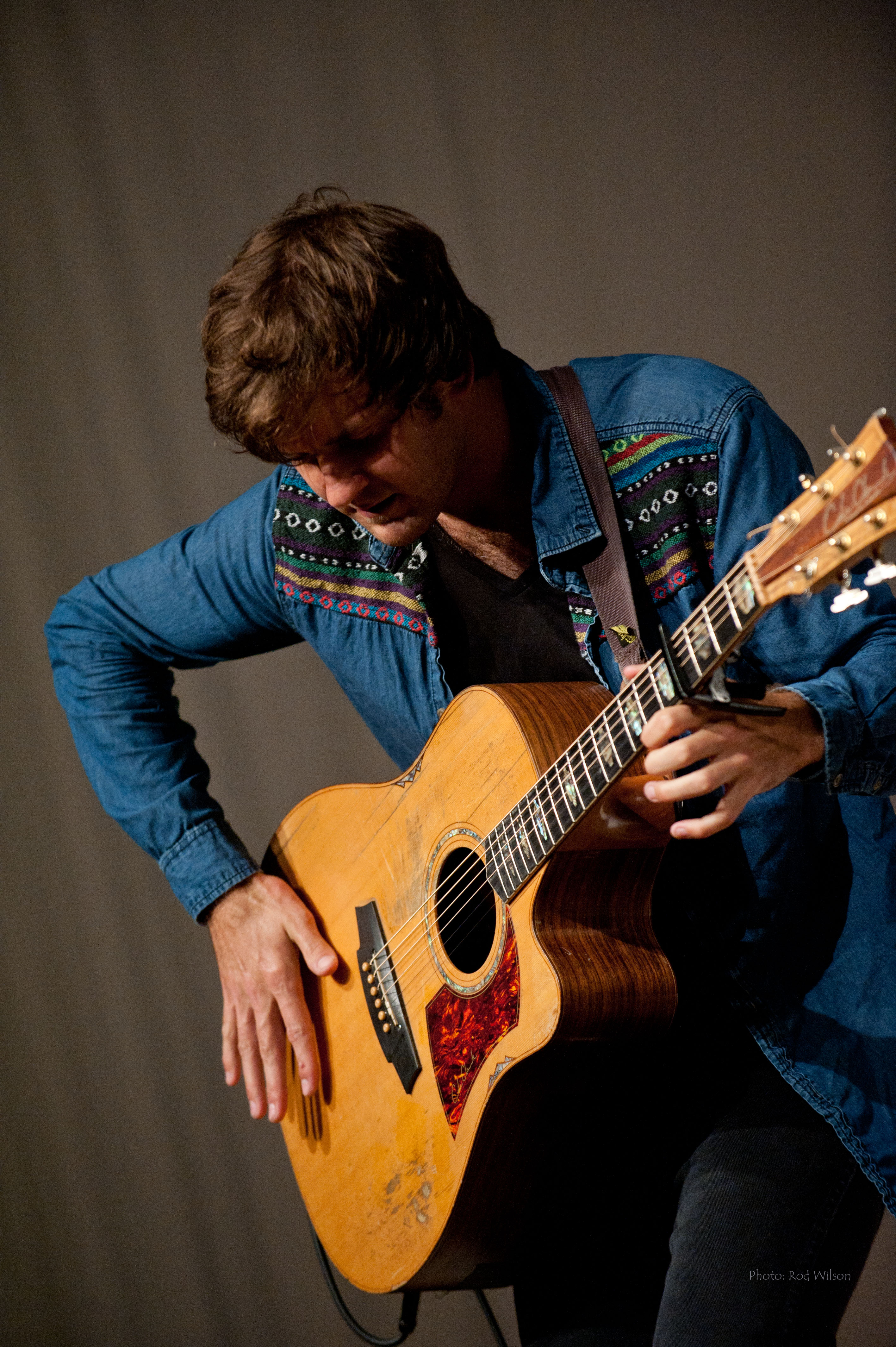
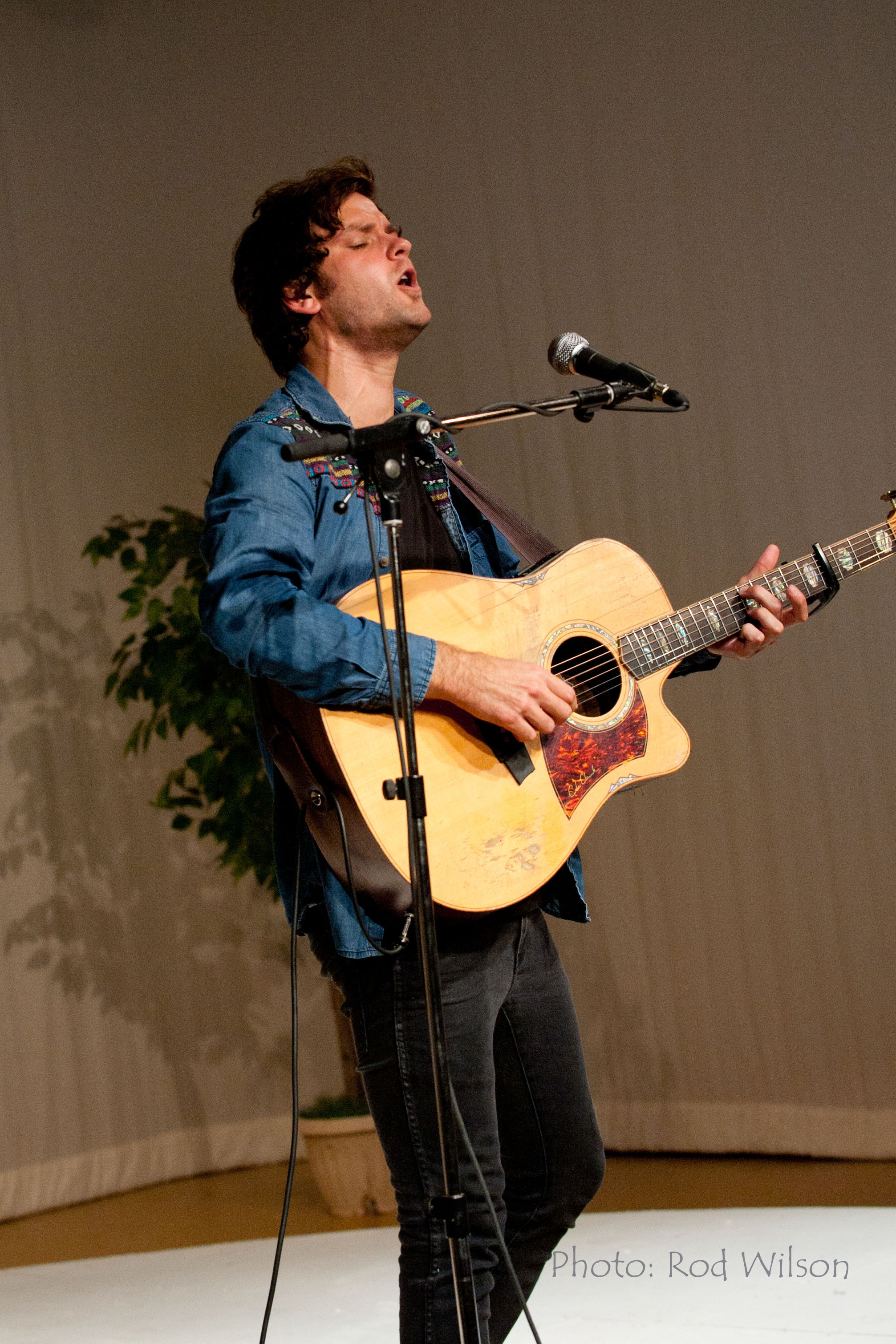
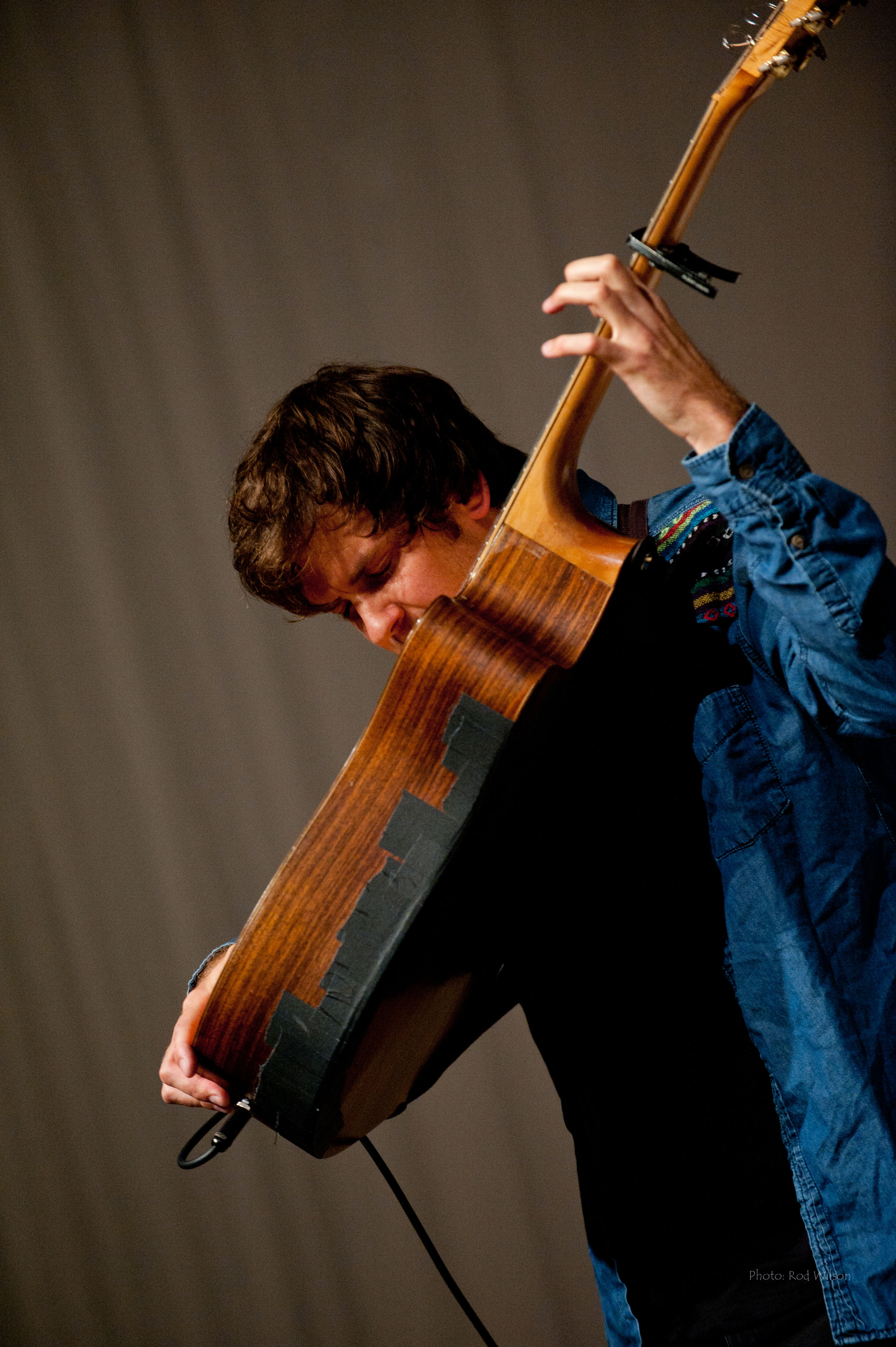
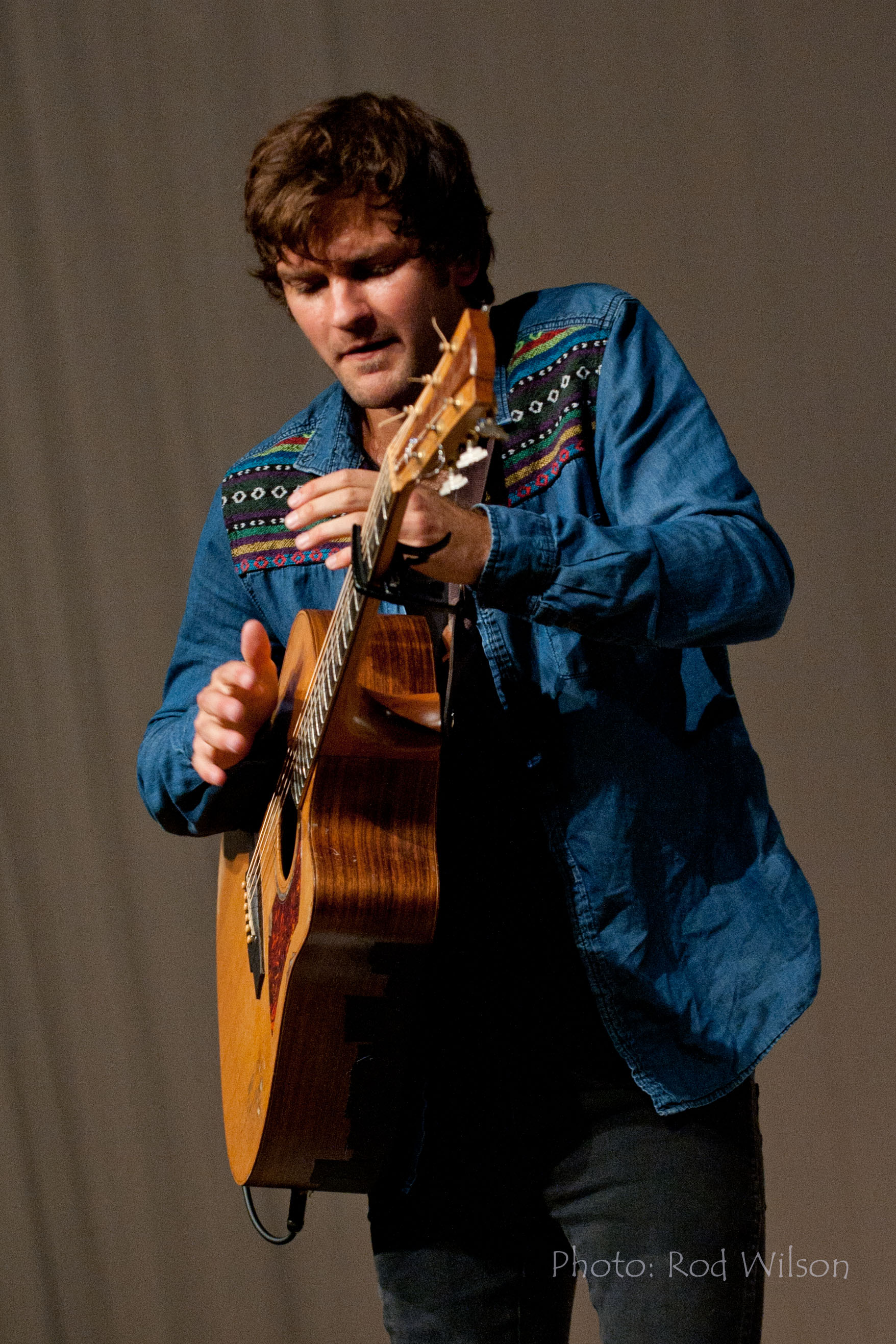
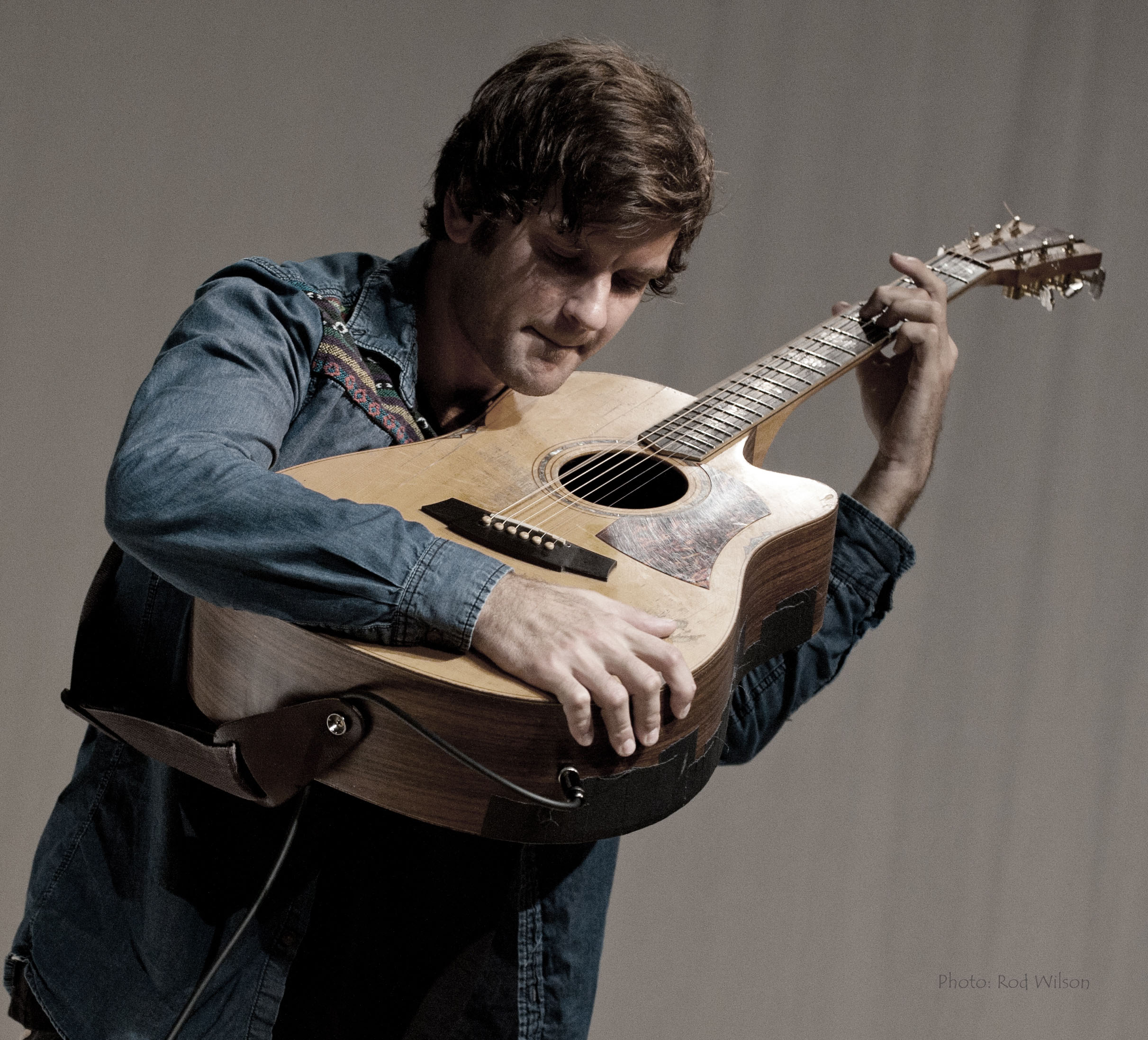
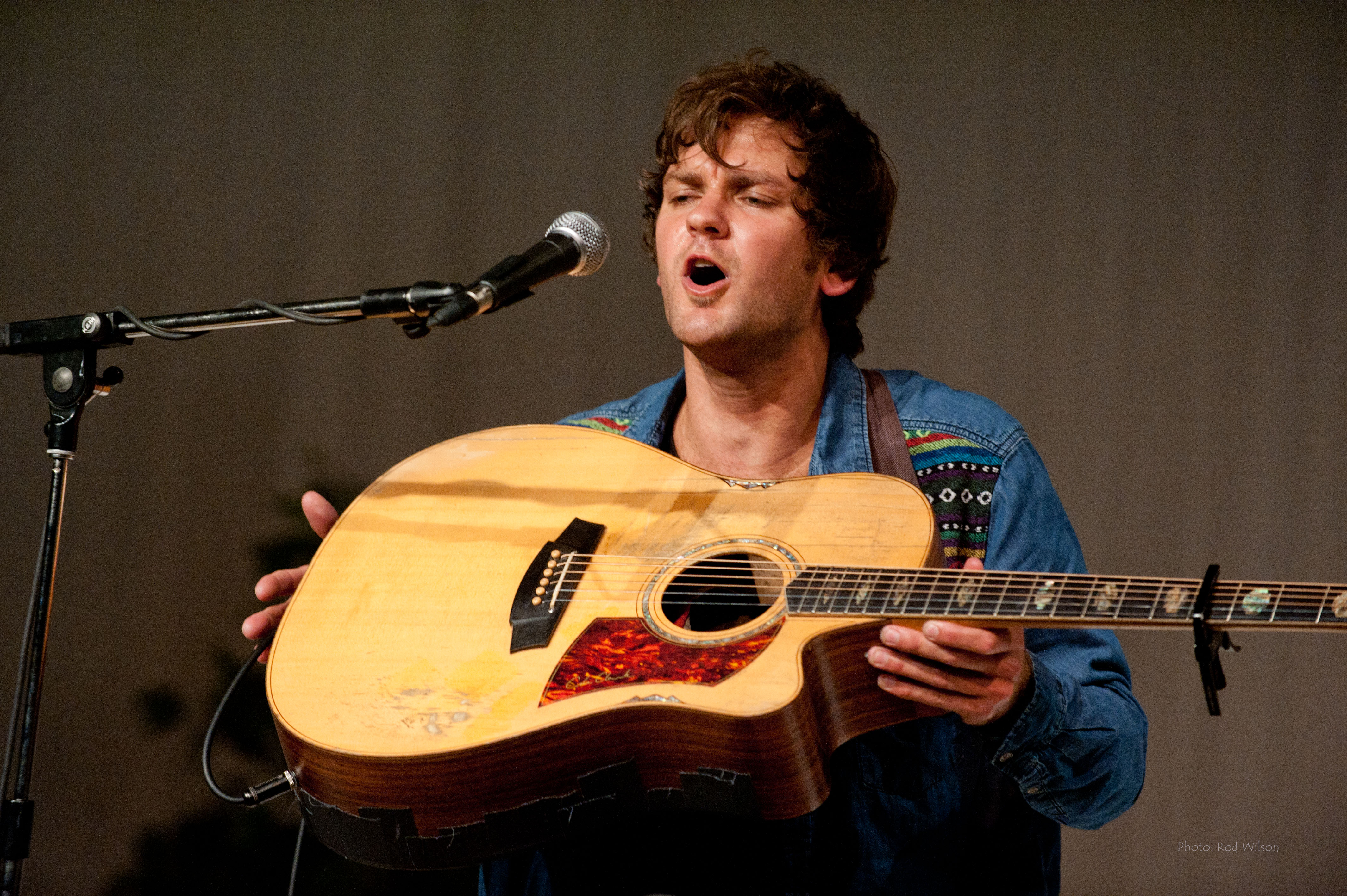
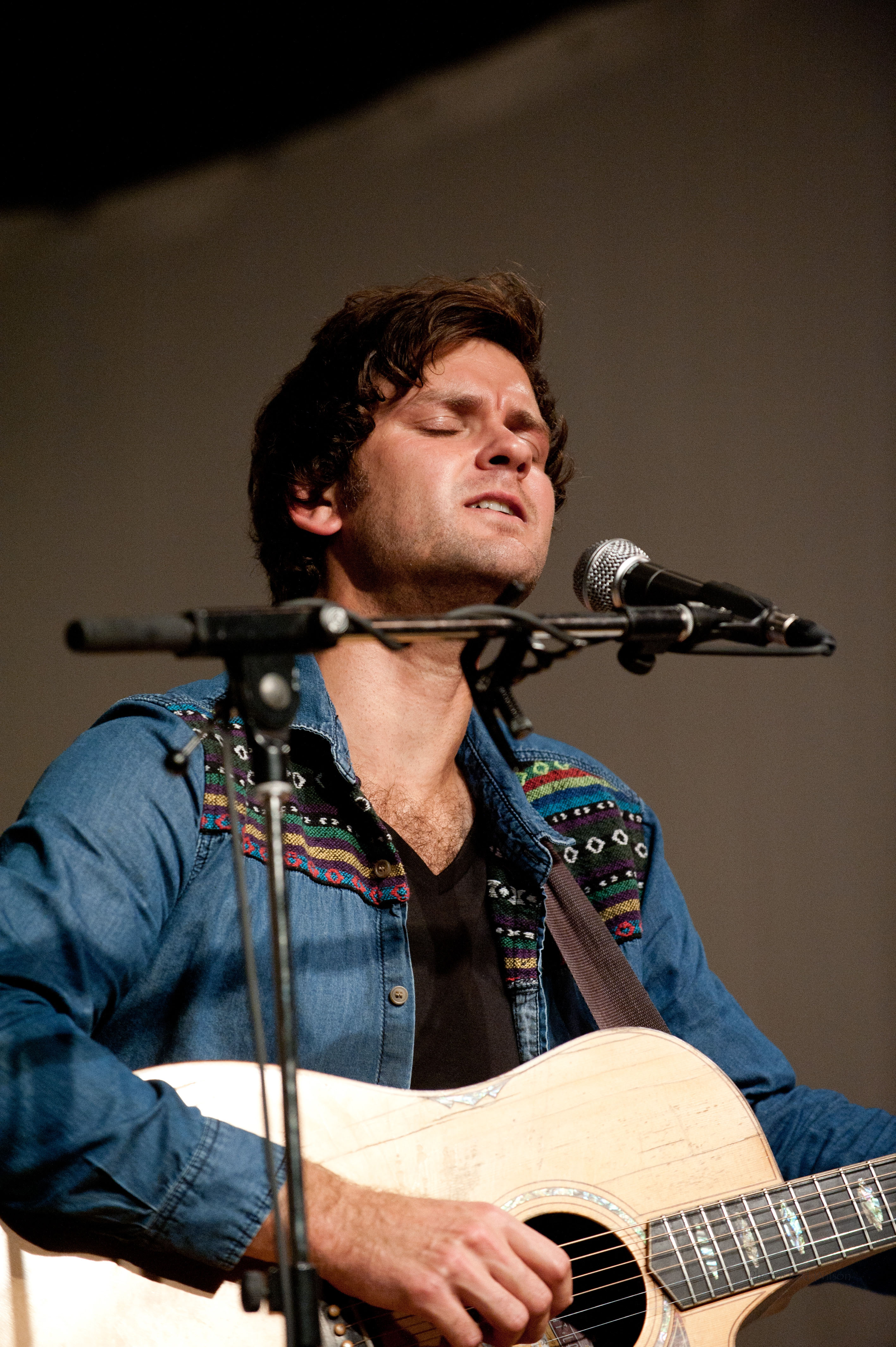
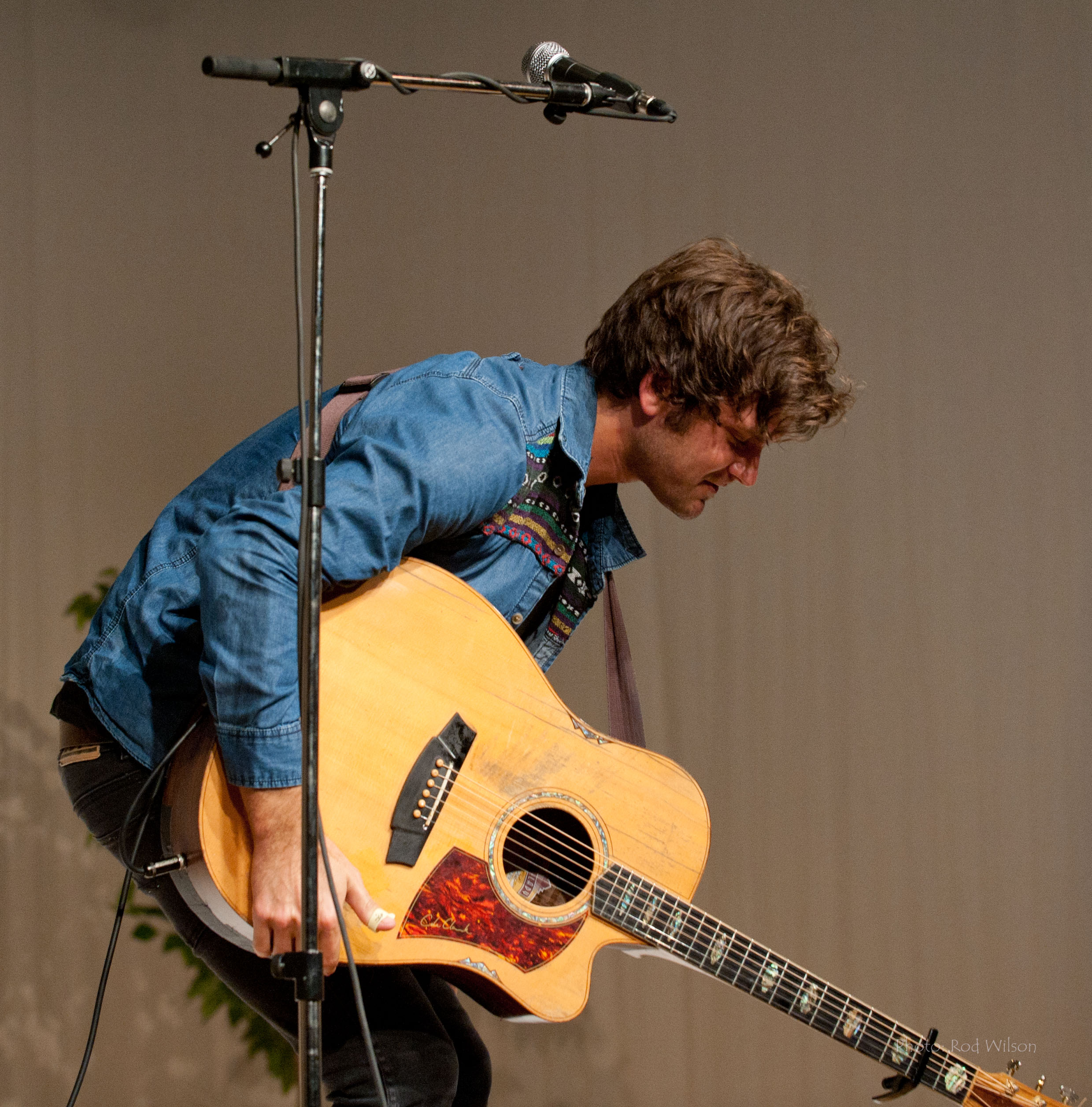
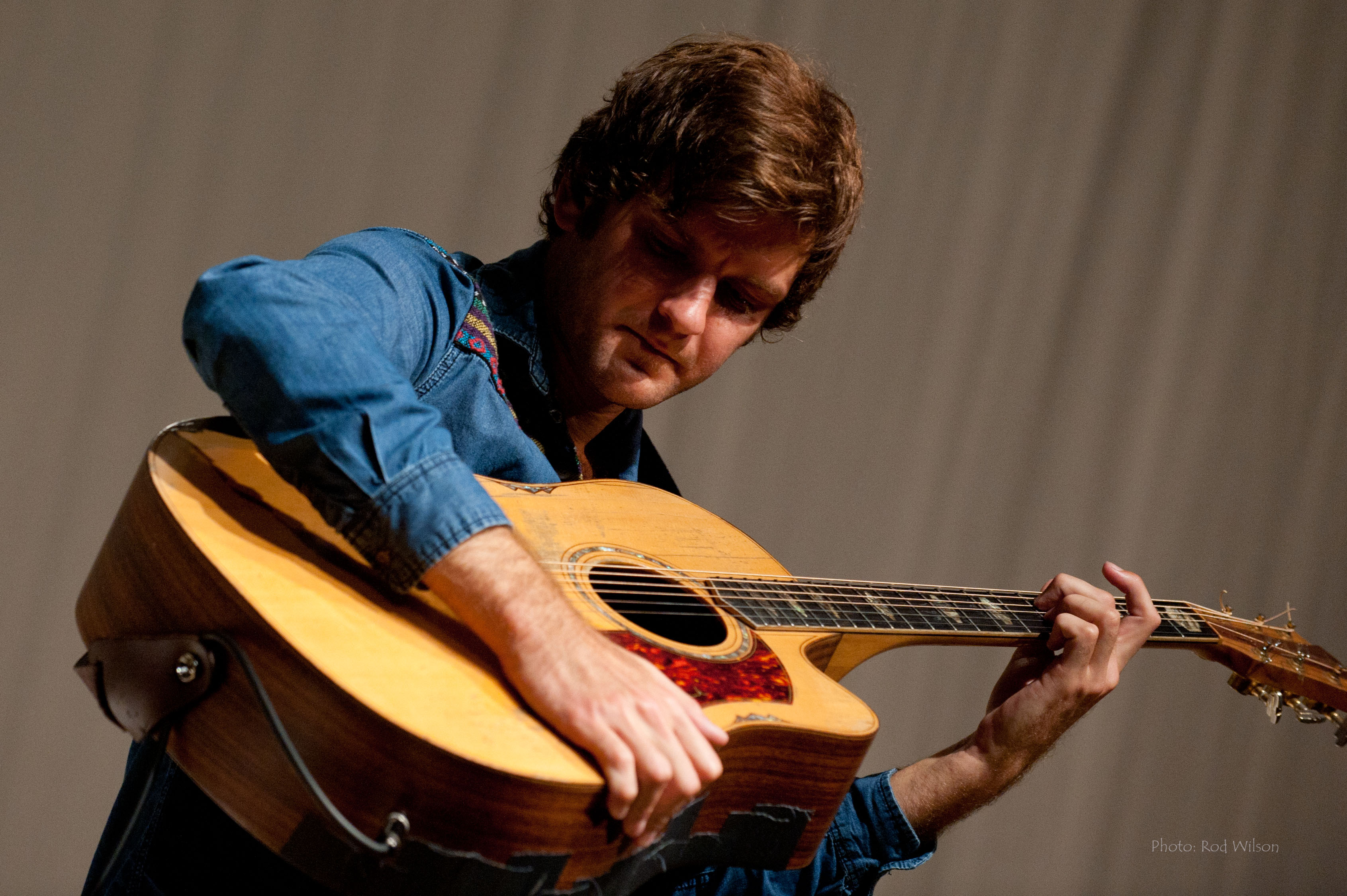
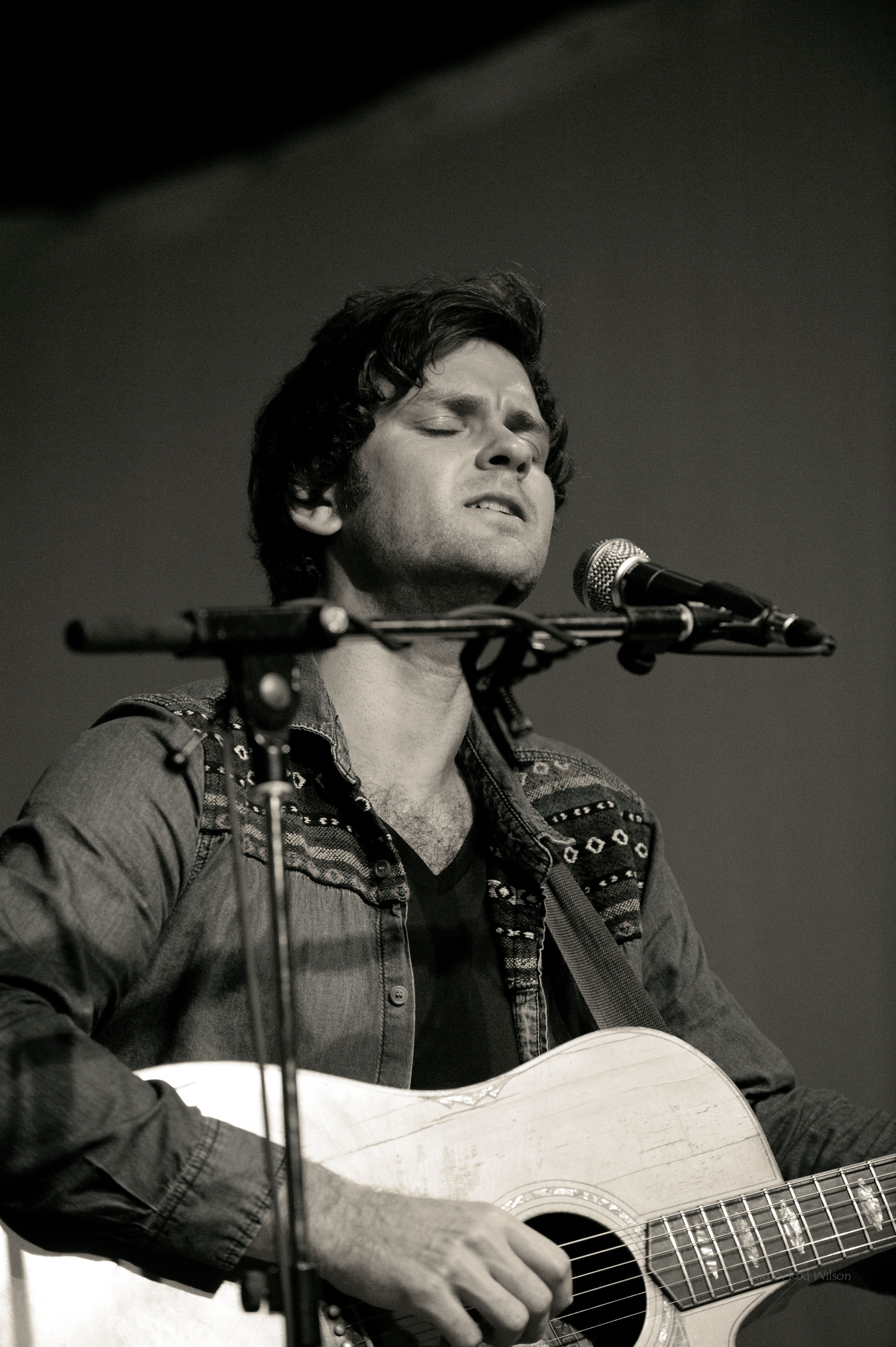
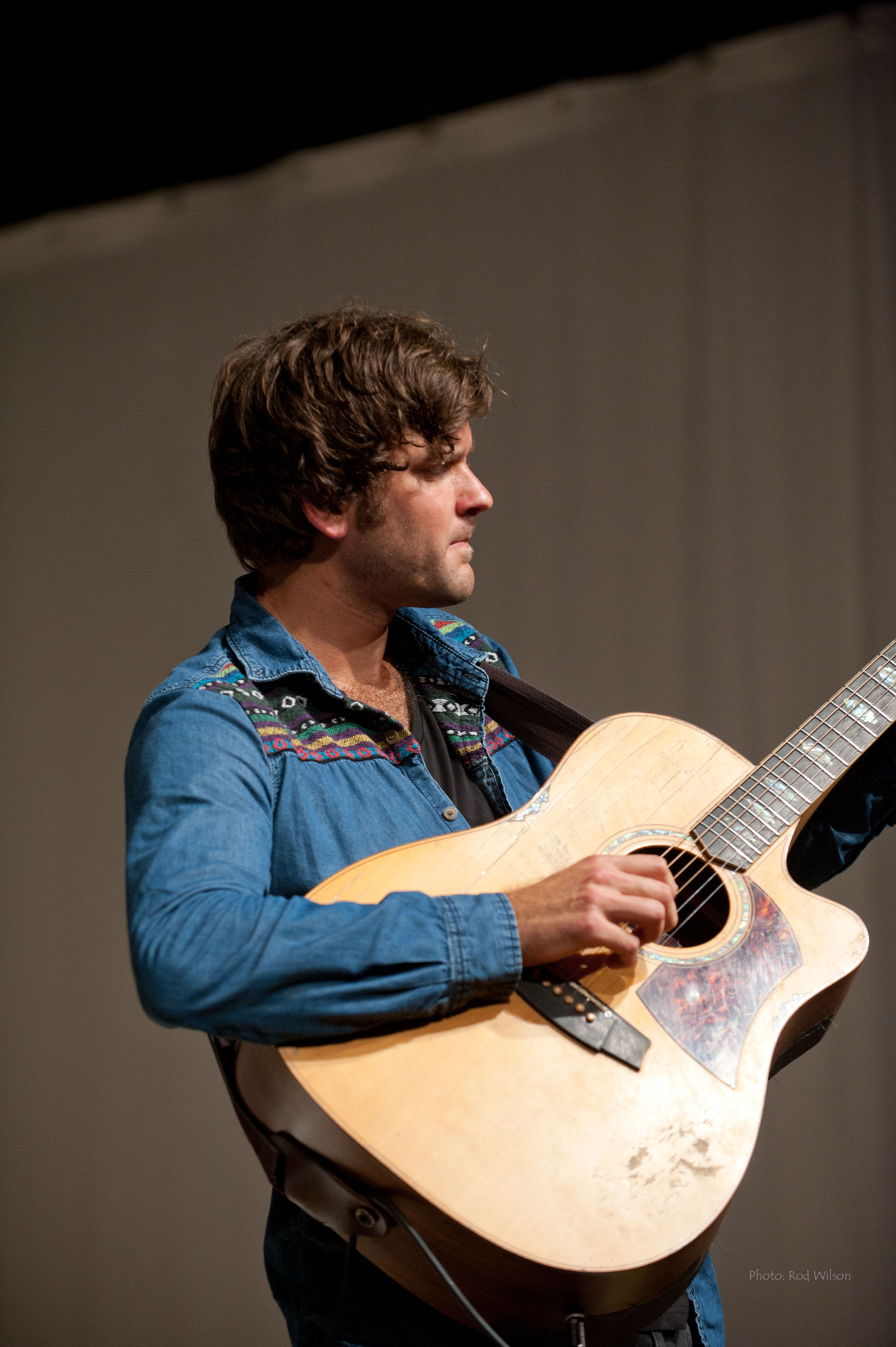
There is a whole cadre of musicians who are out of the musical mainstream and under the radar. There are performers who are a cut above the run of the mill. We have been very fortunate over the years in having local impresarios like Gord and Jill Johnston and Terry Miller who have extended themselves to present these unsung heroes of the music scene. The list of legends who have performed in the area include Martin Simpson, Kelly Joe Phelps, Andy Irvine, Garnet Rodgers, Steven Fearing and many, many others. Gord and Jill have moved on to other fields of endeavor and Michael and Corianna Robinson have stepped up to the plate to keep the tradition going. Some months back they brought in Old Man Leudecke and this past Friday they presented Daniel Champagne. Daniel is a young Australian guitarist and vocalist who is not (yet) a household name. The best way to describe his music is that it is a cross between Tommy Emmanuel (another Australian who is a household name), and Michael Hedges with a dash of Van Halen thrown into the mix. He is a dramatic performer who uses the open tunings and the percussive possibilities of his guitar. It goes without saying that his guitar has taken a lot of beatings in its short life (check the duct tape that seems to be holding it together). He has an endorsement agreement with Australian Cole Clark Guitars and maybe it is just as well. I can’t see his instrument lasting more than a couple of years. Despite his aggressive playing style and on stage athleticism he has a finely developed sense of dynamics that can take his playing from whisper soft to outrageous shouting. The shouter of the evening was Willie Dixon’s blues classic Spoonful. It was an extended performance that could easily match the many other cover versions that are out there. Apart from a number of original tunes, The Pendulum,I Grew Up Where I Could See the Stars, Wrecking Ball, Gypsy Moon, Renegade’s Rule there were a couple of covers tunes as well. They included Don MacLean’s Vincent. This was a masterpiece of deconstruction in which he took the melody apart and put it back together with wonderful instrumental shadings. For the guitarists in the audience here is a hint …. he plays the piece in the key of G using Dropped D / Dropped G tuning (the bottom E string is tuned down to D, and the bottom A is tuned down G ie DGDGBE). Daniel credits Chet Atkins with this arrangement
This was an especially fine concert and the second in this new series. For the purpose of this blog I have decided to “brand” the series by calling it the IN THE TRADITION CONCERT SERIES. The next concert will be the magnificent Freddie Eaglesmith at the Studio / Stage Door October 14, 2014 followed by Bow Thayer on November 7, 2014. CONTACT Mike for tickets atmusic@lotic.co.
Special Thanks to Mike and Corrina Robinson, Ben Blomander (on sound) and the other volunteers lurking in the background.